“We were shooting balls,” someone says on the top of the Sint Pietersberg. A number of guys step off the grass plateau onto the road. It is an introduction activity organised by their fraternity, says a senior student. They are surrounded by a distinct stench of alcohol; there is more involved in this game than just a ‘kloot’ (ball). It is about ten o’clock on an evening at the end of August. The sun has already set and the guys are aware of the fact that they are actually no longer allowed to be here, the fraternity members say. “But it is quiet here, there is space, and it is a good opportunity to show the new members the area. We are never here more than three times a year.”
So, a stroke of luck on our part. Still, on good days you can regularly find youths on top of the Sint Pietersberg after sunset. With a bite to eat, drinks and music, enjoying the sunset. But then to hang about a little longer. “Very tempting,” says forester José Hermens. “It is a beautiful place, but it is so very bad for nature. Peace and quiet during dusk and night-time is very important for wildlife areas. Especially for the animals that live there.” Different animals are active in each season, Hermens explains. “In February, the badgers hunt for their young; it is now time for the eagle owls. The parents avoid hustle and bustle, so they have to travel further to hunt. This means that their offspring is alone longer and can become vulnerable to say buzzards. The eagle owl is rare, a couple of dozen in the Netherlands. It would be such a shame if they were to leave.”
(The text continues below the photo)
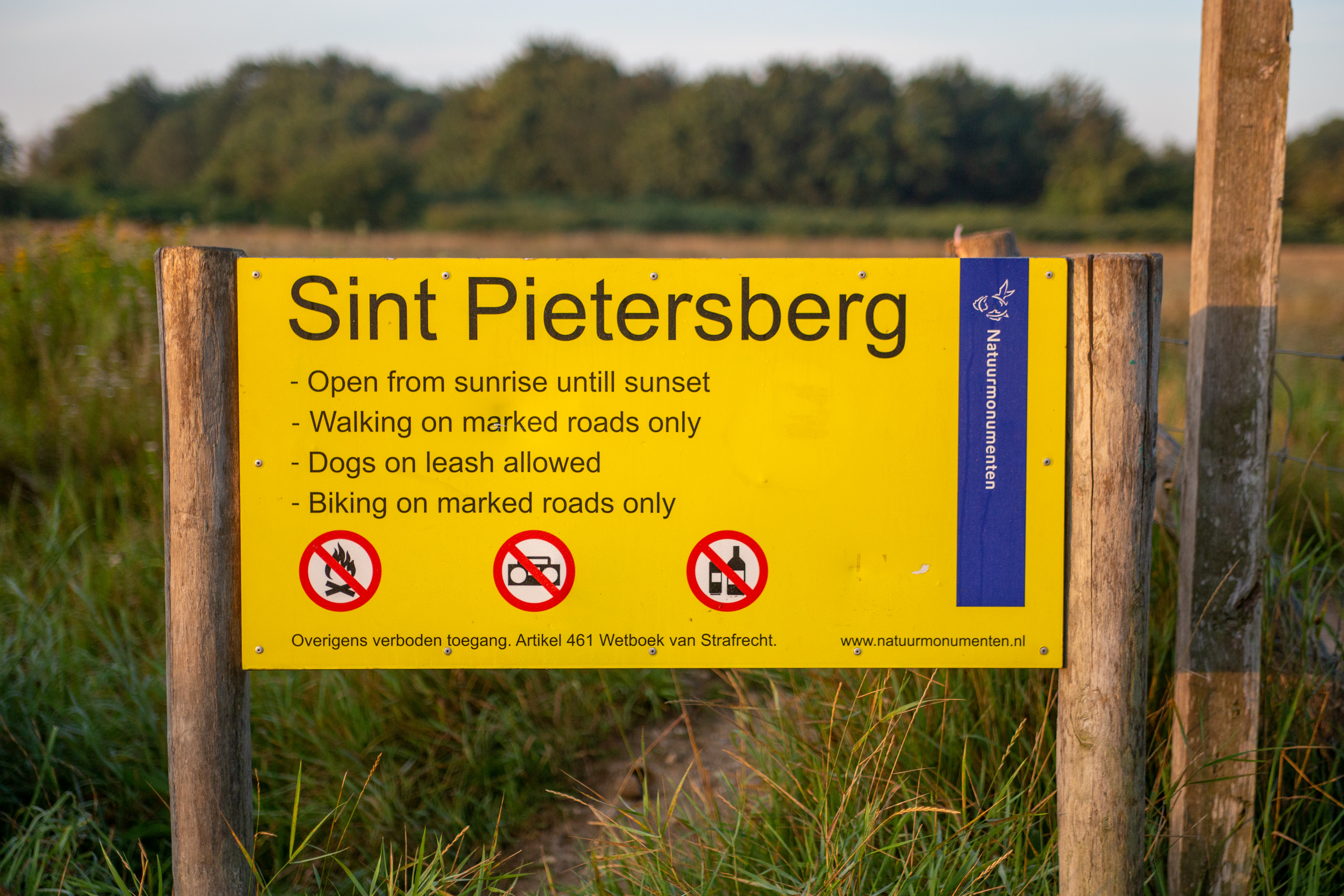
The ‘rules’ are clearly marked on the signs (see photo). No entry between sunset and sunrise, remain on the footpaths, and no music, fires or alcohol. Hermens: “It is also in English; our experience has shown that English is often the prevalent language on top of the hill.” Everyone on the plateau passed by the sign, but hasn’t seen it or doesn’t give a damn, because it is busy this Wednesday evening. The fraternity guys play another game at the top of the Luikerweg. A little further along, on the western incline of the hill, with a view of Jekerdal, there is chatting, drinking and there is music coming from a small speaker. There is a group of about fifty people sitting on the grass in a large circle singing. A total of some hundred people on the hill.
Two German second-year students (School of Business and Economics) lean against the Natuurmonumenten bench. Because they are officially breaking the law, they want to remain anonymous. What are they doing here? “It is a great atmosphere. We know a number of people here and it is easy to make new contacts.” They have been here twice before, the last time being before the summer holidays. They had no idea that they were not allowed to be here. They don’t really see the seriousness of it all. “We chill and we always clean up the rubbish.” That latter appears to be true. Forester Hermens has been very worried about the rubbish lying around, but the morning after, about seven o’clock, there is only the odd tin can and a number of bottles. A fraction of what could be seen the night before. Bags filled with rubbish are beside the bins at the Oog van Sint Pieter, the parking lot halfway up the hill.
(The text continues below the photo)
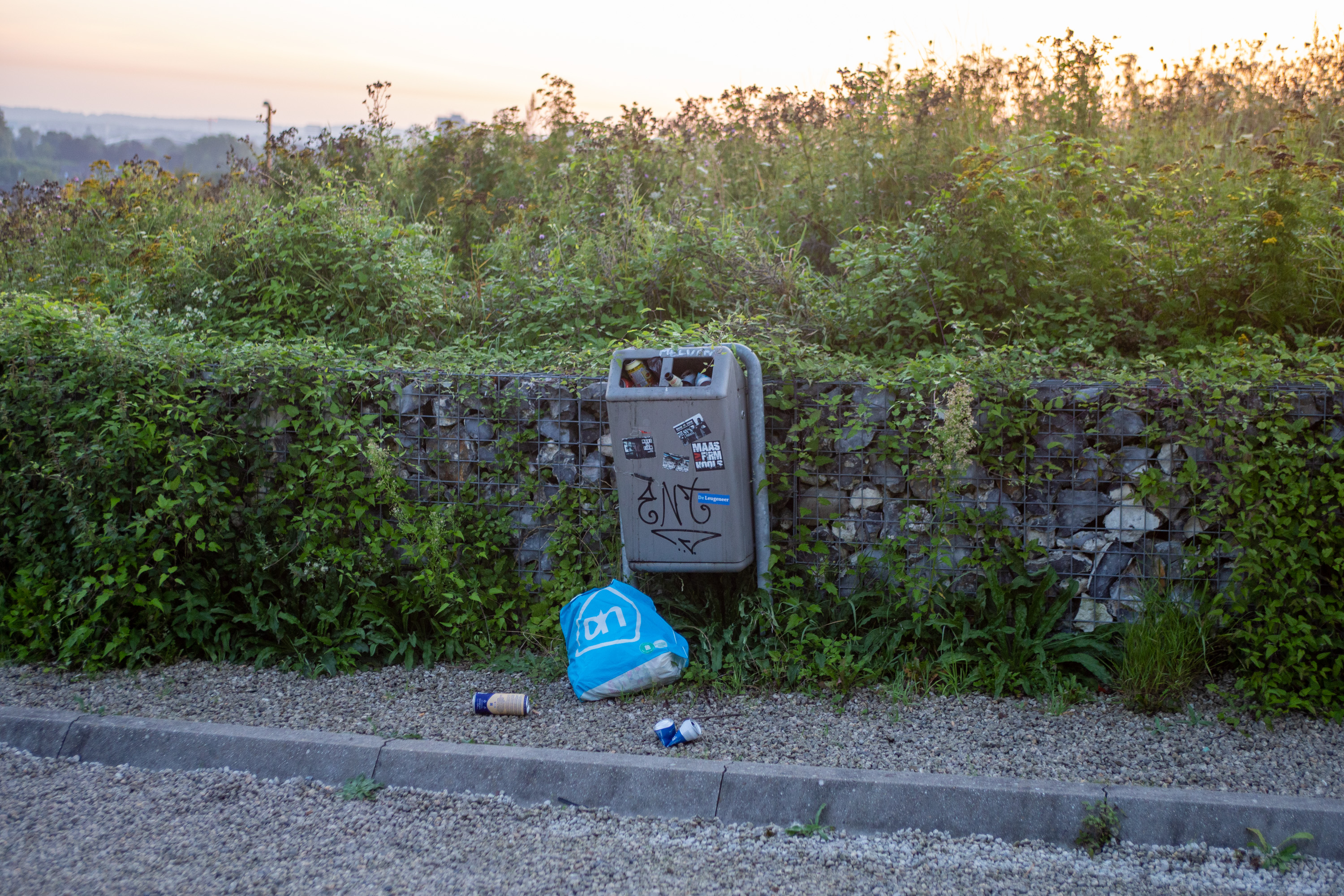
A little further along, there are three German students, two third-year students of Psychology and one from SBE. “Of course we clear up the bottles,” one guy laughs. He is drinking wine from a large bottle. “We bought these in Germany. There is Pfand (a deposit) on them.” They are on the Sint Pietersberg because it is quiet and they are not watched. “Some time ago, we were sitting in the park with a speaker playing music and the police came and sent us off.” They hadn’t thought about the peace and quiet for the animals. But on the other hand, “There is so much space here and we are only using this tiny piece.” Besides, they will be off soon. It certainly won’t be any later than eleven o’clock.
(The text continues below the photo)
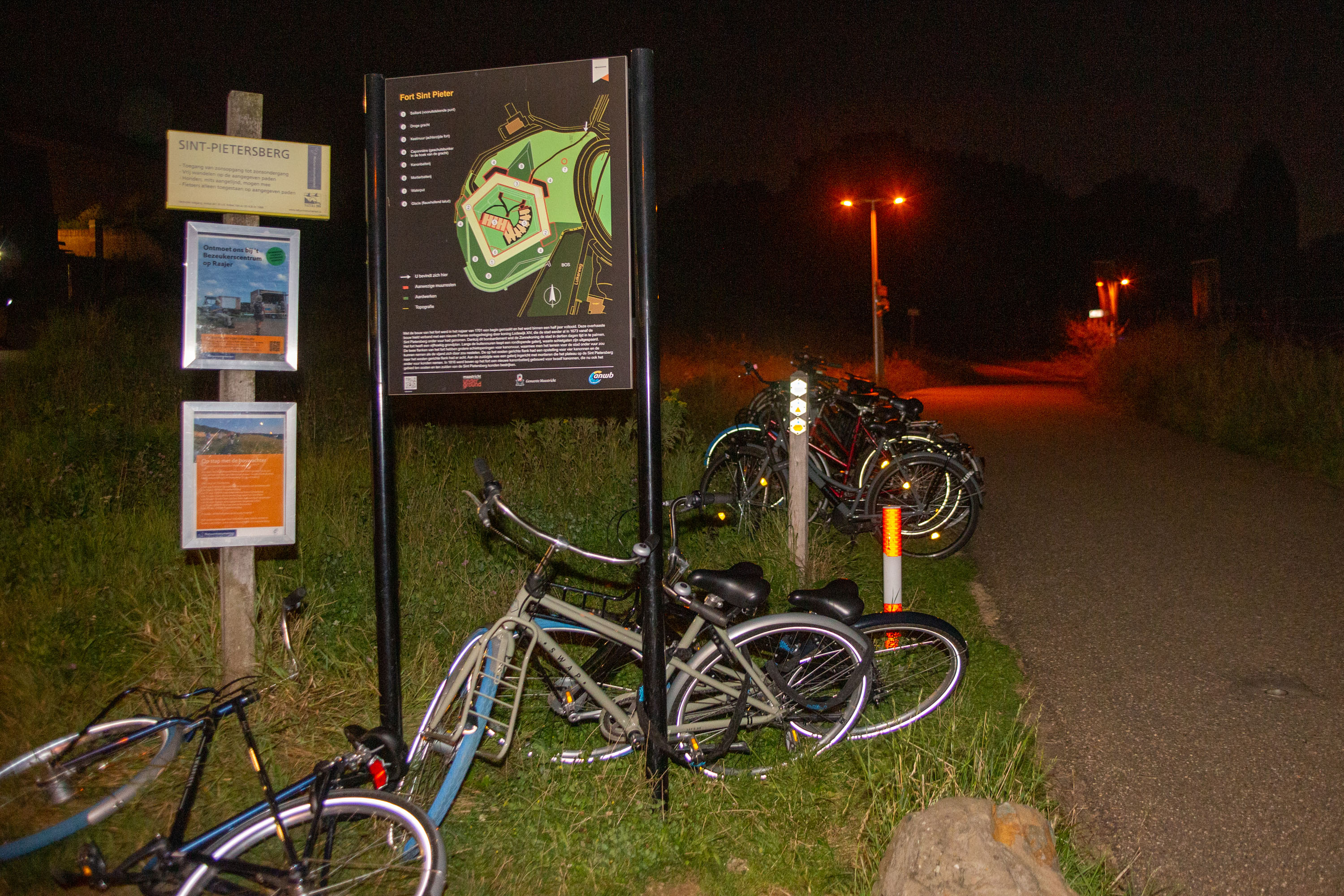
Near the parking lot, five breathless Spanish first-year students are cycling up the hill. One has the navigation on the phone so they can find the way. “We heard that there were gatherings here in the evenings.” A nice way to meet people in these times, they say. “We feel that the pub is too busy at the moment.” They park their bicycles next to the other (swap)bikes in the grass.
The police will have a talk with the city and Natuurmonumenten about the additional measures in the area, the police spokesperson states. “The special student liaison officer from the police will also talk with the UM.” Exactly with who or which measures the police and city were thinking about? He had nothing more definite to say. Perhaps last week's eviction has already helped: last Monday evening (September 13) it was quiet on the plateau except for two voices in the distance.