Having to ask your roommates how the central heating system works, because you’ve never had to use one before. Not knowing that you have to push a button to open the train doors, because you’ve never travelled by train before. Suddenly realising in early autumn that you still have to buy a coat and warm clothes, because you don’t have any. And taking the bus everywhere, because you never learnt how to ride a bike. If you’ve lived all your life on a small tropical island in the Caribbean, you may find yourself in some awkward situations as a student in the cold, densely populated Netherlands.
Though some of these situations may seem amusing or harmless, they often point to larger problems. Every year, several hundred young people leave behind the Dutch Caribbean – the constituent countries of Aruba, Curaçao and Sint Maarten, as well as the special municipalities of Bonaire, Saba and Sint Eustatius – to pursue a university degree in the European Netherlands. At the end of last year, the National Ombudsman called attention to the fact that these students are more likely to experience mental health problems, fall behind in their studies or even drop out altogether. The challenges they face range from bureaucratic hurdles – for example, they don’t have a Citizen Service Number (BSN) and DigiD log-in code to open a bank account or take out health insurance upon arrival – to the language barrier, financial stress, cultural differences, unmet expectations and feelings of loneliness.
Some of these challenges are not unique to students from the Dutch Caribbean. But it’s important to acknowledge the difference between these students and international students from countries like the US or Italy, who choose to study abroad. “Going to university in the Netherlands is essentially our only option”, explains Jaycey Kelly, a master’s student of Epidemiology from Aruba. “The islands themselves offer limited opportunities for higher education. And very few people can afford to study in, say, the US or Canada. In the Netherlands, we can study under the same conditions as our Dutch peers, including student loans and grants from DUO.”
Maximum student loan
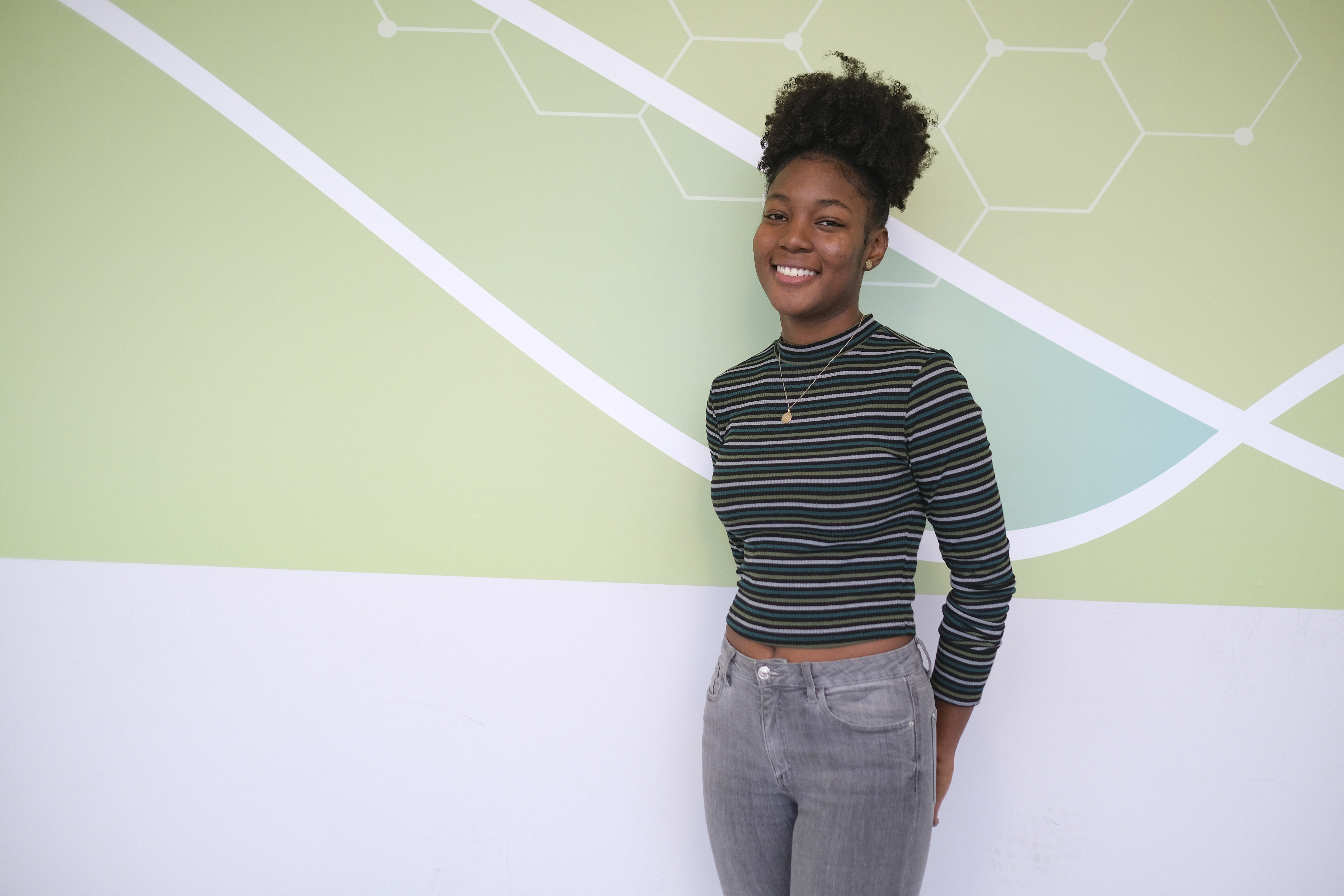 Lianne Girigori
But then you’re on the other side of the ocean, a ten-hour flight away from your friends and family. “It’s sometimes difficult. Feeling homesick can affect your motivation”, says Lianne Girigori, a Biomedical Sciences student from Curaçao. “When I see my fellow students walking to the train station with their suitcases on Friday, I think, ‘Gosh, I wish I could go home for the weekend’. The weather and culture here are very different as well. It can be hard, but I try not to let it stop me.”
On top of that, the cost of living is much higher in the Netherlands, says bachelor’s student Samantha Cijntje, who is also from Curaçao. “My parents give me some money, but their salaries are simply not worth as much in the Netherlands.” She doesn’t have time to work while studying: she is enrolled in two programmes, Digital Society and Data Science and Artificial Intelligence. “I have to be careful with money. I’ve selected the cheapest internet plan and I don’t go out as often as others, which means I get to know fewer people. I often couldn’t join my fellow students when they went out to have fun together in the first year.”
“The vast majority of students from the Caribbean, including myself, take out the maximum student loan available”, adds Kelly. “It’s the only option for us, but it also means we accumulate huge debts. We often have to spend more than other students, too. We can’t just go stay with our parents and not spend any money for a couple of days. And if we do fly home for Christmas or the summer, it’s during peak season when tickets are ridiculously expensive.”
A lot of freedom
Their ever-increasing debts put even more pressure on these students, as do their parents’ expectations. “As a Caribbean student, you got on a plane to achieve something that your parents might not have had the opportunity to achieve”, says Warren Lasten from Curaçao, who studies Medicine. “This can make it more difficult to tell them that you’re struggling with your studies, which only adds to your stress and problems.”
And potential problems are everywhere. “A lot of people in the Caribbean have a very protected childhood. For example, we never go anywhere by bus; our parents drive us everywhere until we’re eighteen years old. In the Netherlands, we suddenly have a lot of freedom. Some people don’t handle it well.”
His observations are confirmed by a study that was published earlier this year, conducted by ResearchNed on behalf of the Dutch government. Only 45 per cent of Caribbean students at Dutch universities obtain their bachelor’s degree within four years, compared to 58 per cent of students with a non-Western migration background and 61 per cent of students from the European Netherlands and students with a Western migration background. These percentages are even lower for Caribbean students at universities of applied sciences.
Friendlier
Although they recognise the struggles, the five UM students haven’t seen a significant number of people in their immediate circles fall behind in their studies. Devagni Pourier from Bonaire has noticed that many of her Caribbean friends switch programmes after the first year, though, which is also confirmed by the ResearchNed study. “From the islands, it’s difficult to get a good sense of what a degree programme will be like”, she explains. “We can’t just hop over to go to a university open day.”
What about choosing a city? All five students made a conscious decision to study in Maastricht, not least because of the environment and culture in Limburg. “Bonaire has 20 thousand inhabitants”, says Pourier. “The Randstad feels suffocating to me. Limburg is less densely populated and the people are friendlier, which makes me feel safer.” Cijntje enjoys the small-town vibe, which reminds her of the islands. “When you go to a shop for the second time, the staff will recognise you and say hello. You don’t get that in Amsterdam. I like this better. I feel at home here.”
Lasten agrees. “I decided to go to Maastricht because it’s quieter, so that I could focus on my studies. A lot of young people want to go to a city with a large Caribbean community, like The Hague or Rotterdam. Just about everyone has family and friends there, and you’ll find lots of activities and Caribbean parties. There are a lot of distractions.”
Bubble
The international character of UM also appealed to the students. “There are people from all over the world in my tutorial groups”, says Kelly. “It makes you stand out less; you’re not just ‘the Antillean girl’ all the time.” It also helps that many UM programmes are taught in English. “We learn Dutch at school, but we usually speak Papiamento or English on the islands. It’s sometimes difficult to participate in a Dutch-language tutorial because you can’t always find the right words fast enough.”
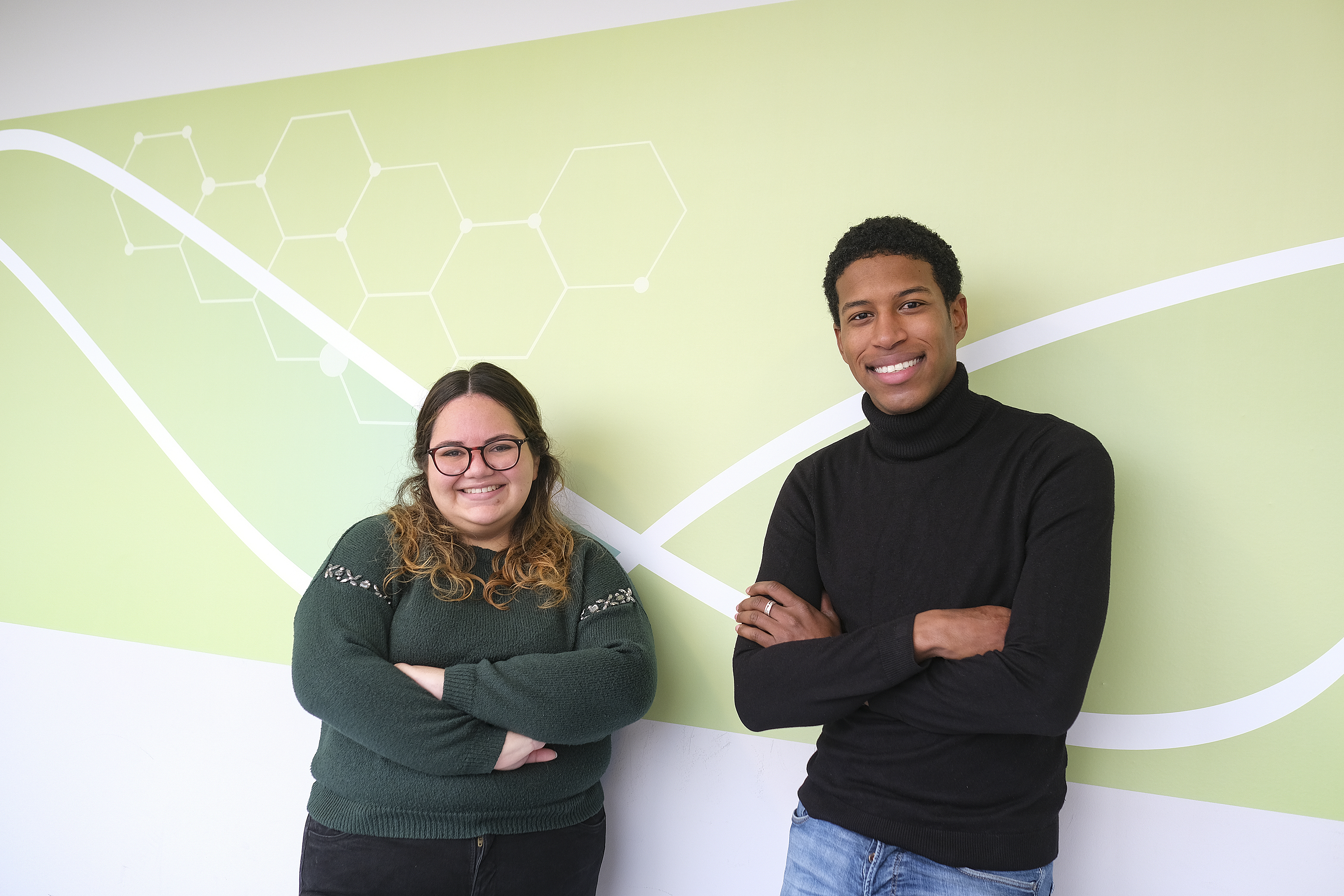 Jaycey Kelly and Warren Lasten
But the international environment comes with some disadvantages as well. “I would like to get a job in the Netherlands after completing my degree”, says Cijntje. “I would like to practise my Dutch, but I don’t get the chance.” Tax Law student Pourier has actually noticed that she’s struggling more with her Dutch, even though her bachelor’s programme is taught in Dutch. “I only speak Dutch in class. Outside the classroom, we always speak English.”
There is also the risk of ending up in a “Caribbean bubble”, the students say. “It can be tempting to look for a safe and familiar environment, especially when you’re going through a tough time”, says Lasten. “There aren’t that many students from the islands here, so you quickly become a small, tight-knit group. This can get you out of trouble, but it can also cause you to fall even further behind. If you don’t stay in touch with your fellow students, you’ll miss out on a lot of information and tips about your study programme and student life."
Safety net
He therefore advises new students from the Caribbean to make Dutch friends, although he admits that cultural differences can make this more difficult. Girigori concurs. “The differences may be subtle, but they do complicate things. I often don’t understand puns or fixed expressions, for example. And going to a party tends to be all about getting drunk for Dutch students, whereas on Curaçao it’s always about being in the present moment and having a good time together. I feel obligated to socialise with them, but it takes a lot of effort.”
“Dutch students are unaware of these differences, because we adapt to their culture”, adds Cijntje. “It’s a strange realisation, actually. From an early age, we are raised with the idea that we will go to the Netherlands one day. But people in the Netherlands learn very little about our culture. When we’re talking about Curaçao, they often say, ‘You have beautiful beaches.’ But the Caribbean is so much more than that! I think Dutch schools should pay a little more attention to the Antilles.”
UM can also do more to help Caribbean students, says Lasten. “In my fourth year of secondary school, we went on a school trip to the Dutch universities. UM was the only university that had put up a banner with the name of our school on it to welcome us. It really made me feel like they didn’t treat people like a number here. But now, looking back, I’m disappointed by the lack of personal support I received. Caribbean students encounter a lot of obstacles, but people often wait to ask for help until it’s too late. UM doesn’t have a safety net in place. You don’t even get an email if you don’t go to class for a year, even though the educational system is set up in a way that your absence should be noticed. It would be nice to have a university staff member who knows the problems we face and actively asks us how we are doing.”