
Sjoerd Maillé (22) is a third year-student of Law. He holds sixth place on the VVD party list (current number of seats: three). He has been involved in politics since he was in secondary school and already has some experience in local government. Last year, he became a citizen councillor – citizen councillors get to participate in council committee meetings, but not in municipal council meetings – for his party in Maastricht. His role model is Daan de Kort, a Member of Parliament affiliated to VVD. They both have a visual impairment. “His vision, like mine, is about 5 per cent.” When De Kort was still an alderman in Veldhoven last year, they went for a cup of coffee together. “I’m impressed by how he grabbed the bull by the horns and is going all in to achieve his goals”. Maillé wants to follow in his footsteps, particularly when it comes to the Social Support Act (WMO), youth care and participation. “A lot of people in Maastricht are on the sidelines and receiving benefits. I think it’s important that everyone can participate in society and make a difference. It’s very important to your happiness in life. I want to give people more freedom in how they participate in society. When I was younger, I hated that the authorities determined how I should organise my life as a person with a visual impairment. I want to be able to take initiative. I see that reflected in the VVD’s approach.” The VVD Maastricht team is very young, says Maillé. “The number one on our list is in his sixties, but numbers two through ten are all in their twenties and thirties. We bring a fresh perspective on the city to the table.”

Jules Ortjens (28) is a research master’s student of European Studies and the number one on the Volt party list (no seats yet). Before he started his master’s degree at UM, he studied in Estonia and Russia and worked as a journalist in Estonia for a while. “I saw from an outside perspective how we take democracy for granted in Europe. I thought, ‘How can we hold on to it and make sure everyone feels represented?’” In Estonia, he learnt about the pan-European party Volt. They were asking the same questions. Back in Maastricht, he helped set up the local branch of the party. “There are national and local parties in Maastricht, but we should be looking beyond national borders. Volt sees Maastricht as the heart of Europe rather than a city tucked away in a corner of the Netherlands. Brussels, Aachen and Liège are just a stone’s throw away.” That’s why we need to improve public transport links, says Ortjens. “It would make it much more interesting for students to stay in Maastricht and for companies to establish themselves in the region.” As for public transport: “There should be trains to Sittard and Heerlen every ten minutes. There are a lot of vacant buildings there. Why not work together?” These plans aren’t cheap, admits Ortjens. “But they will greatly benefit the city in the long run.” Another important thing: “Volt wants to set up an independent citizens’ council – consisting of a diverse group of Schengen citizens, students and international students – to advise on policy proposals. It’s time for democracy 2.0.” How many seats does Ortjens hope his party will secure? “Three seats!”
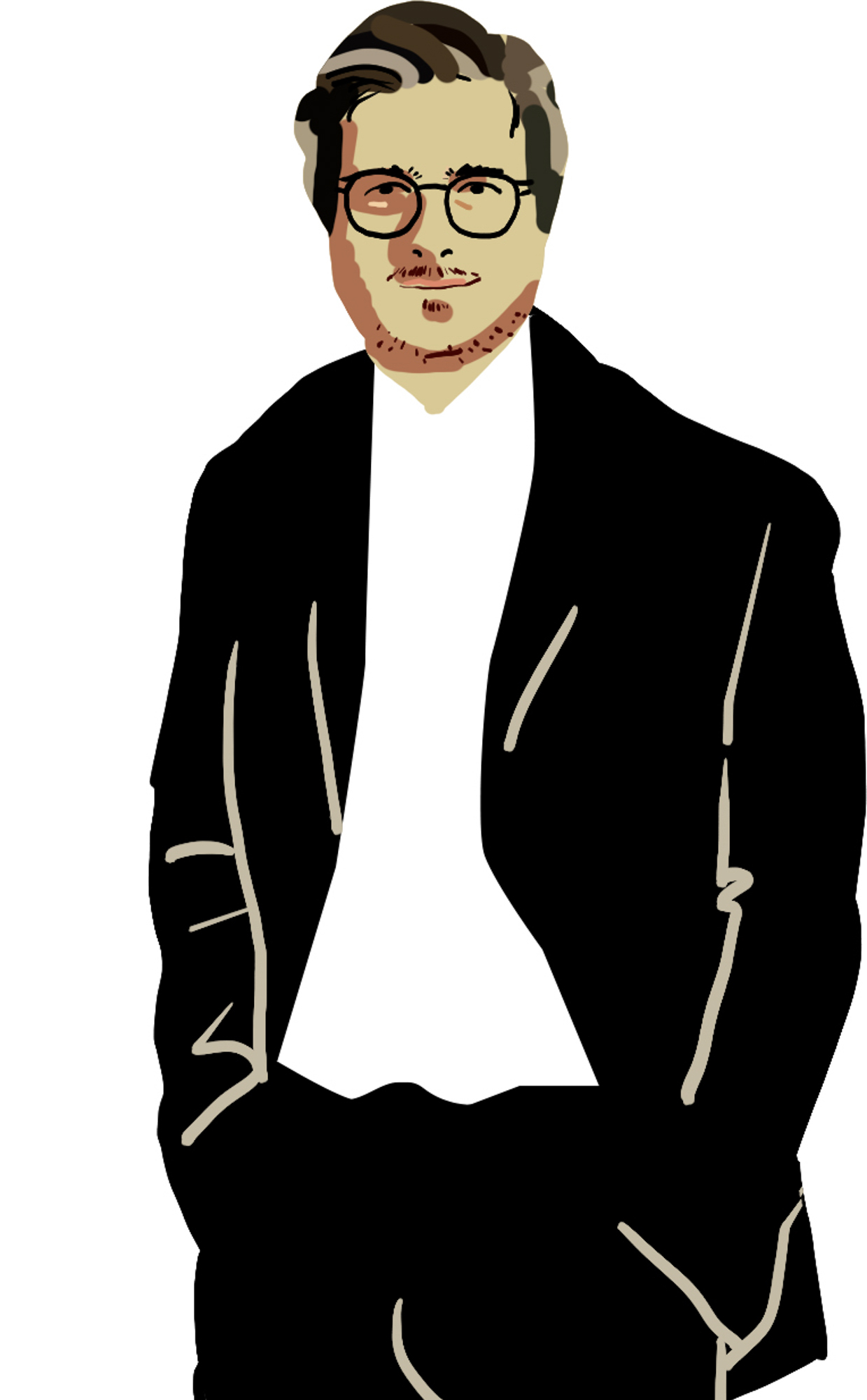
Alexander Lurvink (33) knows exactly what he’s getting into. In addition to being a master’s student of Public Policy and Human Development, he has been on the municipal council for four years. He was initially affiliated to M:OED, but split off from the party and is now standing as a candidate with his new party, RE:SET. And he has big plans. “I want to move away from representative democracy towards participatory democracy. People are disengaged from the current system. Just look at voter turnout in local elections: it has been below 50 per cent for years.” What would this new system look like? “Suppose a resident has a good idea for the city with enough support in terms of signatures or academic research, for example. RE:SET will temporarily appoint them as a citizen councillor so they can share their proposal with the committee themselves. The party and the municipal councillors will play more of a facilitatory role.” But what if the proposals go against his own beliefs? “I myself am on the centre-left side of the political spectrum, but if there is enough support for a right-wing or a very left-wing plan, I will facilitate it.” The advantage of this system: “Instead of having to commit to being on the council for four years, people will be able to translate their proposals on specific issues into action within six months. This way, each policy issue will get its own local specialist.” Lurvink calls it his life project. “It’s about the underlying philosophy, not about me as a person.”

First-year Tax Law student Jouke de Boer (19) holds eighth place on the CDA party list (current number of seats: five). He would like to see more students on the municipal council. “We currently have too few students on the council. Local government should be representative of the local community.” He believes the underrepresentation of students on the council automatically means that student affairs do not receive enough attention. “Take the bicycle problem: there are a lot of bicycles parked on the pavements and a lot of abandoned bikes in the city. We need more cycle parking spaces.”
De Boer’s role model is CDA Member of Parliament Derk Boswijk. “We’ve spoken a couple of times through CDA’s youth wing. He’s a hard-working MP who leaves no stone unturned. He also goes on lots of working visits to farmers, for example. I would want to do the same thing as a councillor when it comes to student affairs. I’m a member of Saurus, the student rowing association, but I also want to connect with other student associations to find out what problems they run into.”
Won’t he feel intimidated being a nineteen-year-old councillor talking to experienced aldermen or the mayor? “I don’t think it will be a problem. I think they want to listen to what young people have to say.” As a full-time student, won’t he be too busy to hold a municipal council seat? “No, I’ve always engaged in extracurricular activities. I was a coach at Saurus, I maintained the boats at my previous student association in Amersfoort, and I was a member of the debate club in secondary school. I’ll be fine.”

Lieve Smeets (24) holds 24th place on the D66 party list (current number of seats: five). It’s unlikely that she will gain a spot on the council, but she’s OK with that. “I think of it more as a way to help the party by campaigning and talking to people. I campaigned for Sigrid Kaag in the last elections. I’m very interested in politics, but I’m also working on my master’s degree in Private Law and I’m the chair of the international student organisation AIESEC in Maastricht.” What if she does get elected? “Then I’ll do it.”
Smeets would also like to see more young people in local government. “People tend to think that politics is for people with a lot of life experience, but students have already learnt and done quite a lot. Our opinions are very valuable to the city.”
Smeets used to think she would stay in Limburg forever, but she is starting to feel the pull of The Hague. “Dream big: Member of Parliament. But I would also like to work as a policy advisor to the party or as a civil servant at the Ministry of Justice and Security. My background as a law student would come in handy there.”
Why D66? “The 2017 general elections were the first elections I was eligible to vote in. I looked into the different parties – and not just by filling in online voting aids”, she says. “I read several party manifestos.” She ended up at D66 and soon met various party members. “It sounds like a cliché, but I felt like these were my people.”

Martin van Rooij (25), master’s student of Public Policy and Human Development, also has some experience in local government. He was the chair of the UM Student Council and the political university party Novum. Also, he was a citizen councillor for M:OED for a while. He is now the number one on their party list. Local government in Maastricht must change, Van Rooij says. “The world has become more complex, but government has remained the same for a hundred years. Residents should be involved more in local government.” A citizens’ budget of 300 thousand euros – the amount of money made available by the municipality for residents to divide over a number of issues – is not enough, he says. “Maastricht residents should be involved in every policy issue.” How? Transparency is the key. “Keep residents informed of what the municipal executive is doing and where the money is going.”
Van Rooij also believes that the municipal executive and the current councillors lack long-term vision. “They are putting out fires rather than coming up with structural solutions. ‘Noise nuisance by students? Let’s ban roof terraces!’ That’s just short-sighted. What kind of city do we want to be in thirty years? What values do we want to build on? That’s what we should be thinking about.”
Van Rooij’s voting advice: vote for local parties. “One of the advantages of M:OED is that we are a local party. We don’t have to consult the national party. Maastricht is our only focus.”