In the past years the area of Belvédère has seen some mayor changes. The former Sphinx factory – an abandoned building for a long time – was renovated and is now housing the Student Hotel and Pathé Cinema, whereas Lumiere Cinema and music platform De Muziekgieterij found a home across the street in the Timmerfabriek. But the Landbouwbelang was left alone – at least until now.
The area planners of Belvédère BV, a city-owned company with the public assignment to restructure the Belvédère area, have publicly asked for investors to submit their plans for the LBB. There are only a few requirements: a potential investor has to pay at least 18 million euros for the former grain factory, and the submission should entail possibilities for housing and should be sustainable to an extent. Three plans have been selected, the municipality will interview the submitters in May 2023 before deciding on which plan to go with. Until the redeveloping starts, the people in the LBB can stay, says Edwin Gerardu, communication advisor of the Belvédère-project.
A home
Whichever plan will be chosen, it looks like, a few years after the former cultural freezone ‘Mandril’ already disappeared from the town, Maastricht’s last bastion of cultural freedom and alternative living threatens to be history soon as well. That means not just the residents and artists will have to find a new home, but also initiatives like ‘Foodbank’ and ‘Maastricht goes vegan’, as well as the numerous alternative parties.
If they can find one, what most of the people in the community doubt. Take Borut Vovsek. The former International Business-student decided a few years ago to help out in an initiative that collects food from supermarkets and distributes it. Later, he took over the idea with others and Foodbank was created – by now the most popular initiative at the LBB. “The aim is to prevent food waste, people learn and get together at the same time.” To facilitate this, the Foodbank volunteers renovated a large room in the LBB. “We made it into a really nice space. It’s quite an achievement”, Vovsek proudly says.
He feels it will be very hard to find another suitable and affordable venue near the city centre, adding “the LBB is our home. We offer something to the community here, we feed people, they can meet others here, they learn skills for life, we even do workshops for school children about food waste. We just contribute in so many ways.”
Boring city
“The LBB is all together and everything”, agrees Tereza Kafková, a Czech second-year Psychology student and regular visitor of the LBB. She thinks that the LBB is the only place that creates the alternative aspect of life in Maastricht. Furthermore, she explains that the community gives the opportunity to have fun without having to spend too much money on a night out since their events are for free or donation based. Kafková believes that the city does not realize that students should generally have a bigger say. “If they destroy the community of the LBB and give us nothing in return, the students will stop coming because Maastricht will end up as a very boring city.”
A place to grow
Michelle Armstrong, who has been living in the LBB as a permanent resident since April 2019 and is currently finishing her master’s Health Education and Promotion at Maastricht University, agrees. She decided to move in with the community because of her financial situation.
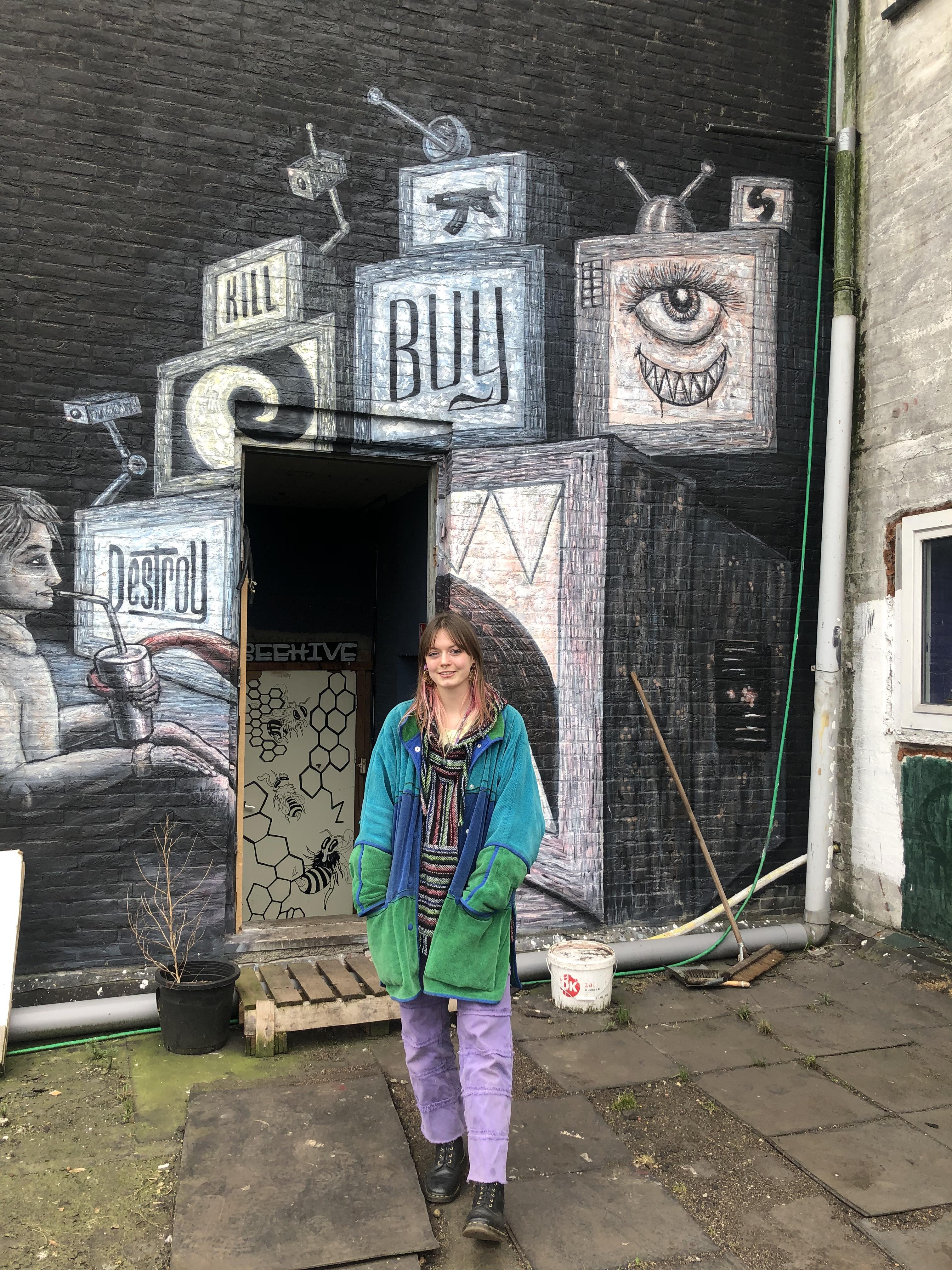 Michelle Armstrong in front of the LBB. Photo: Natalia Rubio
“I was firstly living in Kanne (Belgium), but the rent was quite expensive even there. My dad was supporting me financially as much as he could, but I couldn’t pay the rent and groceries at the same time. In the beginning, I wouldn’t have imagined myself being able to live at a place like the LBB but when my economic situation was critical, I decided to give it a try. The community offers housing to everyone who needs it.”
Diving into the future of the LBB building, Armstrong does not seem very hopeful. “I honestly think that the LBB will not survive. Although there is a large student community that represents one of the major incomes for the city, they still want to destroy a place where students can grow. Furthermore, the Basin area is very fancy and the LBB building just does not fit in the desired image of the municipality. If the LBB goes, Maastricht is going to be a sad place.”
Natalia Rubio and Simon Wirtz