Liesbet Hooghe and Gary Marks
Honorary supervisor Hylke Dijkstra remembers his first ‘meeting’ with Liesbet Hooghe and Gary Marks very well. That was 20 years ago and the current professor at the Faculty of Arts and Social Sciences (FASoS) had just submitted his bachelor’s thesis on European integration to professor Sophie Vanhoonacker. “She said: ‘Great, but it could be stronger on the theoretical side.’” In the University Library – “this was the time before the emergence of search engines such as Google Scholar” – he came across an article by the duo from 1996. “I can still see before me where it was.”
That article touched the core of the work by Marks and Hooghe, he says: “The study of European integration, the authority of states and how the power of decision shifted more and more: it came to be higher – at the European and international level – or lower, at the regional and city level. Because efficient governance is done at different levels: you deal with climate change internationally, while shovelling snow in a city is better left to the municipality.”
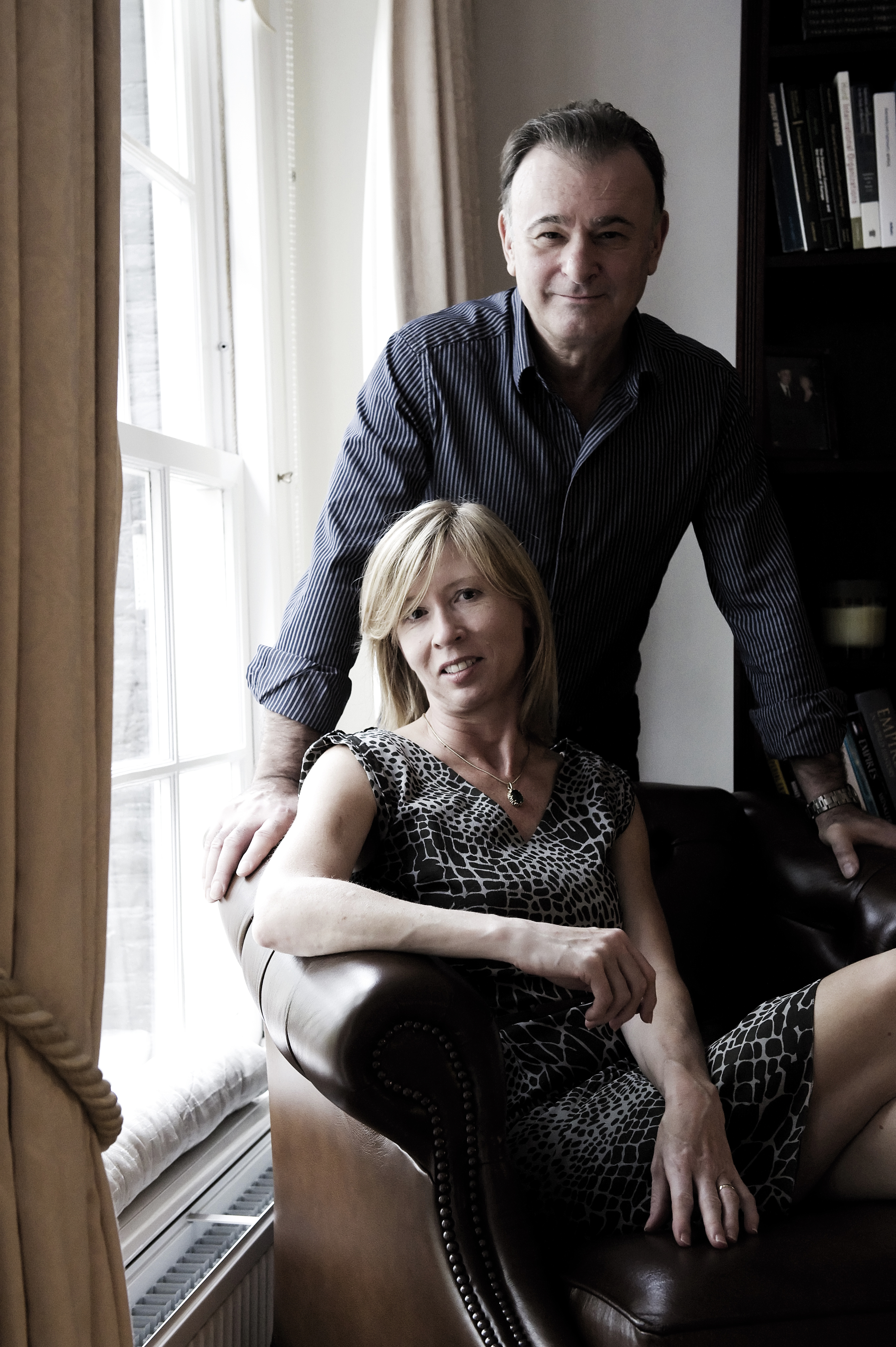 Liesbet Hooghe and Gary Marks
Photo: Arjan Bronkhorst
They coined the term multilevel governance for this, ‘management at various levels’. They also pointed out a potential problem: “Namely, that there could be a conflict between the level at which you manage most efficiently and the degree to which the community is attached to self-rule. People also feel it is important who make decisions about them. This involves questions about identity. The Dutch, for example, identify more with national politicians in The Hague than with European ones in Brussels. With their theory, Liesbet and Gary were miles ahead of the rest in the field at the time.”
The latter also applies to their work about the Maastricht Treaty, which was signed in 1992 and gave European unification a boost. “Before then, Europe was primarily a matter for diplomats and civil servants; after that, it also became a matter for national politics in member states. Liesbet and Gary described in 2009 how politicization put a constraint on European integration.” In 2024, that almost sounds like kicking down an open door, “but they published about this before the huge wave of Euroscepticism and before Brexit. They were there before the rest”.
Hooghe and Marks will receive the honorary doctorate together on Friday. That is special too, says Dijkstra, who will present the award together with Vanhoonacker: “Liesbet and Gary have been publishing almost exclusively together for 30 years: their work is team science avant la lettre.”
Christian Leuz
The Maastricht honorary doctorate for Christian Leuz is a first, says professor of Accounting and honorary supervisor Ann Vanstraelen. She doesn’t say it out loud, but reading between the lines, she seems surprised about the fact that UM is the first university to attribute this honour to the German economist. She feels that his work is “pioneering, theoretically and methodologically strong and innovative,” – and added to that, “very relevant: the impact of it surpasses his field and the academic world. He influences policymakers, advised financial supervisor PCAOB in the US and here in Europe the European Parliament”.
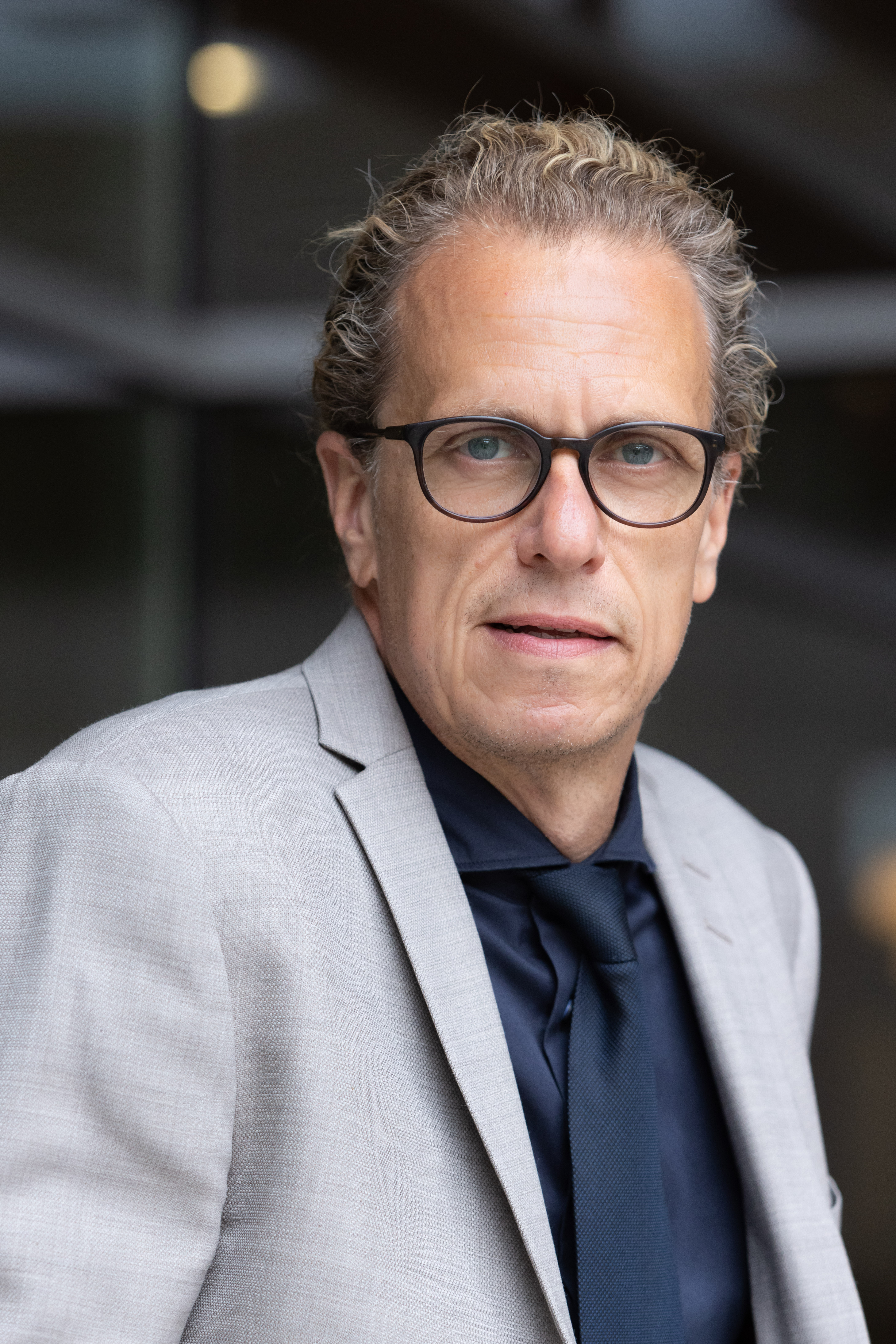 Christian Leuz
Photo: University of Chicago - Anne Ryan
Leuz’ work is about the economic effects of rules and the role of transparency: does it help in any way if we compel businesses to be open about what they do? Leuz showed that in certain circumstances, it does. “The European Union introduced better, more uniform standards for financial reporting in 2005”, says Vanstraelen. “Christian showed that this only works in countries where the rules are enforced and businesses have an incentive to adhere to those rules.”
This may sound technical, but the consequences are very tangible. Vanstraelen refers to the debate in the United States about fracking, an environmentally damaging way of extracting oil and gas from stone. “Christian mapped out the detrimental rises of salt levels in the water, and in 2021 published about it in the natural science journal Science. The American government did not want to prohibit fracking, but did wonder if compelled disclosure – transparency about the process and the chemicals used – could help to reduce the impact on the environment. In a follow-up study, Christian showed that this was indeed the case: businesses took the environment more into account the more they felt public pressure.”
Christian Leuz will give the lecture ‘Transparency as a policy tool: Does it work for societal and environmental problems?’ on Friday at 10 a.m. at the School of Business and Economics. Admission is free after registering.