His sudden departure was prompted by the rejection of a course he wanted to develop and teach in the next academic year. In an email to all UCM staff last Monday, he wrote that it wasn’t so much the rejection itself (“It happens”) as the way it happened. He feels unheard; there has been no discussion between him and his 'opponents'. In fact, Boon hasn’t been officially informed of the reasons why his course was deemed unsuitable. After piecing together information from the Education Programme Committee (EPC) and the Curriculum Committee, he can only conclude that the rejection was politically motivated. “This shows that UCM has become a closed academic community, and I refuse to be part of a caricature of academia.”
Social justice
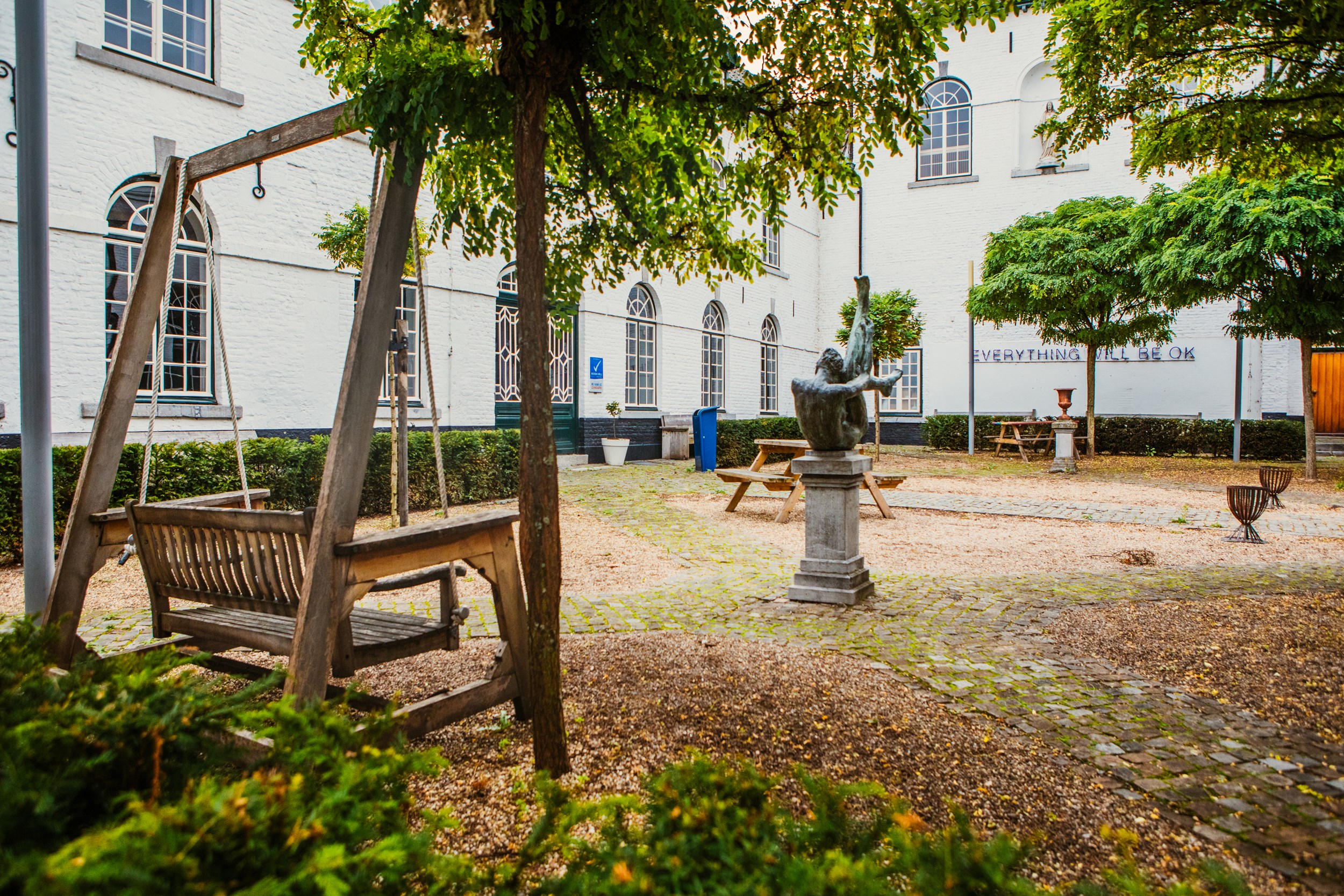 UCM building and garden
The proposed course centred on various theories of social justice. “In the past ten to fifteen years, notions of justice and injustice have increasingly been viewed in terms of groups or identities, whether it’s about slavery, gender, skin colour or anything else”, he explains to Observant. “Groups that fall under these categories are suffering specific inequities. The focus has become to affirm group identity, and to seek social justice through recognition of the claims of a group. Universal equality of all humans as basis for social justice has shifted to equity for groups that experience or have experienced oppression. They fight for compensation for past injustices. How can you compensate a group of people for past injustices? By giving them money, for example. Will this change society? Will it ultimately make society better and therefore more socially just? No, not in any fundamental way.”
Drawbacks
“So, there are drawbacks to this approach, and that’s what I wanted to address in this course. Why are all forms of universalism – where norms apply to all – rejected? Think of socialism, which aims for a more just society for all. Or the human rights project, promoting equality for all groups. If you abandon general principles, everyone will end up in their own tribe and groups will quickly begin to oppose each other.
“This emphasis on groups or identities leads to a situation where you’re only allowed to be critical if you’re part of the group. If you’re an outsider, you have no right to speak, and if you express criticism anyway, you’re automatically in the wrong. In this view, you’re not allowed to talk about racism as a white person, because you’re the oppressor and you’re only out to oppress. These theories discourage discussion between groups; arguments no longer matter and are quickly labelled microaggressions.”
Chocolate incident
The danger of these views, argues Boon, is that “they leave no room for nuance. Take the chocolate incident at UCM last December. Everyone received a cup with chocolate figures, including Zwarte Piet figures. It didn’t go over well with everyone. UCM management issued an apology, stating they didn’t mean to offend anyone. Non-academic staff called the apology excessive – it was just a mistake. I agreed with them. People should be able to tolerate these kinds of mistakes instead of immediately condemning others. Tolerance appears to be in short supply.”
Unimpressed
He’s unimpressed with the reasons why his course proposal was rejected. “There were concerns about whether the course would present a balanced view. But the course description included various group-based and universalist theories to be discussed. How is that unbalanced? And when did diversity of theories become a requirement for UCM courses? I can name seven off the top of my head that aren’t. Will they all be cancelled next year? Or does a course only need to be balanced if its ideas go against UCM orthodoxy – in other words, if you’re critical of group/identity-based perspectives? It was also argued that I should first highlight the positive aspects of these views before perhaps offering some criticism. They seem to assume they’re in the right, which just goes to show that they’re trapped in a bubble of opinions.”
Founding father
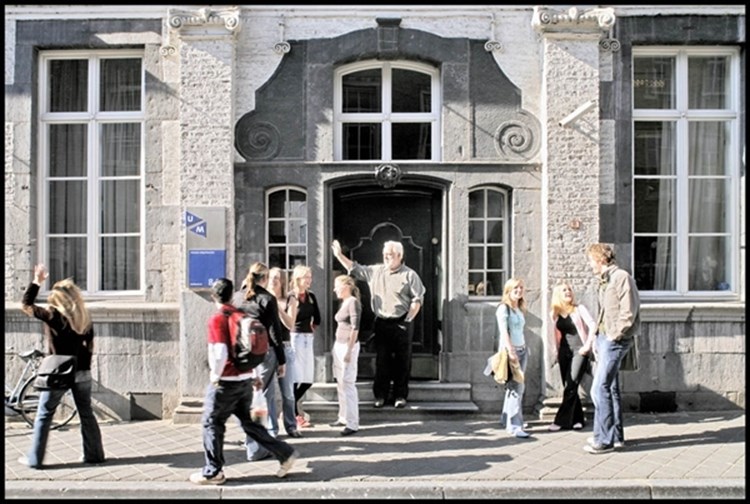 Louis Boon at UCM when he was the dean
Louis Boon (75) is a familiar figure at UM. He played a major role in establishing the Faculty of Health Sciences (now part of the Faculty of Health, Medicine and Life Sciences), the Faculty of Psychology and Neuroscience and the Faculty of Science and Engineering, as well as University College Maastricht, University College Venlo and the Maastricht Science Programme. He had planned to retire from UCM on 1 May 2025, after forty years with the university. “I’ve accomplished everything I set out to accomplish at this institution. I hold a zero-hour appointment, I’m an old emeritus professor. But I’m raising this issue because it’s not just happening within UCM, but also elsewhere in UM. We need to have an open discussion, and if a course proposal is rejected, that decision must be supported with reasons.”