Bos is a hard worker, a policy geek, devoted to Maastricht University, critical, a control freak, dependable, honest, sharp-witted and sometimes a bit blunt. Most of the people Observant spoke to for this retirement interview agreed on these points. But they disagreed on others. Some see Bos as a stoic and distant man, an enigma “who isn’t easily approachable”, while others highlight his “soft side” – his empathy, supportiveness and willingness to go to great lengths for his employees. As his secretary Kolkman explains, “You don’t get to see that soft side straight away, it takes time, and it’s visible only to the inner circle.” Bos returns from the men’s room. “No more than one paragraph on this”, he says. And, later in the interview, “Of course I care about people. I coach a few younger employees, which I enjoy a lot. But I’m not a people manager. I’m here to get work done. My passion is more in achieving concrete goals. That’s what gives me the greatest satisfaction in my work. Obviously, I never do that alone, but always with a team.”
War general
Teamwork was essential during the cyber attack that hit UM on 23 December 2019, the biggest crisis Bos experienced in his twenty-five years at the university. According to an insider, “He took the smallest room in the war room on Grote Looiersgracht. He was like a general, directing everything without getting in the way of his troops. He was there when he was needed. It earned him a lot of respect.” Bos: “If my employees are working on Christmas Day, I’m not going to stay home and sit by the fire.” Without false modesty, he adds, “I’m a good crisis manager. I stay calm, keep a clear overview of the situation, get up to speed quickly and know the university. I can be very efficient in those kinds of situations [the Covid pandemic followed soon after].” But, he reveals, sometimes his composure is a façade. “I can be very restless. My mind never stops. I try to turn worry into positive action by making plans and coming up with solutions, from the moment I wake up.” This is usually around five in the morning. He always starts his day with a walk through the fields near Amstenrade (his birthplace), Brunssum and Bingelrade with his German pointer, Borre. He produces his step tracker: in the last 25 weeks, he averaged 10.1 kilometres per day. While out on his morning walk, he fires off the first few emails and messages of the day. “But I also look around, and make sure Borre doesn’t take off when he’s off leash.”
Proud
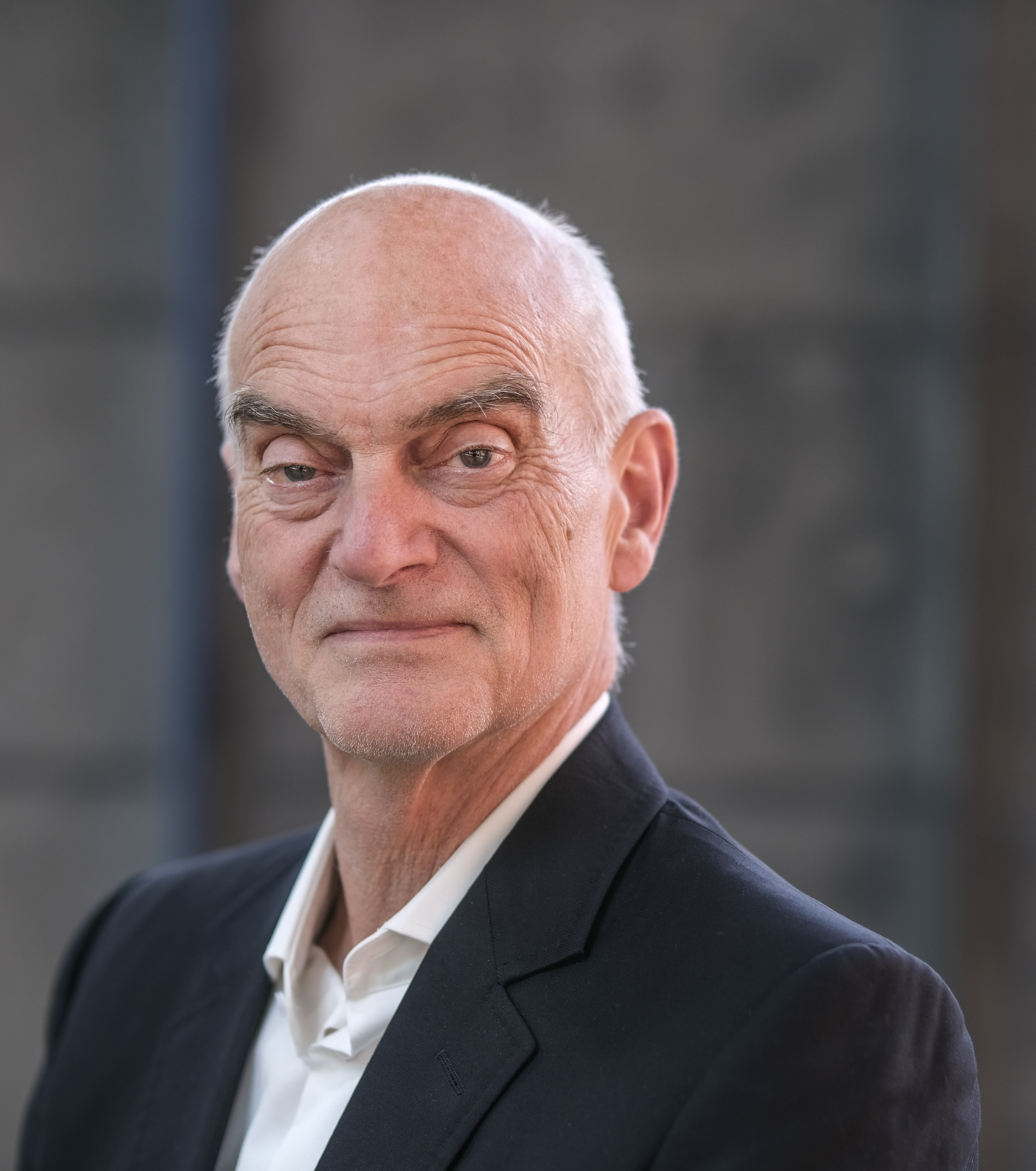
And no, the cyber attack wasn’t the low point of his career. “It was a very intense period. I had to go all out on all fronts – how do I tackle this? Where can I find the necessary knowledge? I had no experience in this area. The fact that we got hacked isn’t something to be proud of. As it turned out, we were very vulnerable. But I feel proud of everything that came after the cyber attack – how we solved it, the sense of solidarity, the loyalty, the dedication of our staff and our transparency afterwards.” The emphasis here is on “afterwards”, two months later. During this time, the university maintained complete radio silence and refused to admit to paying a ransom. The argument was that they didn’t want to tip their hand to the hackers. “We held a press conference in front of a battery of cameras. We were national news. It was stressful – I wasn’t exactly in my comfort zone. I don’t like being the centre of attention. I’m no spearhead or standard-bearer; I gladly leave that to others.” One of these others is his close colleague, Rianne Letschert. When Martin Paul stepped down, leaving the post of president of the Executive Board vacant, Bos immediately said, “Rianne, you should do it.” She’s “much more suitable” for the job, he says. “She’s an incredibly talented leader with an extraordinary human touch. She can create a network out of thin air, build goodwill and has the likeability factor. That’s not something you can learn; you either have it or you don’t.”
Achievements
Nick Bos, who studied history and earned his PhD in Utrecht, came to Maastricht University in 1999 to become director of the Student Services Centre. In 2003 he became general director, before later assuming the position of vice president of the Executive Board on 1 January 2014. At the time, many wondered if he – the embodiment of a policy geek – had what it took to take on the role. He proved that he did, although his tendency to involve himself in the details over the years (“I eventually developed the ability to take a helicopter view”) didn’t always sit well with his employees. They felt restricted, given too little freedom in their work. Bos understands their frustration, but “as a member of the Executive Board, I’m held accountable for everything. Sometimes I need to know the particulars of a case in order to fully understand it. So I’ll ask questions, but not unnecessarily.”
He looks back on his career at UM with a sense of fulfilment. Bos can call himself the founding father of the four Brightlands campuses in Heerlen, Maastricht, Venlo and Sittard-Geleen (see box). During his term as general director, the then Executive Board gave him the opportunity to set up Brightlands (“I’m grateful for that”), which he continued to develop after he became an Executive Board member himself. “I took the lead, built bridges within UM, between UM and the Province of Limburg, between UM and industry, and stuck my neck out. For example, I brought Clemens van Blitterswijk’s tissue engineering research group from Twente to Maastricht. I took a risk – it wasn’t a guaranteed success – and it paid off. MERLN is now a leading research group in regenerative medicine.”
Without Brightlands, the Faculty of Science and Engineering wouldn’t have existed, he explains. “The two have an almost symbiotic relationship. Their combination makes the university stronger and benefits the region both socially and economically. And there’s still a lot of potential left.”
UM has also grown tremendously over the past 25 years, while remaining “financially and economically sound, as well as a pleasant organisation to work for”, says the man who was responsible for finance and operations on the Executive Board. But some say that the university’s growth has come at a price. “The workload”, Bos immediately deduces. The inflow of students has increased workload for both academic and support staff, but the university service centres didn’t see their budgets grow accordingly. “We’re still lagging behind”, they remark. Could anything have been done differently? “I appreciate that it’s been difficult for some of the service centres, but this was the only way”, says Bos. “Everything I did, I did to ensure the continuity of our education and research. That was where the money had to go. Just look at how important FSE is for Brightlands and medical innovation. We’re much better prepared for the future. It’s made us stronger – the service centres, too. But yes, it’s time get them caught up. We’re working on it.”
Blunt
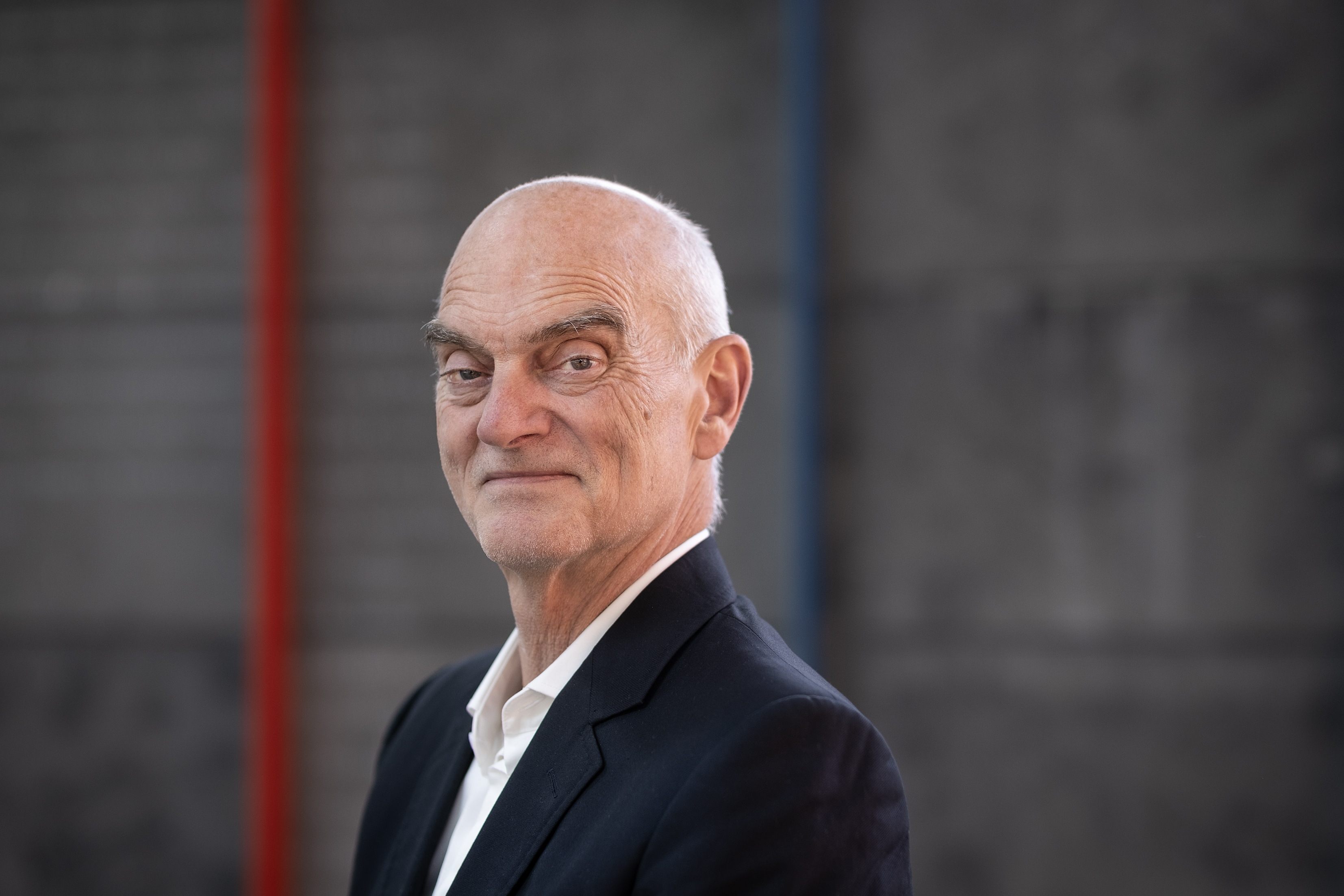
He sets high standards for both himself and his employees. If he’s not satisfied with someone’s work, he can be quite forthright in his criticism; “blunt” is a term often used to describe him, or “angry”. Could he imagine that people are afraid of him? “Afraid? No. I never scold people. I can be blunt, or whatever you want to call it, when I’m disappointed, and demand more of employees, but never more than I demand of myself. I’m focused on end results; I don’t necessarily need things to be done my way. Instead of telling people off, I’d rather take over myself.”
High performers receive praise and freedom in their work, he explains. What about dissenters? “I don’t want yes-men around me. I like to hear other views. I’m the one who ultimately makes the decision, but I like to be well informed. I get enough pushback in the Executive Board and from the administrative side.”
Humour
When asked who he has learnt a lot from, he doesn’t have to think long. He first brings up Louis Boon, who played a major role in establishing the Faculties of Health Sciences and Psychology and University College Maastricht. “It’s very impressive what he has achieved. He showed me how to build things.” Next up is former UM president Jo Ritzen, “a visionary”, says Bos. “He was often one step ahead, but he was the first to say that UM should engage with the surrounding community – the Province of Limburg, DSM, Philips.” Former UM president Martin Paul also makes the list (“a very capable leader”), as does Rianne Letschert, of course. “How could anyone not learn from Rianne?” Former rector magnificus Gerard Mols showed him the importance of humour and the ability to put things into perspective.
Retirement black hole
“I won’t fall into a retirement black hole”, he , who received the Teken van Verdienste van de Stad Maastricht on 6 June for his great services to the university and the city, says firmly. Six months ago, he was less sure. During a chat in the hallway just before a University Council meeting, he admitted that he was feeling a bit apprehensive about his upcoming retirement. And now? “I’ve been fortunate that the Province of Limburg has asked me to stay on as a freelancer at Brightlands two days per week, for two years.” He will be building even stronger connections between the four campuses, looking for opportunities for closer collaboration and finding other potential partners in industry and the public sector. “It’s a new kind of role where I’ll have to convince or persuade parties to work together with us.” To be clear, “I won’t be stepping on my successors’ toes. Both Rianne, Pamela ([Habibovic, rector magnificus] and Jan-Tjitte [Meindersma, Bos’s successor on the Executive Board] will play a role. I helped build Brightlands; it would be a shame to jeopardise that by becoming a backseat driver.”
The joy of work
And it won’t stop there. Bos is still on several boards, leading the board of Museum van Bommel van Dam in Venlo (he’s an art enthusiast). “I’ll have more time for that now. And I have lots of other stuff going on, I’m being asked for all kinds of things. I’ll take my time to think them over.” He will be working fewer hours, though. “Those 80-hour working weeks everyone keeps talking about, that’s nonsense. You’d have to work at least eleven hours per day, seven days per week. It’s practically impossible.” But he’ll continue to work. Why? “I enjoy it.”