What struck Gijsbert Vonk most about the childcare benefits scandal were the harrowing testimonies of its victims, he tells Observant in an interview. Their feelings of anguish, shame, injustice, exclusion, powerlessness, worthlessness. Vonk was a member of the advisory group assisting the parliamentary committee of inquiry into Fraud Policy and Public Service. Between 2004 and 2019, thousands of families in the Netherlands – often single mothers from migrant backgrounds – were wrongly accused of fraud, forced to repay large sums and driven even deeper into debt as their healthcare and housing benefits were cut off as well. How could this happen? Vonk: “The government concentrated all power in its own hands. It used every means at its disposal to combat fraud, when these people hadn’t committed fraud at all. If you made a tiny mistake, you were treated like the worst of criminals.”
All-powerful machine
Vonk, who has long been a professor of social security law at the University of Groningen, delivered his inaugural lecture at Maastricht University on Wednesday 25 September. He will be working at the UM Faculty of Law one day per week. As he pointed out in his lecture, the Netherlands isn’t the only country to have recently faced a social security scandal. Take Australia’s Robodebt scheme, in which nearly half a million welfare recipients were wrongly issued debt notices due to a flawed algorithm. Or the Norwegian NAV-scandal, where European migrants who were entitled to benefits were unlawfully hit with severe penalties or even prison sentences for failing to meet certain social security requirements that turned out to be in conflict with the European Economic Area regulations.
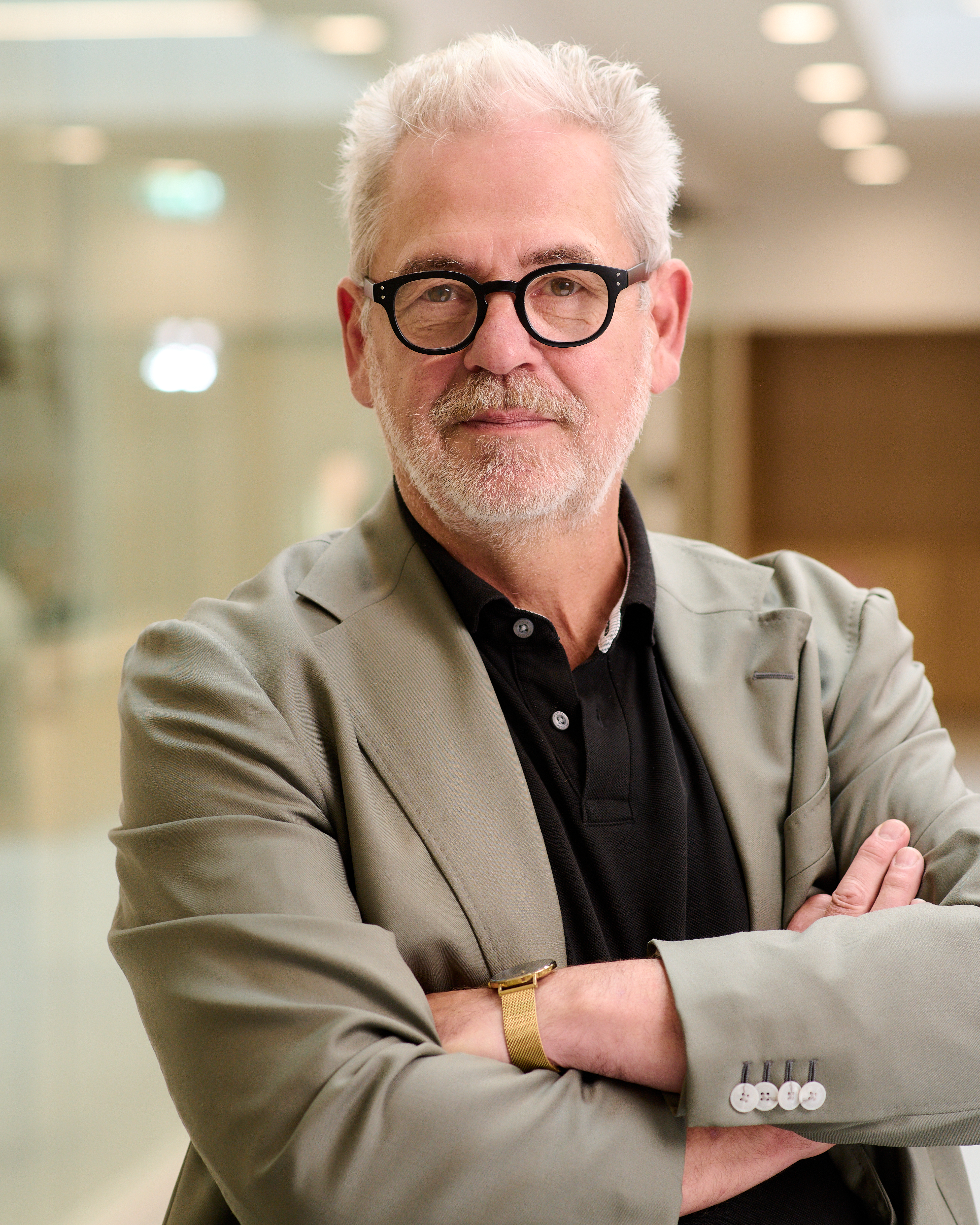 Gijsbert Vonk
Vonk: “I wondered if ‘welfare state dystopia’ was too strong a term, but looking at this string of disasters, it’s undeniable. These aren’t isolated incidents; they point to structural deficiencies. By the way, I’m not the first to use the term ‘dystopia’ in this context.” Several years ago, a UN special rapporteur on extreme poverty and human rights warned of the emerging digital welfare state, where the poorest citizens are “crushed” by data and technology. “People are at the mercy of an all-powerful machine. Look at the British Post Office scandal, dramatised in Mr Bates vs The Post Office, in which Post Office branch managers were falsely accused of fraud and theft due to a faulty accounting system.” But, Vonk argues, faulty computer systems aren’t always to blame. “The roots of this dystopia run much deeper. In the Norwegian scandal, unlawful legislation was at the heart of the problem.”
The poorest in society
The Netherlands Institute for Social Research (SCP), Vonk continues, “does good research analysing the country’s social classes every few years. While most groups are quite close together in terms of economic, cultural and social capital, there’s a significant gap below the middle class. At the bottom is what we call the ‘precariat’ – the unemployed, the unhoused, people with little socio-economic security. Just above that are the working poor, often in temporary jobs in logistics or abattoirs.”
The phrase “the human dimension” comes up in the interview. The government expects citizens to be self-reliant and have their documents in order, but this can be challenging for people who may lack the intellectual capacity to understand complex issues, have low literacy levels or are overwhelmed by stress, poverty or illness. “The Scientific Council for Government Policy reached the same conclusion in its report Why Knowing What to Do Is Not Enough. The government must recognise that the most disadvantaged need additional support. Don’t ignore them. When making policy and drafting and implementing legislation, always keep in mind, ‘How will this affect the poorest in society?’ That’s not an optional step. My argument is that the government has an obligation to ask itself this question, based on the constitutional right to social security.”
The key
We must also move away from a quid pro quo mentality, he says. “Make the system less repressive. To qualify for unemployment or disability benefits you have to meet certain requirements, such as compulsory participation in a reintegration programme. But if you have a falling-out with your case manager, or are late for an appointment for any reason, you’re immediately hit with severe penalties. Does this actually help people? No.”
Finally, he addresses “the toughest and most complex of all problems”: citizen participation. “We get to vote in general elections once every four years. But in our all-powerful welfare state, voting alone isn’t enough. The most vulnerable must be involved in policy development and implementation.” But how do you engage them? “Whoever knows the answer to that question holds the key.”
Omtzigt
Do the new government’s plans offer hope? After all, the Nieuw Sociaal Contract (NSC) party is part of the coalition, and it was NSC leader Pieter Omtzigt who played a key role in exposing the childcare benefits scandal. He also advocates for better governance and greater socio-economic security. “Well, yes and no. No, because the right-wing populist PVV party brings us closer to this dystopia. They want social security only for the ‘chosen ones’, not for ‘foreigners’ or those who think differently. Yes, because this has jolted other parties into action, pushing to strengthen the rule of law. That’s good.” One final question about the childcare benefits scandal: could it happen again? Vonk isn’t optimistic. “It could easily happen again – that’s what the parliamentary committee of inquiry concluded. We as citizens must remain vigilant, to borrow a term from former Minister of Justice Ernst Hirsch Ballin.”