A brand-new faculty with a teaching method never before used in economics education in the Netherlands – all in all, studying Economics in Maastricht in the 1980s was “quite an adventure”, says Folkert Jager (58). One he eagerly embarked upon in September 1984. “I had already visited Tilburg and Utrecht, but Problem-Based Learning (PBL) won me over. Two tutorials per week and independent study suited me perfectly.”
"We kept having to explain to tutors that they weren't supposed to give lectures"
 Harry Hol
Harry Hol (60) also considered other options first. “I wanted to study business economics in Rotterdam until I came across a newspaper job advertisement for a professor at the new faculty in Maastricht. The small-scale setup described in the advert caught my interest. In Rotterdam, I’d be one of 1,700 first-year students; in Maastricht, one of only a hundred. Instead of overcrowded lectures, we’d have small PBL groups. That appealed to me, so I took the leap. Doubts? [Laughs] Not until later that first year, when we found out there wasn’t even a second-year curriculum yet. Or when six-week courses wrapped up in just three weeks, while others could’ve done with twelve.”
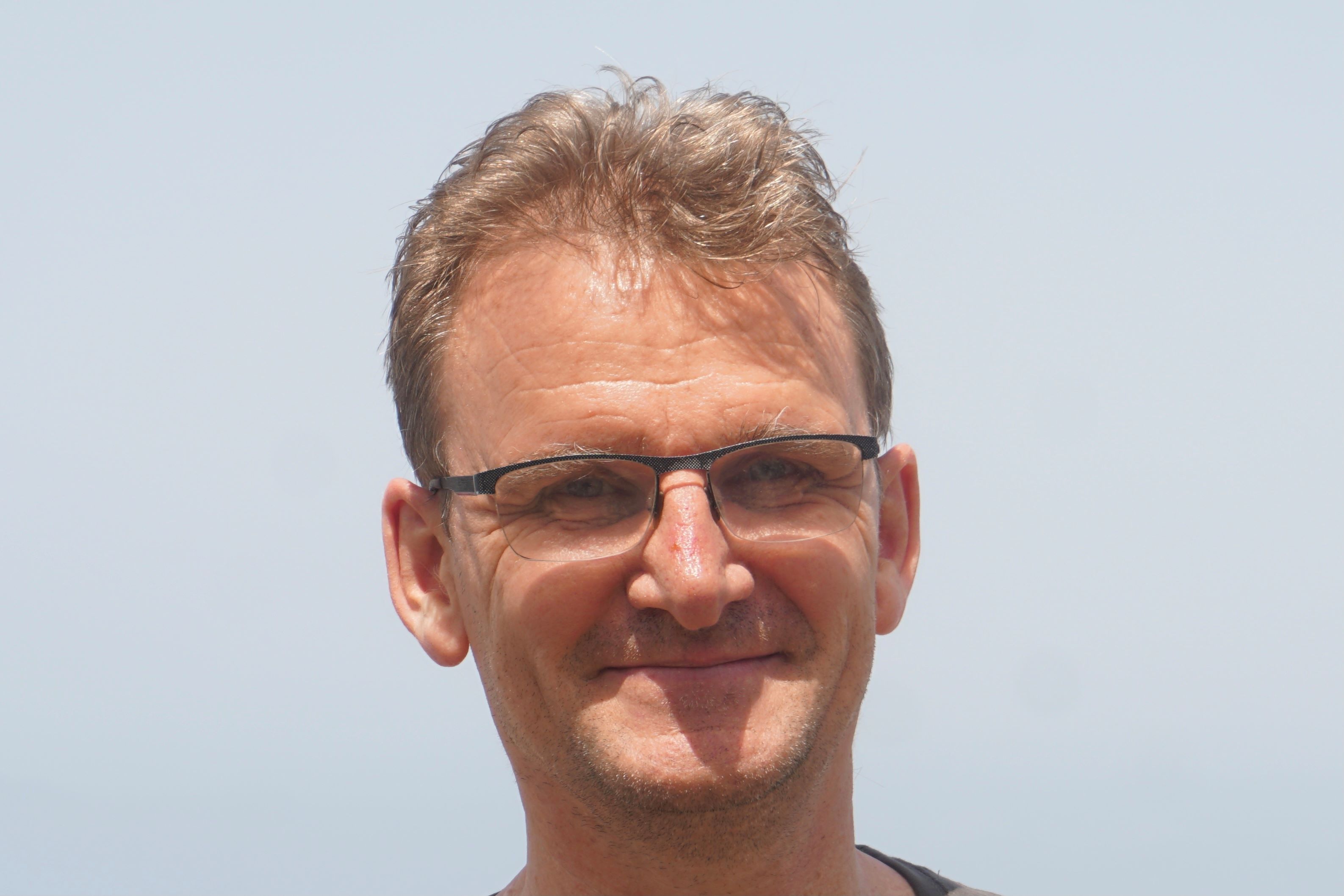 Folkert Jager
Both staff and students had to adapt, Jager recalls. “That first year was all about experimentation. We kept having to explain to tutors that they weren’t supposed to give lectures during tutorials… They knew how it worked in theory, but in practice, everyone was still finding their way. I remember two students who hadn’t realised we wouldn’t have any lectures at all and showed up unprepared for the first tutorial. We were pioneers.”
But the small scale and occasional chaos also offered opportunities, they explain. “If you wanted, you could get involved in developing new course modules”, says Hol. “In the fourth year, Professor of Finance Paul van Loon took us to ABN Bank to discuss financial markets with a board member there. That was only possible because we were such a small group. And everything was very informal. We were on much more familiar terms with our professors than was common at the time.”
"Our professor called London: 'I've got some good students for you'"
“Anything was possible”, laughs Jager. “Internships at local companies like DSM? Just make a few calls and everyone had a placement.” Jager himself spent a year at the prestigious London School of Economics. Speaking of informal, “We got in because one of our professors called LSE and said, ‘I’ve got some good students for you.’ It never would’ve happened otherwise.”
Both men look back fondly on their time in Maastricht and have gone on to have successful careers in business, working for large companies and as consultants. Did the teaching method at UM prepare them for working life? “In my early working years, I really benefited from PBL”, says Hol. “Colleagues who’d studied elsewhere had more immediate knowledge, but they tended to focus on one area when it came to solving problems. Business economics problems have many facets, and PBL taught me to recognise and address them all.”