No, she admits, Maastricht wasn’t her first choice. It was far away from her home in Leiden, where “there were five medical faculties around the corner”. But she ended up there anyway. Rijssenbeek had been rejected from studying medicine three times and was studying history in Leiden when she received a letter on 10 September 1974. She could start the programme in Maastricht, provided that she responded quickly – it was set to begin just six days later. “My mother gave me the final nudge, reminding me that I’d always wanted to become a doctor. [Laughs] The classic reason: I wanted to help people.” She made the decision in one day, “after which I stuffed a mattress, a suitcase of clothes and a bike into a Tin Snail and drove south. I could stay with my brother, who studied at the Jan van Eyck Academy. When he later moved in with his girlfriend, I took over his room.”
"I stuffed a mattress, a suitcase of clothes and a bike into a Tin Snail and drove south"
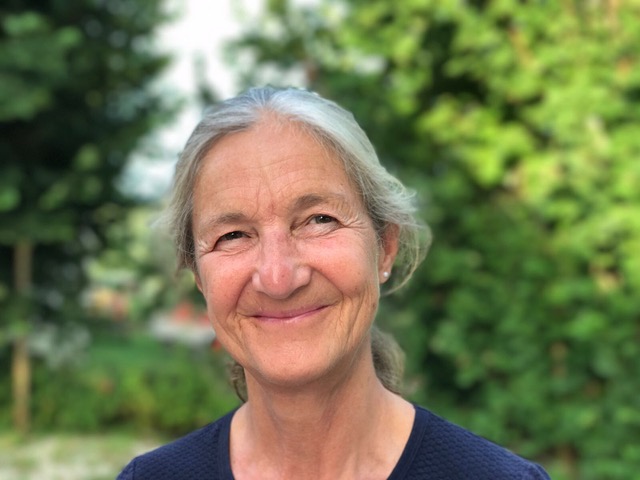 Lous Rijssenbeek-Nouwens (own archive)
The faculty espoused a new teaching method, Problem-Based Learning (PBL), which turned out to involve quite a bit of improvisation at first. “We were figuring it out as we went along”, she recalls of the first few tutorials. “That was true for the faculty itself as well. During the first course period, they were still designing the curriculum for the second. I did struggle with that a bit – I thought, what have I gotten myself into? Give us some lectures first instead of leaving us to figure everything out ourselves.” Looking back, she’s glad that didn’t happen. “Delving into issues and seeing things in context became second nature. That’s what PBL taught me, and it has taken me far.” It led her to a career as a pulmonologist, to be precise, which ultimately took her to the Dutch Asthma Centre in Davos, Switzerland. In 2015, she earned a PhD from the University of Amsterdam for her research on why people with severe asthma respond better to treatment at high altitude than in the Netherlands. She currently works for C-support, a Dutch foundation supporting people with long Covid symptoms.
"I do understand why they viewed us with some suspicion elsewhere in the country"
Rijssenbeek praises the informal nature of the programme. The small number of students and staff knew each other well. “We were on familiar terms with each other; the hierarchy typical of other universities and teaching hospitals didn’t exist here. It shaped me as a person. I still talk to people without hesitation, regardless of their status or position, which was not something that came naturally to me.”
Students were also able to help shape the curriculum, she says. “We were eager to do so. There was a spirit of ‘let’s make this succeed together’. We knew the faculty had to fight for its survival; the dean was very open to us about that. I do understand why they viewed us with some suspicion elsewhere in the country. We were a new offshoot declaring that we were going to do everything differently and better than the rest. But today, aspects of PBL are used everywhere. [Professor and PBL advocate] Wynand Wijnen was proved right in the end.”