“There’s no link between your vote and what happens next in the councils”

“There’s no link between your vote and what happens next in the councils”

Why no one cares about the university elections: a three-part analysis

19-05-2025 · Analysis

The democratic backbone of this university – staff and student participation through representative bodies – is under strain. It has been for years, but it’s especially painful now, at a time when democratic systems everywhere are under pressure. This three-part analysis by Observant identifies the biggest problems facing the University Council and the faculty councils. The third and final part will look at possible solutions – and whether they would work. This time: no one knows what the councils actually do.

How many students and staff are even aware that the university elections are taking place from Monday 19 May? And how many can say what the various councils have discussed over the past year? For a large part of the UM community, it seems like a distant concern – and that’s hardly surprising. Even for those who are interested, it’s practically impossible to find out what’s on the council agendas, or when and where meetings are held. First, you have to track down the relevant page on the UM website. Most faculty and service councils don’t even publish their meeting schedules, let alone their agendas. Sure, everything is available on iBabs, an online meeting portal, but let’s be honest – that’s for the truly persistent. (Quick note: this series doesn’t cover the service councils, as no outsiders are present at their meetings.)

Minutes no one can find

This is the heart of the matter. Call it a lack of awareness, clarity, access or visibility – it all amounts to the same problem. “What issues are on the table? What are they discussing?” This information isn’t being clearly communicated, noted one academic staff member of the Faculty of Arts and Social Sciences (FASoS) in 2023, when Observant asked the UM community to respond to several statements in the run-up to that year’s university elections. “That inevitably leads to less engagement”, he concluded. A second-year bachelor’s student of Law agreed: “A lot of students think it’s unimportant or irrelevant to them.” This is due to the lack of visibility, he said. “Minutes are hard to find, and you don’t hear much from council members themselves. There’s no link between your vote and what happens next in the councils.”

“There should be stricter rules about keeping things confidential or not"

Even if you do manage to track down the minutes, they’re often quite limited, as pointed out in Observant last year by a staff member of the Faculty of Health, Medicine and Life Sciences (FHML). “There should be stricter rules about keeping things confidential or not. Right now, chairs or councils can keep a lot hidden from public view. The published minutes give a very limited picture of what’s really going on.”

No clear idea

And the lack of clarity runs deep. It turns out that even candidates standing for election don’t always have a clear idea of what council members actually do. “At the start of my term, I kept hearing, ‘That’s not up to the council; we don’t decide that here.’ It took me several months to figure out how it all works”, said a student representative on the Law Faculty Council last year. For example, some of the decisions students would like to be involved in are actually up to the programme committees or boards of examiners.
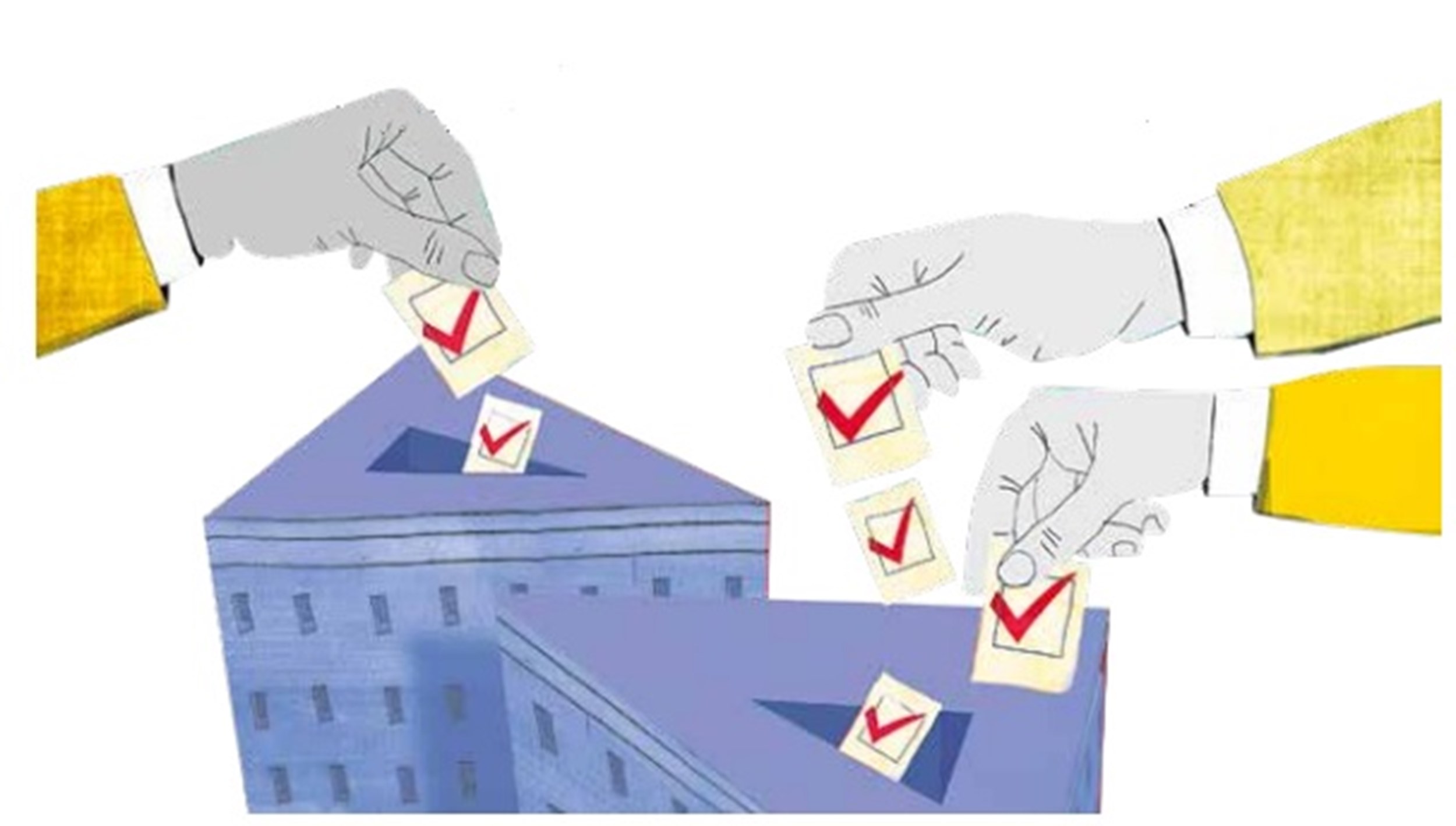
Illustration: Simone Golob

This lack of awareness of what the role entails can have serious consequences. It’s reportedly the reason why the student party NovUM failed to fill either of the two seats it won on the FASoS Faculty Council last year. One student switched parties; the other resigned his seat. The party hadn’t had enough time to guide candidates that year, NovUM chair Olga Kosjakova explained to Observant, adding, “We’ve learnt our lesson.”

Complex issues

Let’s take a little detour. While this isn’t directly related to the lack of accessibility or visibility, the complexity of the issues themselves can be a major barrier for student representatives in particular. Students are elected for one-year terms, while staff serve for two years. Despite the training available for council members, one year is often not enough to get a firm grasp of complex issues like university funding, quality agreements, digitalisation, research infrastructure (scanners, microscopes, ETpathfinder, etc.) and people strategy (HR). What’s more, these issues tend to be quite boring, dry and technical.

“I just kept wondering: what does it mean when we do this?"

Two years ago, several student members of the University Council abstained from voting on the university budget because they felt unqualified to make an informed decision. “I just kept wondering: what does it mean when we do this? Does spending money here mean cutting back elsewhere? Are we spending more on this than we did last year? I wanted more context – like how this compares to spending at other universities – and more concrete examples”, one of them said afterwards.

No time

The lack of awareness of what the role entails, combined with the complexity of the issues, can discourage not just students but also staff from standing for election. But staff face an even more significant obstacle: a lack of time. Many councils don’t even hold elections for academic and support staff – they’re just relieved to have enough candidates come forward. “We simply don’t have time for anything outside of our core responsibilities”, said one member of the University Council in a previous interview with Observant. “Everyone’s too busy with their own work”, another added.

“Why do people have so little interest in joining the Faculty Council?”

The same people tend to keep serving term after term, which causes frustration. “Why do people have so little interest in joining the Faculty Council?” asked Huub Mudde – the current chair of the School of Business and Economics (SBE) Faculty Council, who is once again standing for election – in this year’s election paper. Just like two years ago, there are only five candidates to fill six staff seats on the SBE Faculty Council. “Are you just fine with the way things are? Or are you too overwhelmed with work to take this on?”

Low voter turnout

Lack of time is also an issue for students, though to a lesser extent. Moreover, a lot of students simply don’t read their emails, complaining to Observant about receiving too much communication from the university and their faculties. And while there are always plenty of student candidates, this still translates into low voter turnout. Many students miss the call to vote, contributing to persistently low turnout rates.

Wendy Degens and Cleo Freriks

Why this analysis?

It’s hardly news that no one at Maastricht University seems to care about the university elections. Staff are uninterested in standing for election; they don’t have the time, don’t get enough support from their managers, or just don’t see the point because they don’t think they can make a difference. Professors usually find other ways to influence university policy. Voter turnout is also consistently low, especially among students. In 2022, just 15.6 per cent of UM students voted; turnout rose to 20 per cent in 2023, only to fall again in 2024 to 17 per cent. One small bright spot: turnout within individual faculties tends to be a bit higher, occasionally peaking at 26 per cent. So, what’s going wrong? By analysing articles from the Observant archive and drawing on years of attending council meetings, we’ve identified the structural problems explored in this series.

Author: Redactie

Illustration: Bas van der Schot

Tags: university elections 2025,elections,university council,faculty council,participation,council members

Responses

Maja

It's the lack of transparency on what is going on in the faculty/university councils. There's little to no promotion of the parties themselves and student postulates sound repetitive every year. In addition, I'd like to point out that most promises that students make before the election don't get fulfilled. It would be nice to be able to join the council without having to be a member of any of the parties, which, looking at the elected students and their parties seems unrealistic anyway

Roberto Cruz Martinez

**SPOILER ALERT: IT'S THE SYSTEM**

Why does no one care about the university elections? Why does no one know what the councils actually do? Why are candidates and active voters so scarce? A three-part analysis is nice and welcome, because answering those questions is no simple task. This first part alone already inspired me to share my conclusion.

Spoiler alert: it's the system.

To be specific, it is the Dutch participation system in Higher Education, which is to blame. It is democratic, but how much? Let's not forget, it is there by law: see articles 9.31 to 9.35 (University Council) and articles 9.37 and 9.38 (faculty councils) of the 'Wet op het hoger onderwijs en wetenschappelijk onderzoek' [https://wetten.overheid.nl/jci1.3:c:BWBR0005682&hoofdstuk=9&titeldeel=2¶graaf=1&z=2025-01-01&g=2025-01-01]

Is the law flawed, or is it its implementation?

Before continuing, a disclaimer: I am not an expert in the subject of Dutch law. I have experienced just enough of its implementation in this area to fully agree with this article (and all of its cited pieces). My experience comes even from another Dutch university (UTwente), yet it was all still recognisable. Same challenges here and there.

Now to the point:

The 'democratic backbone' of this and all Dutch universities is there by design, 'set in stone' in Dutch law. Or is it? If one compares the law with current practices, one might realise that there are 'hits' and 'misses' in terms of how things are transferred from paper to reality. According to the (DeepL-translated) law, article 9.32, paragraph 3: 'The Council promotes openness, publicity and mutual consultation in the university to the best of its ability.' As signaled by the article above, this is arguably a dissonance between law and practice, depending on how you interpret 'mutual consultation' ('onderling overleg') or 'best of its ability' ('bevordert naar vermogen'). Do the hard-to-find minutes and lack of clarity in the councils' roles entail a lack of compliance with the law? I think, probably not. It is my experience that councils do strive, to the best of their ability and in some form of mutual consultation, for openness and clarity. The law/system seems to work here, or not?

Let's do another one. Article 9.32, paragraph 9: 'The Executive Board shall ensure to the Council that the members of the Council are not disadvantaged in their position with regard to the University by virtue of their membership.' Again, forgive the automatic translation, but 'disadvantaged' ('benadeeld') in what sense? For in my experience, as signaled by the article above, the lack of time (i.e., high workload, work pressure) and complexity of issues (including decision-making processes) put all council members in a disadvantage. Are the Executive Boards of all Dutch universities not complying with the law here? I think again, probably not, although I miss the 'to the best of their ability' in this part.

Did you already get the point? No? Well, I gave it my best, but I can try again.

• Which article and paragraph allows some key matters to be decided by the whole community? For instance, as voted in a referendum, a democratic tool that could potentially promote active participation.
• Which article and paragraph allows the community to vote out members of the Executive Board and/or the University Council? For instance, in a recall election, which is just another type of referendum.
• Which article and paragraph commits the Government to permanently fund the maintenance of a national, openly accessible, and user friendly system where all Dutch academics can transparently browse the decisions of all and any Dutch university? This could potentially reduce the burden, by standardising the transparency of participatory bodies.
• Which article and paragraph allows Dutch universities to fairly reform the law that rules their own participatory bodies, in a way that fits their priorities and interests? This, to avoid that we all remain tied to the current system, and its explicit and implicit consequences.

It's the system. It seems we can deviate it from it, but perhaps we must strive to change it.

I wonder what others think. Please, if you read this and know better, correct me where I am wrong, clarify where I was unclear, and add up where I did not elaborate.

Add Response

Click here for our privacy statement.

Since January 2022, Observant only publishes comments of people whose name is known to the editors.