“I hope to get to know myself better this coming year”
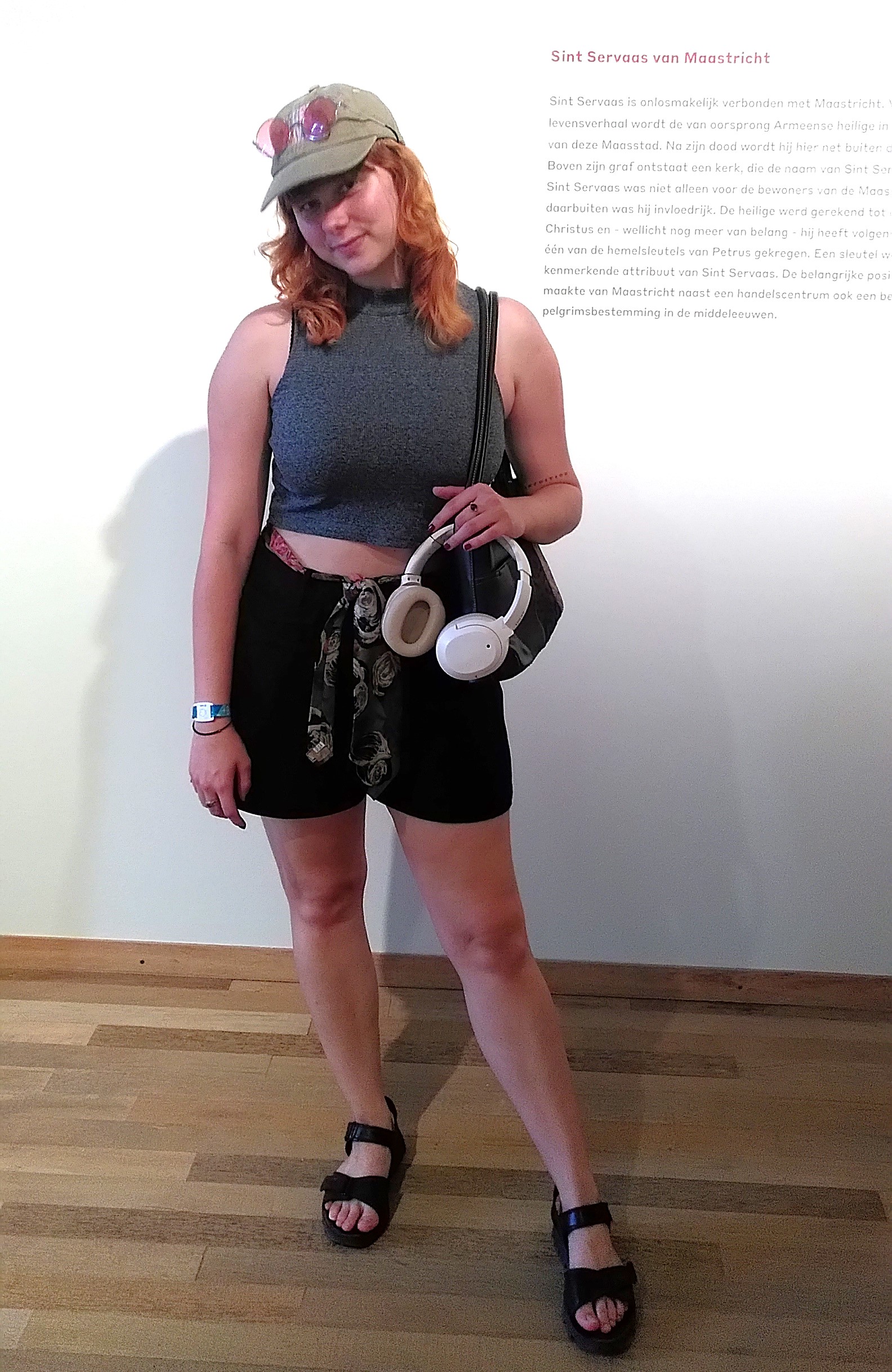 Kinga Szczembara
No, she won’t be going to the MECC party tonight, says Polish Kinga Szczembara on Tuesday evening at the Bonnefanten Museum, where the cultural event Live at the Museum is taking place. “I’ve been out and about since eight this morning.” So far, she really likes INKOM (the introduction week), but also finds it “intense, I can't imagine a greater variety of activities.” Her group is a bit too large – more than twenty people – to do everything together, “but I talk to different members at each activity. I hope to know everyone better by the end of the week. It’s nice to make friends outside of my own program too.”
A city where there’s a lot to do for students, that was also her first impression of Maastricht when she visited this past May. “Very lively, that really drew me in. Of course I want to study hard, but I also want to have a full student life – the whole experience.” Szczembara was here in the spring to look for a room. She’s since found one. “Right near the Belgian border, in a house with six others. It’s a bit of a walk – 40 minutes to the city centre – but it’s doable. And I want to buy a bike. It’s a nice place, there’s a meadow with lambs next to us, really cute.”
What does she hope the coming year will bring her? “I’m going to study Global Studies, but that was quite a spontaneous decision. For years I wanted to study psychology, until I became more aware of everything going on in the world. Then I decided I wanted to help bring about change in a broader way. Maybe I’ll go into politics or diplomacy. I hope I’ll get to know myself better this year and discover what I want to do in the future.”
The biggest difference compared to her life so far? “How international it is here. Amazing — I love learning new languages and discovering other cultures.”
Cleo Freriks
Too busy to miss home
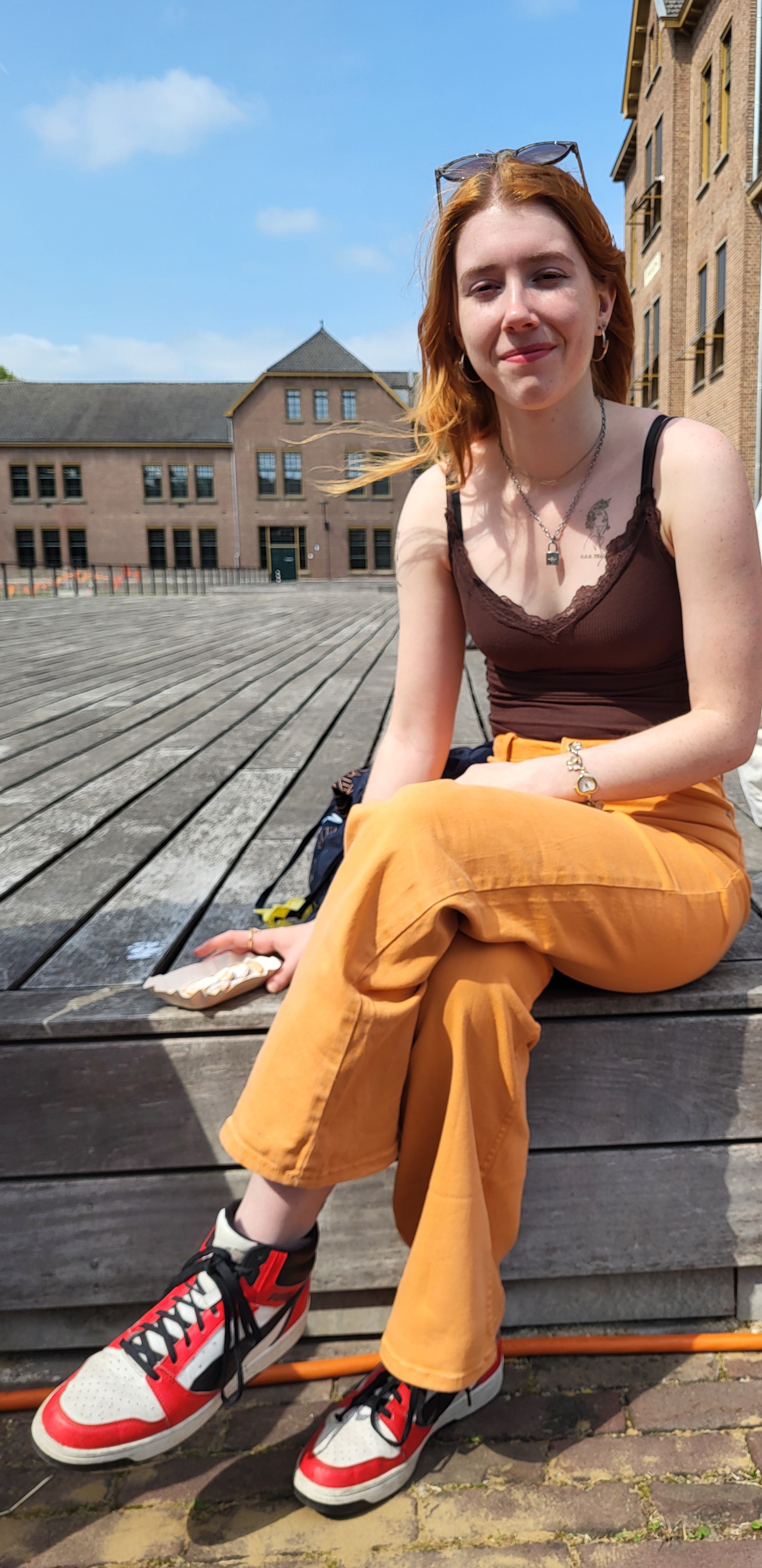 Lianne Vullings
This morning she was still on the phone with her mother, checking in about last night’s party at the MECC – INKOM LIVE. “It was really fun”, came the verdict. Her parents mean a lot to her, but in the past few days she’s been so busy there hasn’t been any time to miss anyone. “We’re really close, I can say anything I want to them. They’ll miss me too. I’m the first of their three kids to leave home.” She’s determined to travel back to her parents’ place in Boxmeer every weekend.
Lianne Vullings (18) is going to study Circular Engineering, a programme offered only in Maastricht, which made the choice of city an easy one. “It’s smaller than I expected, everything’s close together, really nice,” she says. The fact that the program is taught in English doesn’t faze her. “I did Cambridge Proficiency.”
She’s been living in a student house for about a month now. “I met my new housemates over FaceTime. That’s so much nicer than visiting a place with a crowd of other people who all want the same room. It felt like a real conversation, and we immediately clicked.”
Her mentor group has already shrunk quite a bit. Only her neighbour - who joined her on Wednesday afternoon at Dutch Dimensions, a new event where international students get a taste of Dutch culture with short language lessons, traditional games, a chance to ‘milk’ a fake cow, and samples of ranja and stroopwafels—is still around. The two have already become friends. Over the next six months, she hopes to expand her circle even further—and of course, stay on top of her studies.
Riki Janssen
"I've fallen in love with Maastricht"
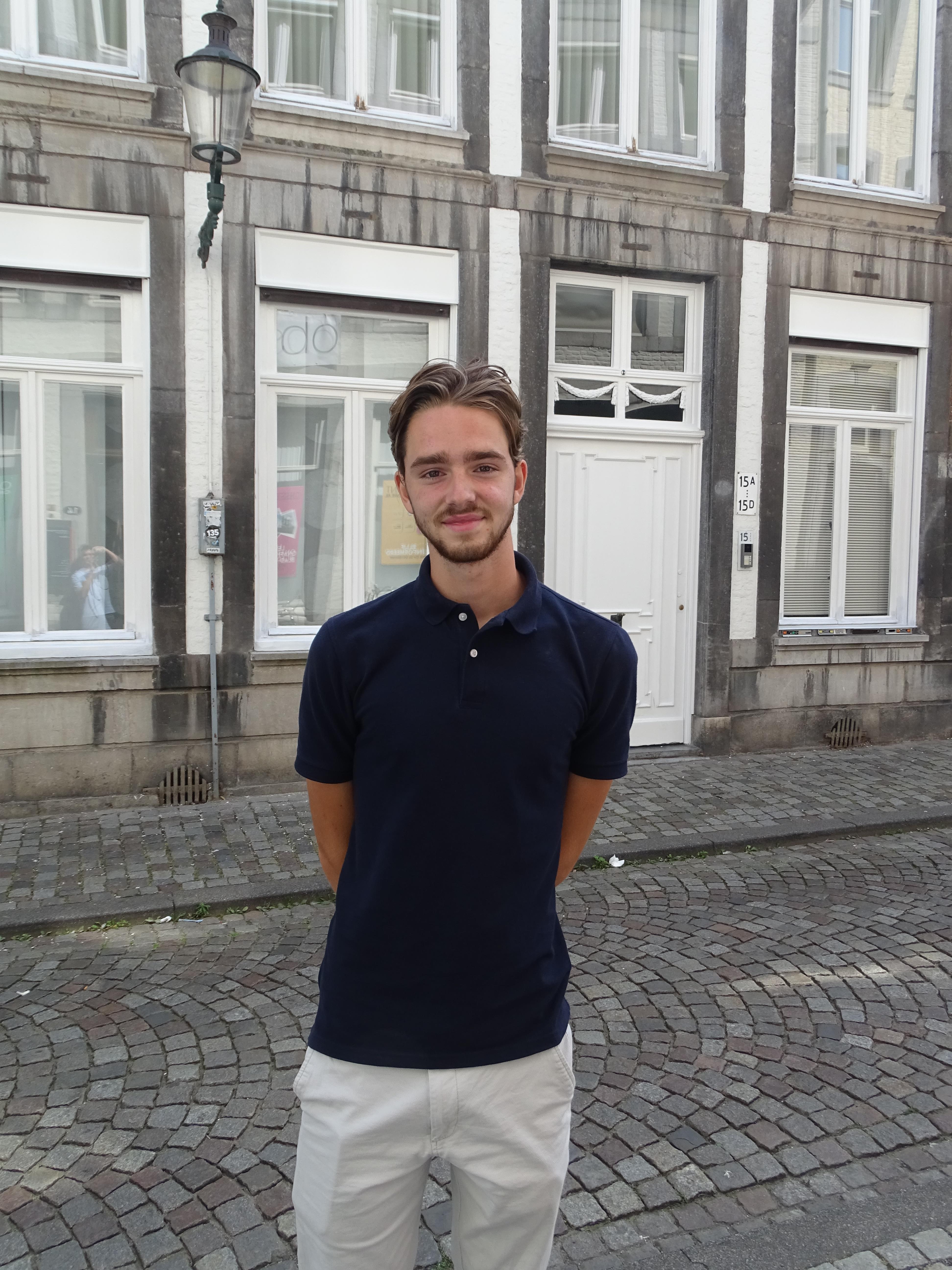
Has he already found a room? “Yes,” says the 18-year-old Twan Hulshof . “Since yesterday, after six months of searching and countless viewings.” He sounds relieved—and with good reason. Commuting from home would soon have become difficult. “I’m from Doetinchem, and that’s quite a distance.”
The brand-new International Business student—“I’m interested in big companies and might even want to start something myself”—had narrowed his options down to Tilburg and Maastricht. In the end, he chose South Limburg. “I already had bilingual education in high school, I wanted to study in English, and this program ranks higher.” On top of that: “Maastricht is a great city, I’ve fallen in love with it.”
And INKOM? “Fun,” he says—though after just one day he switched over to Maasweek, the introduction week for the student associations Circumflex and Tragos. “I met some people from Circumflex. It was really fun, I signed up right away, and I’ve already made a few friends.” Reports of misconduct at some associations haven’t put him off. “That was more to do with the disputen,” he says. Whether he’ll join a dispuut himself, he doesn’t yet know.
Peter Doorakkers
“Hopefully, I can brush up on my Dutch again”
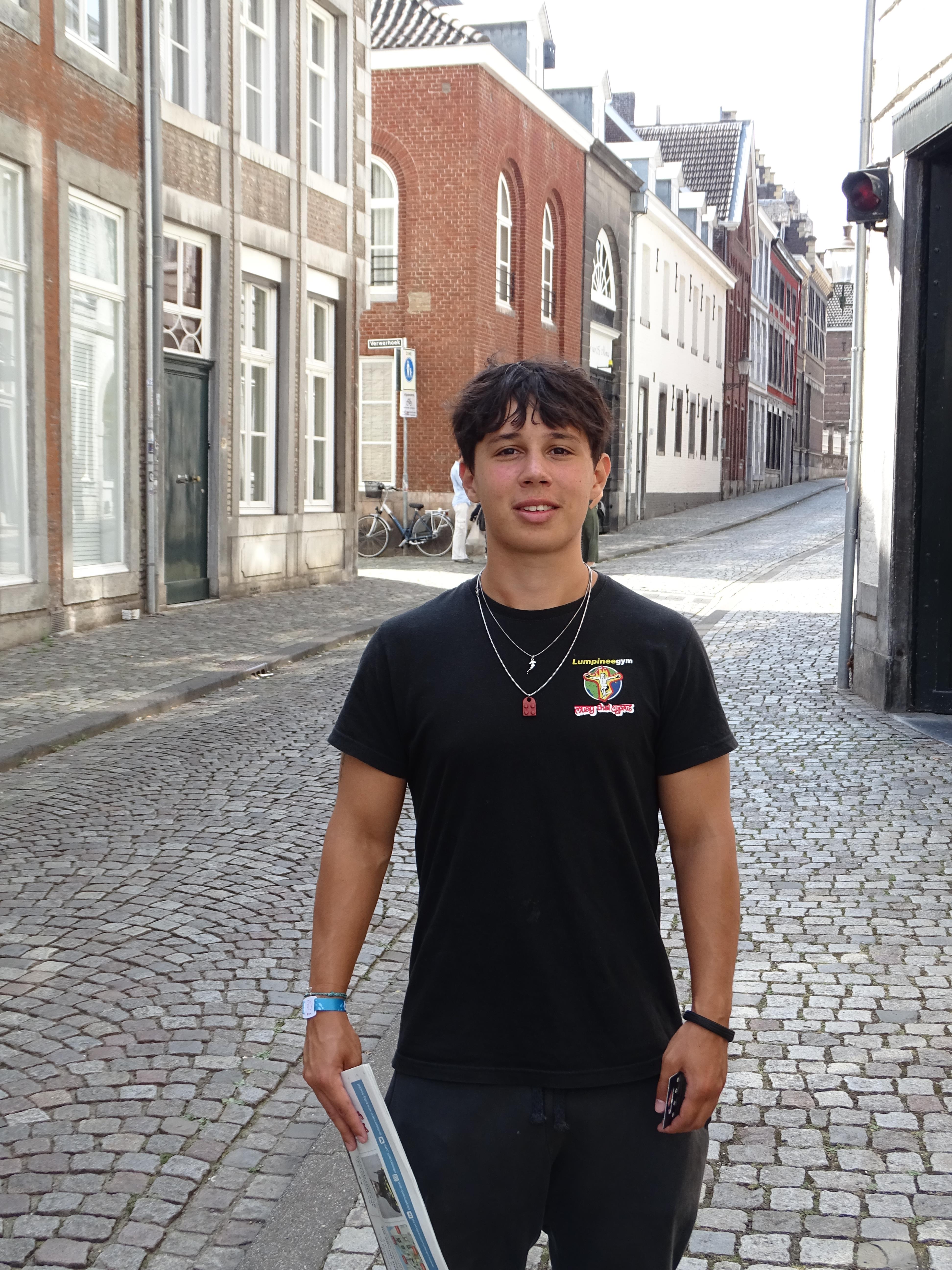 Sören Hens Guatama
No, suddenly meeting people from many different cultures is definitely not something he has to get used to in "super international" Maastricht, says 19-year-old Sören Hens Guatama at the start of the third INKOM day. He has been doing it all his life. His father is Flemish, his mother Colombian, he lived in Mechelen, Belgium, for the first years of his life and then in Vienna for fourteen years, with a three-year stint in Abu Dhabi. “I went to international schools there. They were English-speaking, which meant that my Dutch became a bit rusty. Hopefully, I can brush it up again here.”
Another reason for choosing Maastricht was that it is “small and cosy. That suits me. Vienna also feels very cosy – yes, it's a big city, but not like, say, London.” What's more, his grandparents live nearby, and he was also drawn to the problem-based learning approach of the bachelor's programme he is starting, European Law School. “I enjoy getting started myself more than listening to lectures or reading books for hours on end.”
Making new friends is going smoothly. “On the first INKOM day, it didn't go so well; it was too crowded and overwhelming. But at the quieter events, I've already made several nice connections. There are also five or six people living in Maastricht whom I know from my school and football club in Vienna. Yes, Maastricht is quite popular there.” He also hopes to find a part-time job this year, perhaps as a youth football coach. “I stopped playing football myself, partly because of injuries, and since then I have been coaching young players. I would like to obtain a coaching licence from UEFA.”
Hens Guatama will be commuting from Germany for the foreseeable future. “Finding a room in Maastricht was very difficult. In the end, I decided to take an apartment in Aachen. It's a nice place, I think I'll definitely stay there for the first year. Moving is such a hassle. The commute is quite long – more than an hour – but fortunately, it's affordable thanks to a student discount.”
Dennis Vaendel
No endless lectures and think for yourself
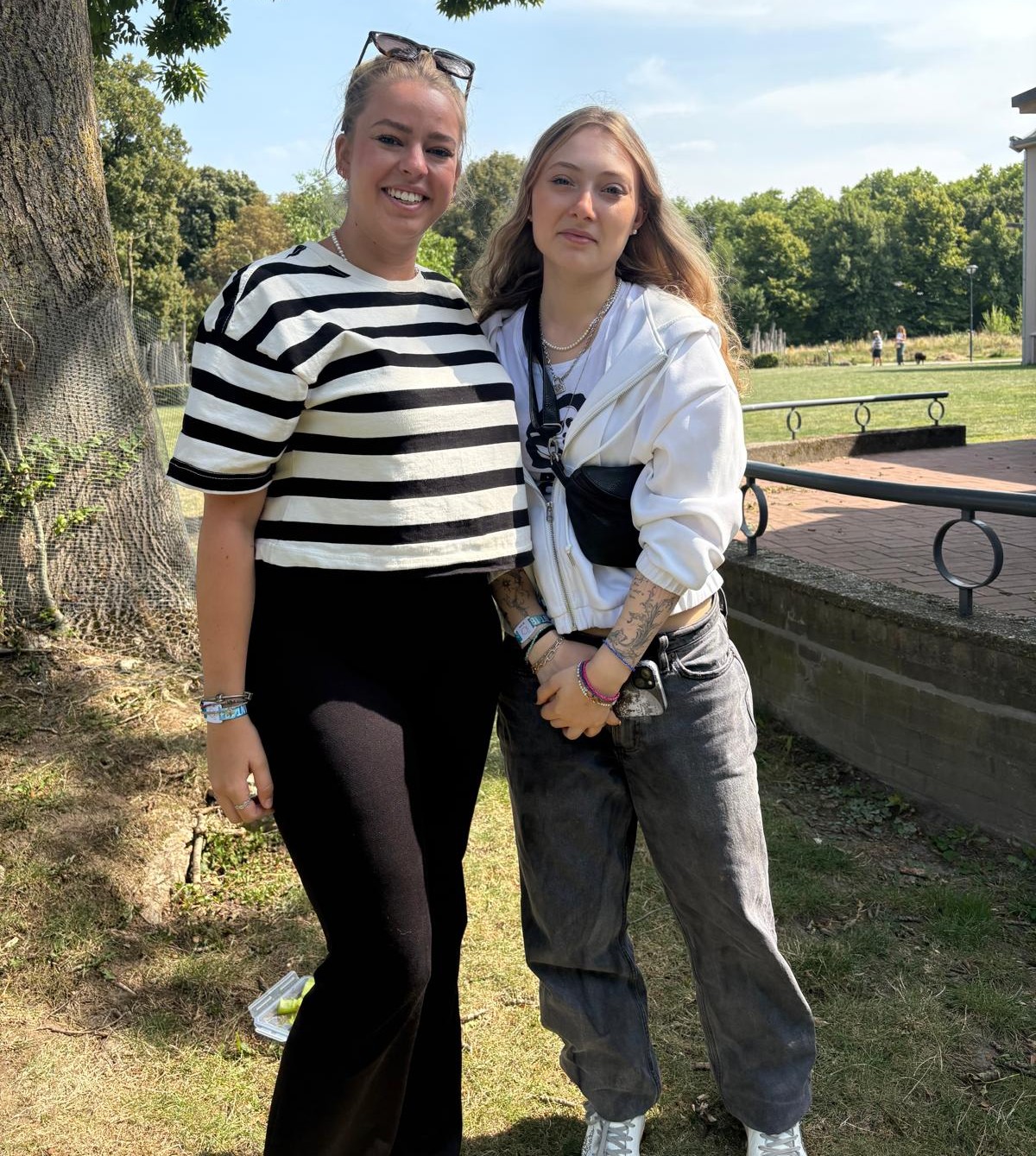 Lottie Bauer (l) and Caroline Gronholz
What’s their goal for the coming year? "Passing all our exams." The answer comes quickly and in unison on Wednesday afternoon from German friends Lottie Bauer (20) and Caroline Gronholz (19). They’ve taken a short break before heading over to the Tapijnkazerne, where the student sports clubs are showcasing themselves. Bauer is thinking about joining the cheerleading squad; Gronholz isn’t sure yet.
The two already know the city pretty well — “we’re from Aachen, so Maastricht has always been close by” — and they managed to find housing in time. “I can only move into my place on September 1st, so I’m staying with Lottie until then,” says Gronholz. This week, they’re trying to experience and explore as much as they can. “We skipped the big party at the MECC on Tuesday night, but we’re definitely going to a social event on Thursday.”
So far, they’re enjoying INKOM, as well as the university itself. “We like the way things are done in Maastricht — we think problem-based learning really suits us.”
Bauer and Gronholz are critical of German universities, which they say don’t leave much room for individual input. “You sit through endless lectures, learn what the professor tells you to learn, repeat it in the exam — and that’s it. You don’t really learn to think for yourself.”
Bauer expects things to be quite different in her Global Studies program, where more initiative is expected. “I even had to write a motivation letter to apply — that was pretty intense. I made a case for equal access to education.”
Gronholz had an easier time getting into her Arts and Culture program — she didn’t have to submit any work or application materials. “I think hardly anyone wants to study that,” she says with a laugh. “The nice thing about this program is that it gives me lots of options — I don’t have to lock myself into a specific subject. If you study medicine, then you’re stuck with medicine. I like having more flexibility.”
That freedom is also why Bauer chose Global Studies. “My family started a social organization in Namibia. I lived there for a few months, and even as a kid, I knew I wanted to do something in diplomacy. Issues like racism, equality, and education really matter to me.”
Deborah Blekkenhorst