Surely, most refugee students at Maastricht are Syrian or Ukrainian, right? No, laughed Luc den Akker, central contact for refugees at UM. The largest group, 27 students, actually fled from Turkey. “A country that also supplies ordinary students,” he acknowledged. “Most Turkish refugee students therefore prefer not to advertise their refugee status. They’re afraid of the long arm of President Erdogan.”
For 25-year-old Burak Demirci, who has just started his Master’s in Labor and Organizational Psychology, this is not the case. Yes, he is careful about sharing his story – “I don’t want people to judge me as a refugee” – but he will respond to anyone who asks: “I have nothing to hide.” He came to the Netherlands in 2023 to join his father. He has since also been joined by his mother, brother and sister. “My family was in trouble with the government,” he explained, in a tone that suggests understatement.
"If I had stayed in Turkey, I would likely have been arrested as well"
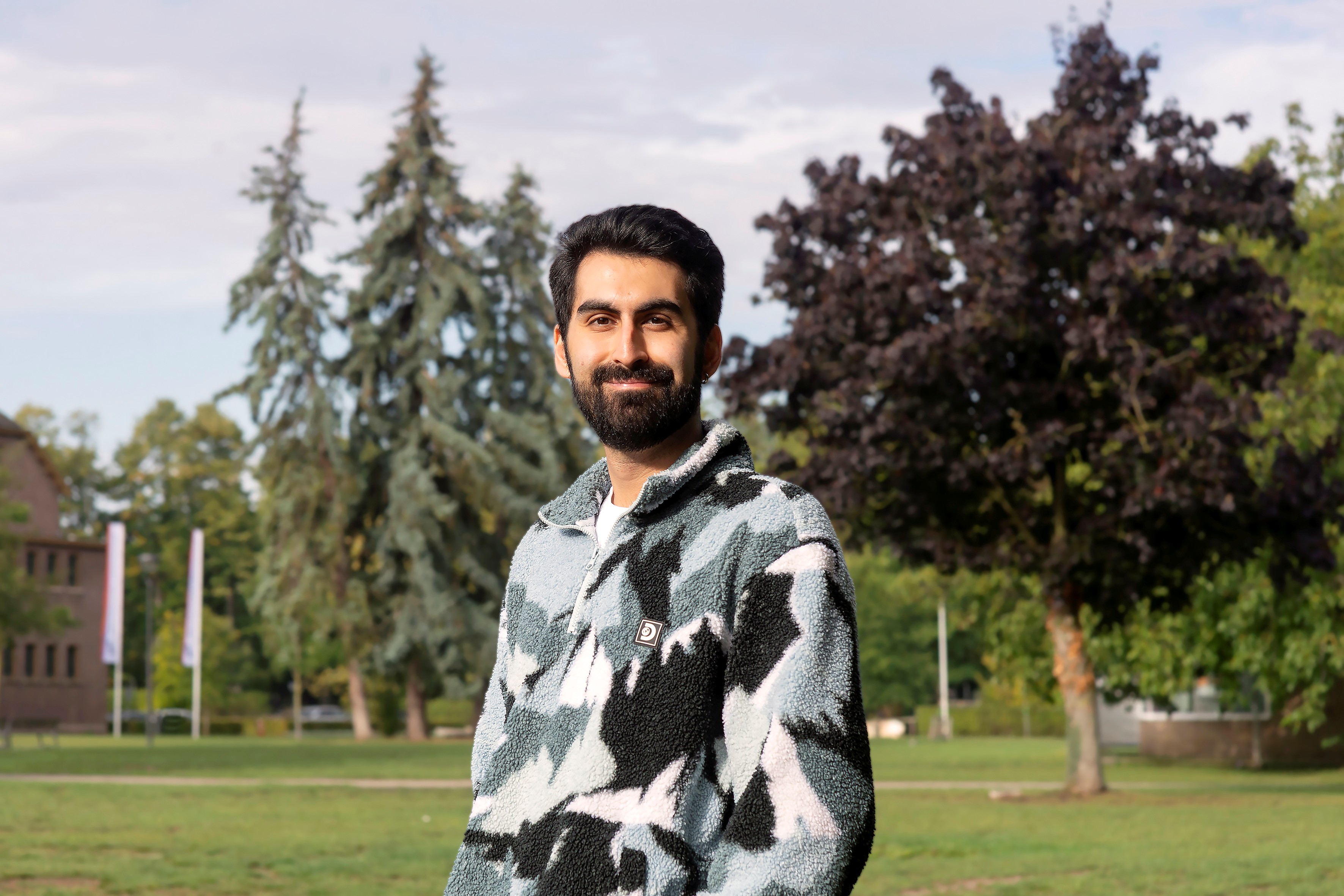 Burak Demirci
His parents are followers of Fethullah Gülen, the Muslim cleric who was accused by Erdogan of organising the failed coup in 2016. That was never proven; nevertheless, the lives of ‘Gülenists’ have been much harder as a result. “My parents were labelled terrorists and they both lost their jobs as teachers. My father did nothing wrong, but was in prison for nine months and sentenced to a further nine years once he was released.” Personally, Demirci is not a follower of Gülen, but he also experienced hostility. “They labelled me a ‘terrorist’, too, and if I had stayed, I would likely have been arrested as well. I also stood no chance of finding employment in Turkey. There is no future there for me and my family.”
Instead, he is forging one in the Netherlands. In Maastricht, where he was drawn to the international nature of the university and the “broad scope of the Master’s”, and in the hope that he can help refugees down the line. “They have to find a job here, but that isn’t always possible. Sometimes, people who were academics in their own country have to work in a factory instead, that’s quite a change. I want to set up programmes that would help ease the transition to a life here.”
Tuition fees
Demirci is glad of the help that UM offers him. After all, Turkey is not part of the European Economic Area (EEA), which means that students from there have to pay institutional tuition fees. Depending on the programme, that can cost up to 25 thousand euros a year. “I could never have afforded that,” he said. “But when I indicated that I was a refugee, it turned out I was eligible for lower fees.” Van den Akker explains that is government policy: the university receives funding for students with recognised refugee status, which means they pay the same tuition fees as students from the EEA (2601 euros in this academic year). “I was also allowed to follow the pre-academic training for free [a programme that teaches new students about problem-based learning],” said Demirci, “and Luc helped me find accommodation in Maastricht.”
"If I had told them back home that I am gay, I think they would have killed me"
Motaz Daw is also grateful. Originally from Libya, he has only been in the Netherlands since December 2024. Although his asylum application is still ongoing, he started his Bachelor’s in Computer Science on 1 September. He was forced to abandon his degree in Information Technology at the University of Tripoli because of the civil war that ravaged his homeland until 2020. “I am 28 now and I don’t want to wait anymore,” he said in a coffee bar at the Faculty of Science and Engineering – he had just finished his first study groups.
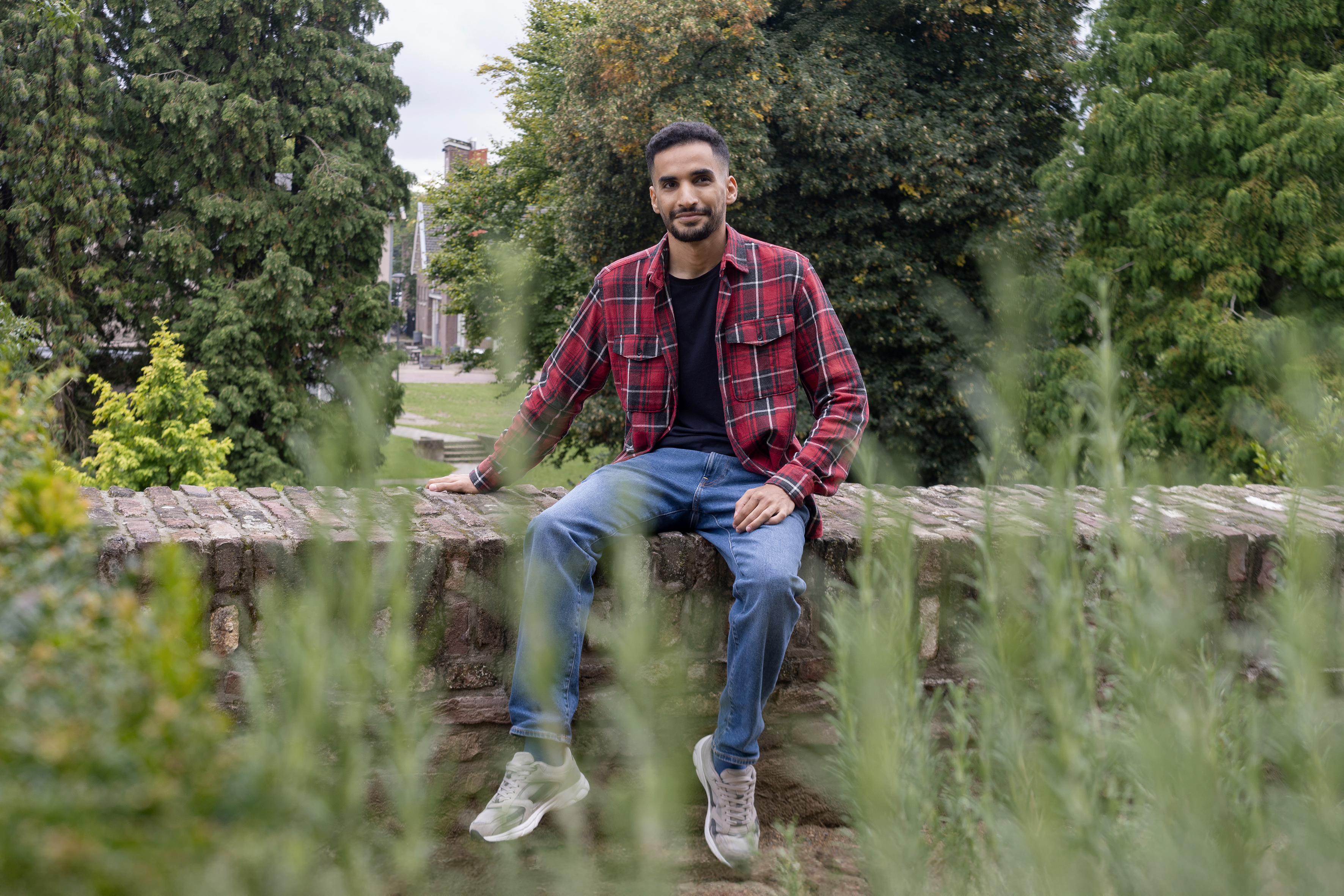 Motaz Daw
Daw was also awarded a scholarship to participate in the pre-academic training. According to the law, people such as Daw, whose asylum applications are still being processed, should be paying institutional tuition fees, but UM has opted for a concession for these students: they also pay the lower fees. And that’s a good thing, said Daw with a sigh of relief, as even finding enough money just for the lower fee was hard enough. Without refugee status, he is unable to apply for student loans, “and my application for a grant from the [student refugee fund] UAF was rejected because my Dutch isn’t good enough yet. In the end, I was able to raise enough money for my first year through a crowdfunding campaign on GoFundMe – I am able to study thanks to friends and friends of friends.”
Relieved
Daw said his main reason to flee was his own family. “In my family, children were physically and mentally abused. On top of that, I am gay and my whole life, I have had to hide who I am. If I had told them back home, I think they would have killed me. When I left for the Netherlands, I simply told them that I was going there for an internship. I was relieved once I was finally in the aeroplane. After I landed, it did take a few days to truly appreciate that I was in the Netherlands.”
While he does feel safe at the asylum centre in Maastricht, where he is staying in the section for LGBTQIA+ people, Daw is not yet entirely at ease. “I have nightmares that members of my family are looking for me, and loud noises, the sudden slam of a door, for example, make me jump. It takes time for things like that to change and I am getting help for that, too. There is always a chance that they will reject my application, which increases the stress even more.” Same-sex relationships are criminalized in Libya, with penalties of up to five years in prison, while armed militias target LGBTQIA+ people. “ISIS in Libya has even carried out public executions of men accused of homosexuality”, Daw added.
Being able to study is a blessing, he said quietly, it helps to forget his troubles for a while. “It keeps me going, it’s a lifeline, because everything else isn’t so good right now.”