Disastrous plans
The most recent battle, of course, was the lobbying effort to stop the government from going ahead with its disastrous plans to limit the internationalisation and increased use of English in Dutch higher education. Disastrous for UM, that is. Having fewer international students and mainly Dutch-taught degree programmes would be a death blow to this university, UM President Rianne Letschert warned anyone who would listen. She even argued in Observant that the whole region would take an economic hit, “bakers, restaurants and cinemas” included. Together with local politicians and industry, Letschert lobbied tirelessly over the past few years, practically wearing out the carpet at both the Ministry of Education and the House of Representatives (“Yes, you could put it that way…” she says now). And it worked: Maastricht will get an exemption, as long as nothing goes wrong while the law is being finalised.
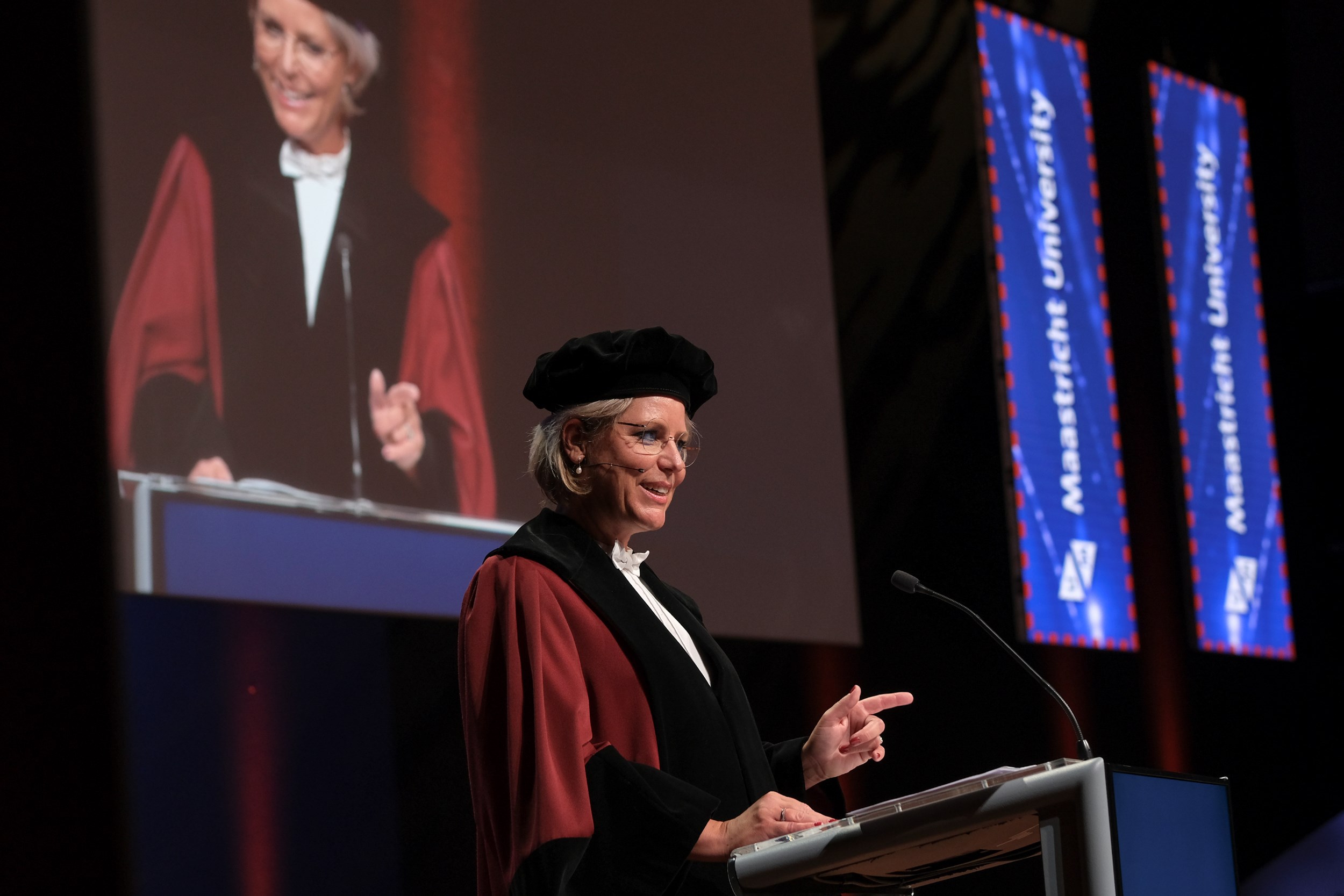 President Rianne Letschert at Opening Academic Year
Letschert’s efforts on behalf of UM have placed her in a long line of activist university presidents, stretching all the way back to Sjeng Tans – the man widely regarded as the university’s founder. His successors have been just as willing to stand their ground for the institution.
Controversial from the start
In the 1960s, the Dutch population was growing, more doctors would be needed, and the country’s seven medical programmes were increasingly popular and at capacity. In short, the Netherlands needed an eighth medical faculty. Where, though? Maastricht put up its hand: after the forced closure of its coal mines, South Limburg could do with a boost. On top of that, too few pupils from Limburg were going on to university, and everyone knows that universities mainly attract students from their surrounding regions. It only made sense for the eighth medical faculty to be established in Maastricht and grow into a full university. At least that was the view in Limburg.
But there was strong competition from Brabant and Twente, which pointed to their objective advantages: they already had higher education institutions (Tilburg University and Eindhoven University of Technology and the University of Twente, respectively), so they wouldn’t need to set up a brand-new institution complete with an academic hospital. This was also why Maastricht’s candidacy was opposed by key government advisory bodies and civil servants in the Ministry of Education. The House of Representatives was divided, even within the large Labour Party. But its education specialist managed to win the party over, and in 1969, the cabinet finally opted for Maastricht. Cue celebrations in Vrijthof Square, and the great bell of the Basilica of Saint Servatius tolling in triumph.
The Labour Party’s education specialist was Maastricht native Sjeng Tans, who would become the university’s first president. He was a fighter – and he had to jump straight back into the ring, because in the years that followed, doubt crept in. Population growth was less than anticipated, and some argued that the seven existing medical faculties could cope in the long run. Would the cabinet’s decision stand? When the ministers involved kept delaying the necessary concrete steps, the future started looking uncertain again.
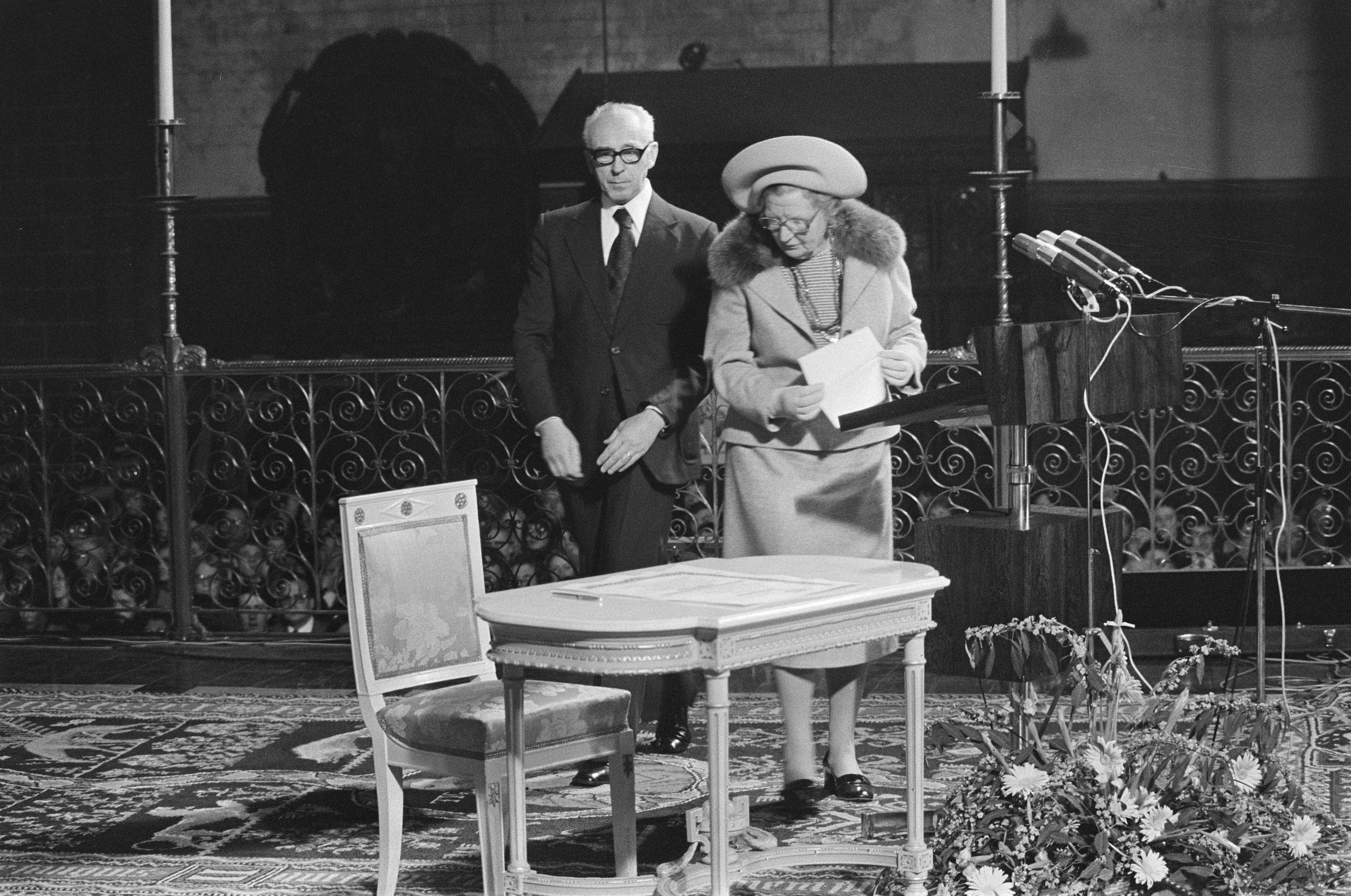 Sjeng Tans, first president of the Rijksuniversiteit Limburg (now UM) and queen Juliana at the formal start of the university
Something innovative
But the people behind the idea weren’t easily put off. The setup of the new medical faculty was still fairly traditional; what if they made it something unique instead? Something innovative – an experimental, “problem-based” educational system? And what if they trained a new kind of doctor, with an emphasis on primary care and general practice, and more focus on the social aspects of illness and health? This new direction became known as the university’s Basic Philosophy.
Amazingly, Maastricht got the go-ahead. But everything had taken so long that it was 1973 by then. Tans, who knew all too well that nothing is guaranteed in politics, realised that the decision needed to be made irreversible as soon as possible. So they needed students, and fast. After all, who would dare turn away a bunch of enthusiastic young doctors-to-be? That’s exactly why fifty “course participants” – they weren’t officially allowed to be called students yet – arrived in September 1974. That first cohort (and the second one too) was brave and confident, at least as feisty as the institution’s founders. They would make their voices heard.
A hospital, really?
Take the heated discussions about whether they needed an academic hospital. Today, the question seems absurd – a medical faculty comes complete with an academic hospital, doesn’t it? That was certainly the view of the people who had been recruited from other universities to form the core team here in Maastricht. Among them were surgeon Co Greep and other professors, all of whom wanted to get a proper faculty and hospital up and running as soon as possible – if only to ensure its long-term survival in a political climate increasingly focused on budget cuts around 1980. That was the threat hanging over the brand-new institution well into the 1980s: closure to relieve the national education budget. It was clear that something had to be built, and fast – something nobody could ignore.
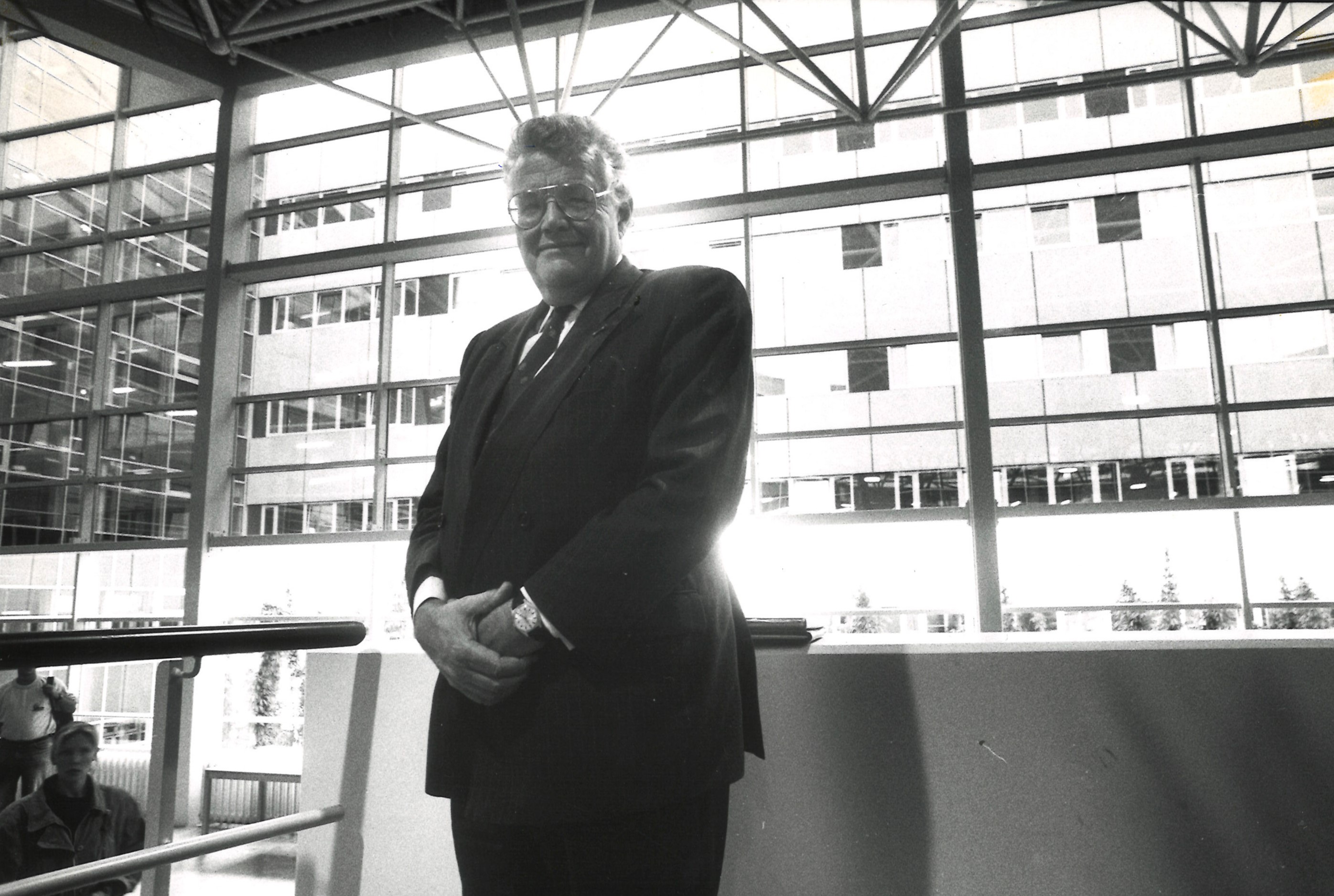 Professor and surgeon Co Greep eventually got what he wanted: an academic hospital in Maastricht
It was a formidable struggle, partly because supporters of the idea were fighting on two fronts. Opponents within the university interpreted the Basic Philosophy to mean that they did not need a full-blown traditional academic hospital; they could make do with existing hospitals and other care institutions in the region, and the academicisation of general practices.
Idealistic types
This interpretation found plenty of support among younger staff and especially within the first cohort of students. Mostly leftist idealists, they imagined a different kind of medical practice – which was exactly why they hadn’t chosen a more traditional medicine programme.
They also knew how to reach the right people in the healthcare industry, the relevant ministries and the parties in the House of Representatives. Their proposal for a medical faculty without an academic hospital gained national traction, much to the annoyance of Greep and his allies. They were even more annoyed when parliamentary questions were raised – prompted by the Maastricht troublemakers – asking whether building a new hospital went against the Basic Philosophy.
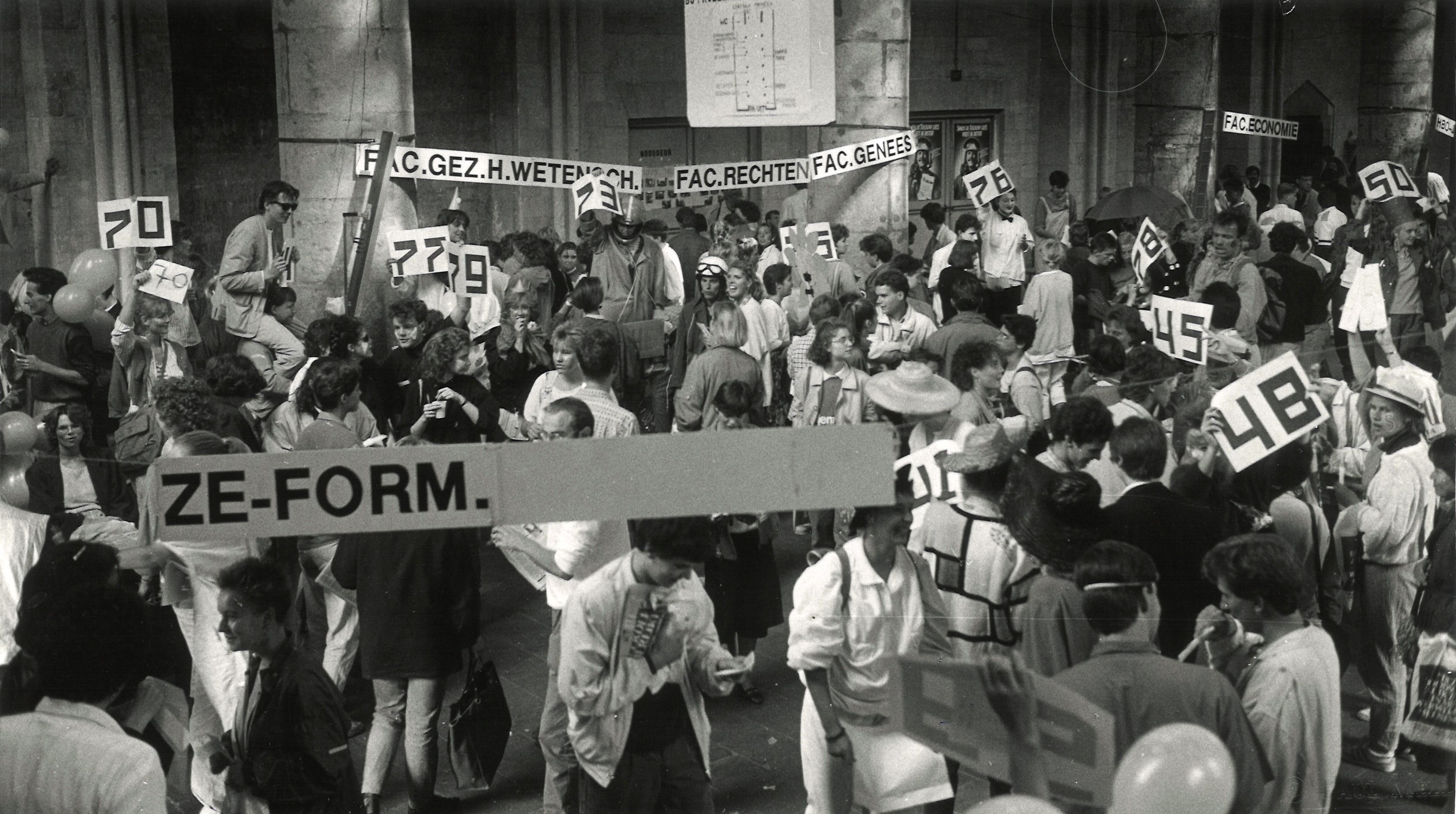 INKOM 1986, searching for the right mentor groep
When this news reached the university’s headquarters on Tongersestraat (now SBE), it was like a bomb had gone off. Stabbed in the back – by their own students, no less! Co Greep’s swearing could probably be heard far and wide.
But the opposition was eventually worn down. Ten years later, an academic hospital – now known as MUMC+ – had been built in Randwijck. Did that settle the matter? To the surprise of many in Maastricht, it didn’t. As late as 1994, civil servants in The Hague were still talking about shutting down the medical programme and academic hospital. Karl Dittrich, the university president at the time, called it proof “that the higher education budget cuts were conceived in an office by a full-blooded desk jockey”.
Where is the money?
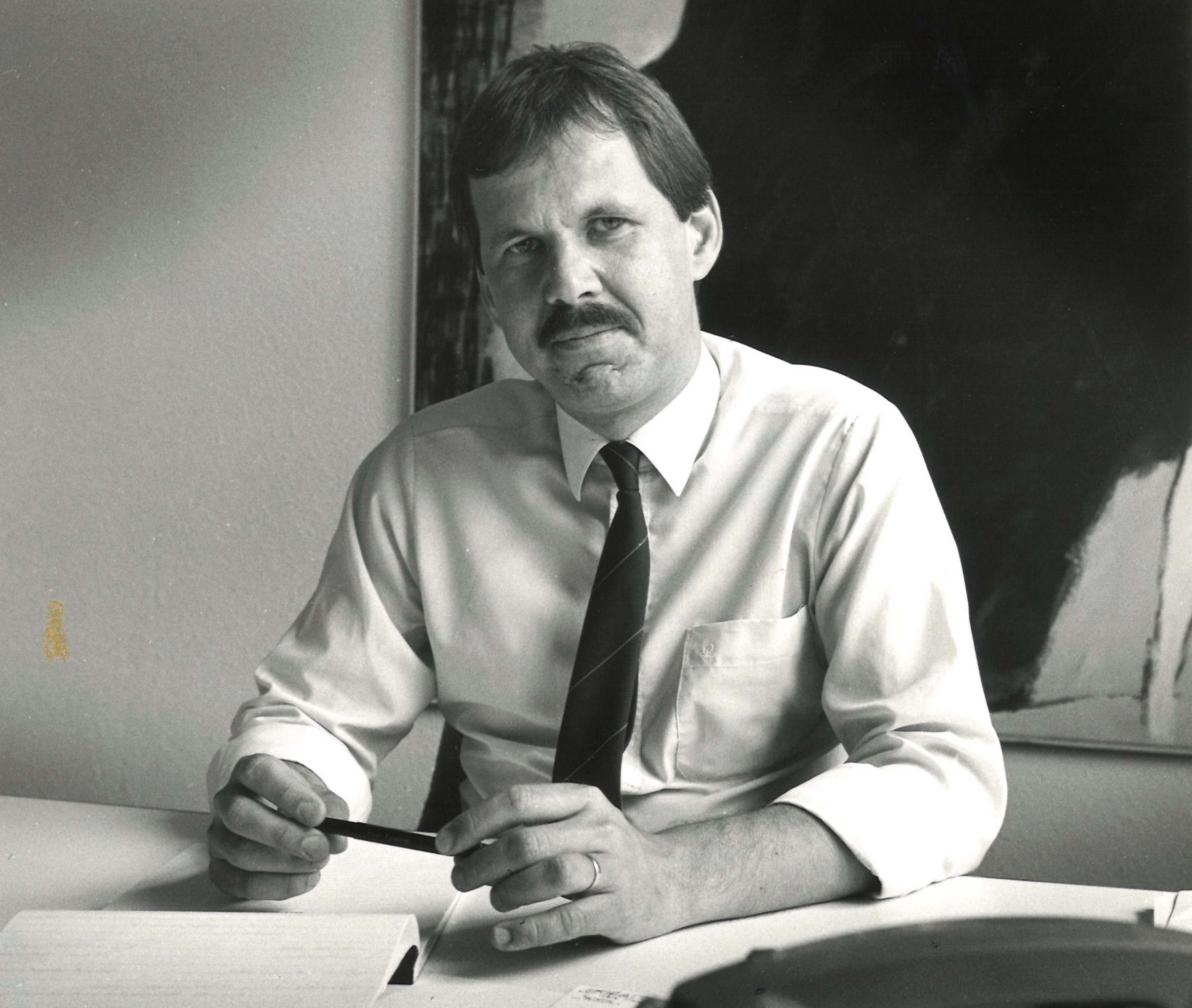 President Karl Dittrich
The Maastricht medical faculty was long known for its conflicts, both internal and with other new faculties and the Executive Board. They stood their ground and weren’t about to hand over their fairly generous funding just because other faculties came knocking – much to the newcomers’ despair.
Between 1982 and 2003, René Verspeek was director of what is now the School of Business and Economics (SBE). In an interview for SBE’s anniversary book (2022), he said: “In the early years, we had to fight endlessly for our right to exist. Medicine (…) was everything. And they kept getting most of the money – the allocation model was flawed. Meanwhile, the Executive Board kept pushing growth, almost obsessively. We were growing, but where was the damn money?”
So the economists reasoned that if the Executive Board wouldn’t listen, they would just have to dig in their heels. Verspeek: “At one point we said: we’ll just take fewer students. We’re growing too fast anyway; we’re already struggling to find staff, especially in business economics. (…) There were a few moments in our history where we put the brakes on. (…) I saw it as one of my tasks to chip away at the love for medicine in discussions about the allocation model. (...) Our point was: teaching should be funded on the same basis. We too have groups of ten students, and besides, we’re doing well in the rankings – we consistently finish first or second, unlike those complacent types in medicine who are slipping to third or fourth place.”
Give the university an inch...
The young university also frequently bumped heads with its older peers. It needed to grow to be viable, which meant adding new degree programmes. But nearby universities often saw this as competition. Take the now highly successful and steadily growing Faculty of Science and Engineering (FSE). From the very start, Maastricht had dreamt of a proper science faculty, but real and potential opposition meant it remained just that – a dream – for forty years. Radboud University Nijmegen was the fiercest opponent of the early plans for a Science College in Maastricht. It has since changed its mind and now even collaborates with FSE.
This wasn’t the first time that Nijmegen stood in Maastricht’s way. If it had been up to Nijmegen in the 1990s, there would never have been a psychology programme here, let alone a whole faculty. The first plans for the programme emerged in 1992, focusing on the science side of psychology: biological and cognitive psychology, a niche in the broad field. Initiator Louis Boon argued that it wouldn’t overlap with what was already on offer elsewhere in the Netherlands – they had looked into it carefully – and so the minister had no grounds to refuse permission. “Nonsense. They must not have looked further than Sittard”, a Nijmegen board member told Observant in disbelief.
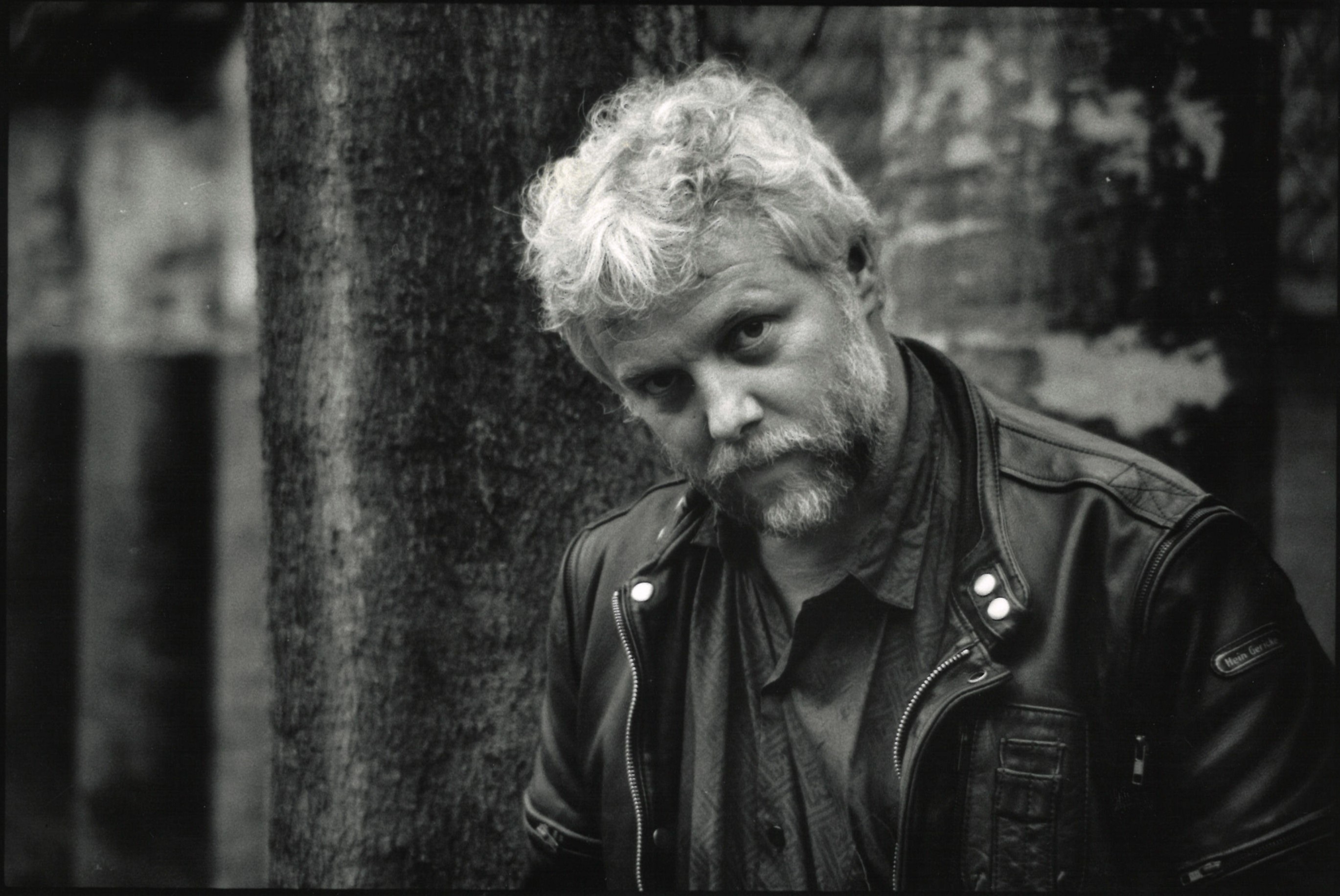 Professor Louis Boon, founding father (among others) of the faculty Psychologie and Neuroscience
Deep distrust
It marked the start of ever more stubborn opposition, including from Tilburg, where psychology had been all but eliminated by budget cuts. The opposition was fuelled by a deep distrust of the young university – the fear that if you give them an inch, they will take a mile. A niche programme in Maastricht would soon grow into a full-blown faculty, and that would cause real problems for Tilburg and Nijmegen, which traditionally drew a lot of students from Limburg. Other universities also protested, arguing that this narrowly focused initiative would inevitably expand into a broad programme – and the Netherlands already had seven of those. Meanwhile, psychology graduates were struggling to find work.
By 1993, the plan was hanging by a thread. Minister Ritzen initially rejected it, but Boon managed to turn the tide by convincing the main national advisory committee. Nijmegen refused to give up and continued to oppose the plans. UM President Loek Vredevoogd vented his frustration in Observant: “It’s time for them to stop this.” Eventually, they did.
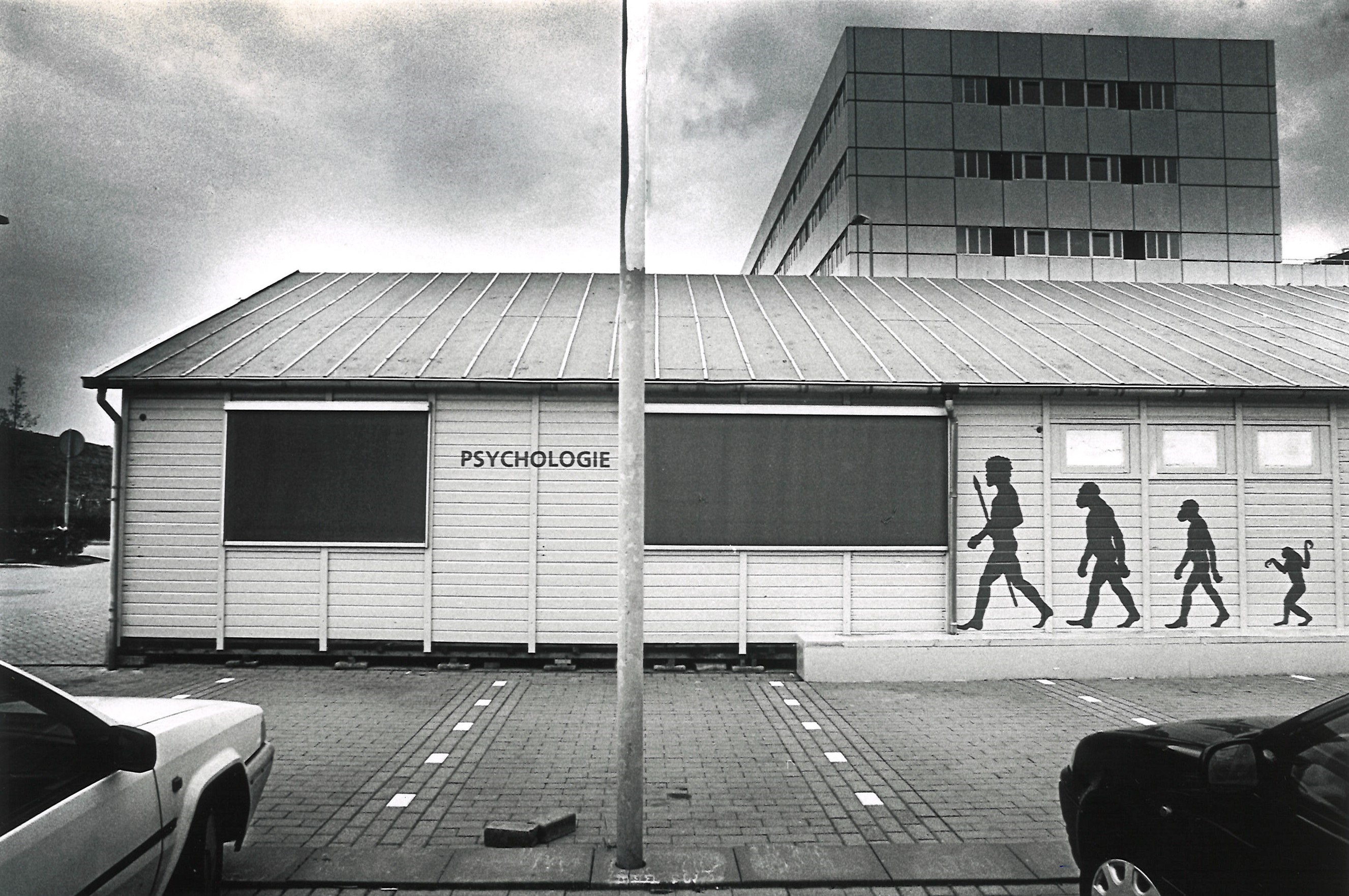 The home of the first generation of psychology students in 1995, on the site where Universiteitssingel 40 would later rise