For the first time since the announcement of the administrative integration between the university and the hospital in June 2023, documents have been made public. These were published on intranet UMployee on Tuesday afternoon. Until now, both the participatory bodies and board members have only met behind closed doors. But – in a new development – they want “broad involvement” from the community in the further implementation. Various committees from both institutions will give their final verdict in February or March. Although rejection is seen as unlikely. The plans – totalling two hundred pages – are at such an advanced stage that rejection seems almost inconceivable. If everything goes ahead, there will be a “transition phase” of twelve to eighteen months.
Maastricht model
The documents that have now been published discuss strategic choices for four substantive themes (as sustainability and a healthy society), for HR-issues, cultural differences and student welfare, but also provide an answer to the question of how such a huge organisation with more than ten thousand employees and 23 thousand students will be run. The governance plan has been renamed the ‘Maastricht model’: unique in the Netherlands because nowhere else is a university merged administratively with an academic hospital. In any case, the outcome is that the current UM Executive Board will disappear and be replaced by a five-member Executive Council headed by two chairs: one who will focus on healthcare, and thus effectively be the ‘head’ of the hospital, ánd a university chair, the rector, who will be responsible for education and research. In addition, there will be three members with separate areas of responsibility (finance, human resources, valorisation and impact). A striking detail is that the Council’s decisions must be unanimous (“to prevent the formation of cliques”). If they cannot reach agreement, the (new, merged) Supervisory Board of the ‘integrated knowledge institution UM-MUMC+/azM’ (quite a mouthful) may consider the matter.
One budget
There will be no administrative changes for the Faculties of Psychology and Neuroscience, Law, Arts and Social Sciences, Science and Engineering, and the School of Business and Economics. Management there will remain with the deans and faculty boards.
The biggest change will affect the Faculty of Health, Medicine and Life Sciences. It will be merged with the hospital under a single board, with the dean of the FHML as vice-chair and the ‘head’ of the hospital as chair. The plan is one strategy, one policy, one budget. In this respect, this structure is not that different from other Dutch UMCs. However, by linking the entire university to the hospital – there will be a single knowledge institution with a five-member Executive Council – the UM hopes to keep the FHML on board.
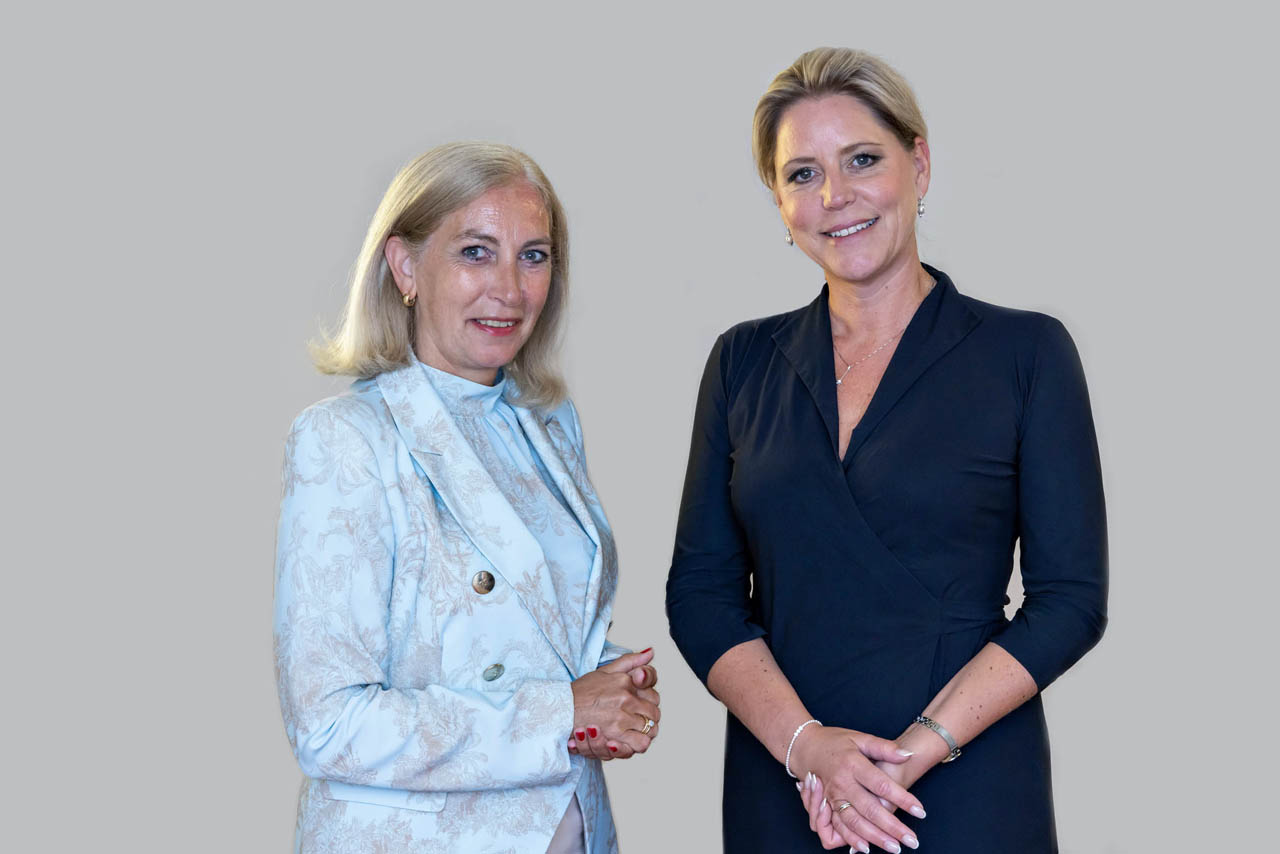 Helen Mertens and Rianne Letschert
Photo: Appie Derks MUMC+
Helen Mertens of the MUMC+ previously told Observant in April 2024, in a joint interview with UM President Rianne Letschert, that there are enough examples in the country – she mentioned Leiden and Rotterdam – where integrated UMCs have “drifted apart” and become too distant from the rest of the university. Both considered this undesirable. Letschert previously said: “If that faculty were to go to the UMC, we would lose it.” It would be at the expense of the others; instead, they are trying to keep everything together.
Spectre
How does this benefit UM as a whole? Since the start the emphasis has been on pooling knowledge, greater influence, a robust organisation, more attractive to students and staff. But now more defensive reasons are visible: the location on the periphery of the Netherlands, in a region with a tight labour market and increasing demand for care, two relatively young institutions of limited size. All of this makes them vulnerable, it seems. Added to this are the pressure of national budget cuts on research and healthcare, the restriction of the number of international students, as well as plans for the concentration of highly complex care; the latter is a spectre for the hospital.
Once again, emphasis is placed on “preserving the individual character and autonomy” of both institutions. They will still be free to make their own choices, for example, how to organise teaching and research within the faculties. Academic freedom remains guaranteed.
Cultural differences
Other areas investigated include a new ‘student welfare’ centre (in Randwyck) and HR, culture and leadership. With a damning report published just before Christmas on social safety in the hospital (which leaves much to be desired), this is an important topic. The MUMC+ report, which the board itself commissioned after a number of crises, shows that a lot of work needs to be done to address mistrust, fear and distant administrative leadership.
As far as HR is concerned, the preliminary conclusion is that both institutions will maintain their own collective labour agreements. The higher wages at the hospital will therefore not be decisive, not even for FHML employees, which has been recognised as a potential cause of friction and frustration. There will need to be a lot of communication about this.
Cultural differences have also been investigated. Yes, there are differences, but there are also similarities. Both work in a “people-oriented, value-driven and socially oriented” manner. However, academic freedom is highly valued within UM and decision-making is much slower than at the hospital, which is more results-oriented and hierarchical. According to the rather optimistic working group, the differences should not be an obstacle, but should instead be “consciously linked” to create added value.
Risks
Suppose the participatory bodies give a green light. Who will then keep a close eye on developments? An ad hoc committee has considered this question (including emeritus professor André Knottnerus and health economist Professor Wim Groot, who has repeatedly expressed criticism of the plans in his columns in Observant). In their 'advisory report evaluation’, they identify a number of risks, because “a single major change", however great the opportunities associated with it, is not without its dangers. Among other things, they mention the possible dominance of the hospital or the university, the fear of a ‘health university’, but also an unbalanced distribution of money between the various scientific disciplines, less room for academic freedom, underestimation of cultural differences, and the risk of bureaucratisation.