“If the representative bodies do not back the proposal, the board integration will not go ahead”, University Council chair Teun Dekker said after the University Council’s meeting last Wednesday. Pamela Habibović, the recently appointed president of the Executive Board, confirms this: “In principle, no. It would be highly unusual to push ahead with a proposal that has not received the University Council’s consent.” That said, she stresses that the views and recommendations of other representative bodies, including the hospital’s Works Council and the Faculty Council of Health, Medicine and Life sciences (FHML), remain “extremely relevant”. Those are expected in the coming weeks. The Executive Board will wait for those reactions before determining its position and the next steps, together with the Supervisory Board and the deans.
Concerns
At the University Council meeting on Wednesday afternoon, 25 February, members said there were too many concerns. They were not convinced that the proposed course was the only – let alone the right – way to achieve closer cooperation between the hospital and UM. Their statements prior to the vote made it clear that the plans were likely to be rejected. Habibović tried to change their minds: “Haven’t we worked towards this proposal together, as partners? I feel its content should not come as a surprise to you.”
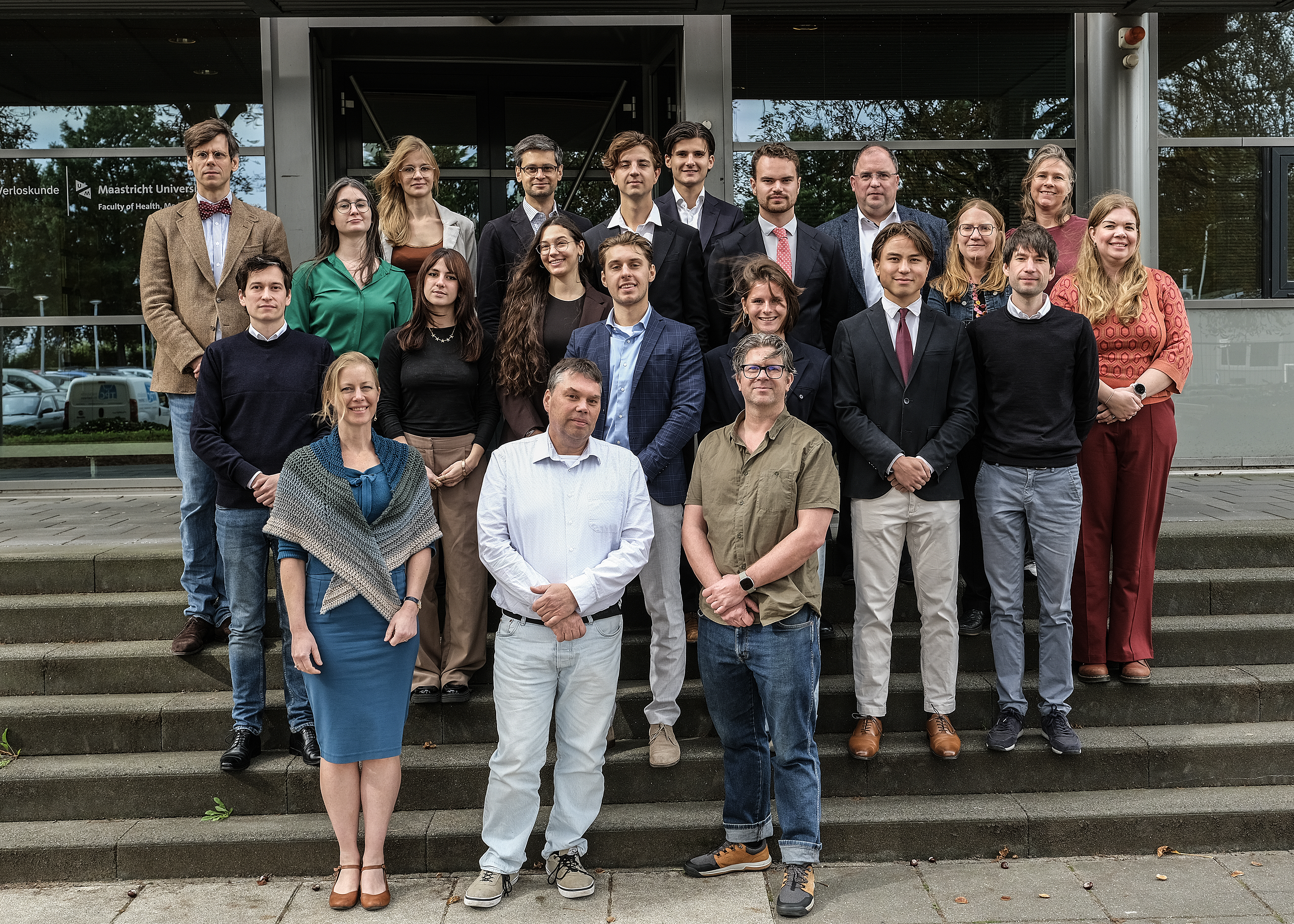 The University Council Photo: Joey Roberts
“But to the community, it does”, replied support staff representative Werner Teeling. Over the previous weeks, it had become clear that the wider university community has doubts. The academic action group WoinActie took the floor to voice its concerns during the meeting on Wednesday, as did the Maastricht Young Academy; the institute directors of the FHML sent in a letter stating their objections; the FHML Faculty Council and other faculty councils raised numerous questions; and critical opinion pieces appeared in Observant.
Not turning a blind eye
At the meeting, Habibović said she was not turning a blind eye to the community’s concerns, but “the question put to you is: can we move on to the next phase? Will you give us that trust? This is not the end point; we still need to develop things further, and a thorough evaluation will follow.”
Support staff representative Maarten van Wesel responded: “The question put to us is whether or not we are in favour of this board integration, whether we agree with the documents, some of which have binding legal effects. The question isn’t whether or not we are in favour of a next phase, is it?”
Although the University Council said no to the proposals currently on the table, it strongly supports strategic collaboration between the hospital and UM. For that reason, it has recommended that the Executive Board institute a period of reflection to explore alternatives and determine the best way forward. Crucially, this should involve the entire university community, staff and students alike. The University Council would like to play an active role in this.
Justification
But which arguments were decisive in the University Council’s decision to withhold consent? These were not shared on Wednesday 25 February. This week, University Council chair Dekker again declined to go into detail. “We are currently writing a statement explaining our position – you could call it a justification of how we reached this decision. We intend to share it with the Executive Board very soon, so they can study it before questions are raised. It will then be made public. We want to be as transparent as possible. We will certainly push for an evaluation of the whole process: how did the decision-making process unfold?”
Disappointed
UM President Habibović is not just disappointed by the outcome, but also puzzled by some of the criticism voiced in various council members’ statements. One council member complained about the last-minute publication of a big stack of documents, saying, “This is such an important issue, but staff were given almost no time to read and reflect on it.” Habibović now responds, “Other bodies asked for more time. They could have done the same. This wasn’t a deadline.” She also refutes the claims that the university community was not sufficiently involved and the process lacked transparency: “I asked the programme team to compile a list of everyone we spoke to since we started this process in June 2023 – people who took part in working groups, staff who were invited to brainstorm sessions. Rianne Letschert and I visited faculty councils, faculty boards and service councils. In May last year, we shared a confidential first draft with University Council members and asked for their feedback. That draft did not differ significantly from the proposal now on the table. In my view, we did our best to discuss this thoroughly with them.”
She also disagrees with the council member who commented that the timing is unfortunate because the boards are “unstable” following Letschert’s ministerial appointment and the earlier departure of the hospital board member responsible for finance. “When we submitted the plans to the University Council last December, both boards were complete. Moreover, this is not about the people currently in post, but about whether the proposed governance model is deemed sustainable.”
Not naive
Still, this firm rejection calls for self-reflection by the boards. After nearly three years, doubts and fears remain. Not everyone is convinced that the integration is necessary. Some worry the hospital might gain too much influence, while others fear the university will become too focused on health. How does Habibović account for these anxieties? Is this something the university community actually wants? Have the plans not been explained clearly enough? Have the boards failed to build enough confidence? Were they too naïve? “No”, she says to that last question, “not naïve. We worked hard to come up with a plan that would inspire enough confidence. The University Council disagreed. Fortunately, we agree that closer cooperation is important for both the university and the hospital. That’s why we need to figure out how we can make it work, with input from all representative bodies. This is far too important to just go ‘never mind, then’.”
Wendy Degens and Riki Janssen