Creating a dance about your research is not as easy as it may sound, says Kondrateva. She certainly had no idea how hard it would be when she first learnt about Dance Your PhD. “I’d just started taking dance lessons and was in the middle of writing my dissertation when someone I knew put the two together. They sent me a link, and I just thought, ‘Wow. I want to compete in this. And win it.’"
The dance contest was founded in 2008 by John Bohannon, who worked at Science at the time. His idea was to challenge PhD candidates to interpret their often complex research in dance and movement – and film it – to bring science to a wider audience. “I immediately looked up previous winners and the rules”, says Kondrateva, who recalls entries of “Eurovision-level” quality – in other words, highly polished performances. “But I wasn’t going to let that put me off.”
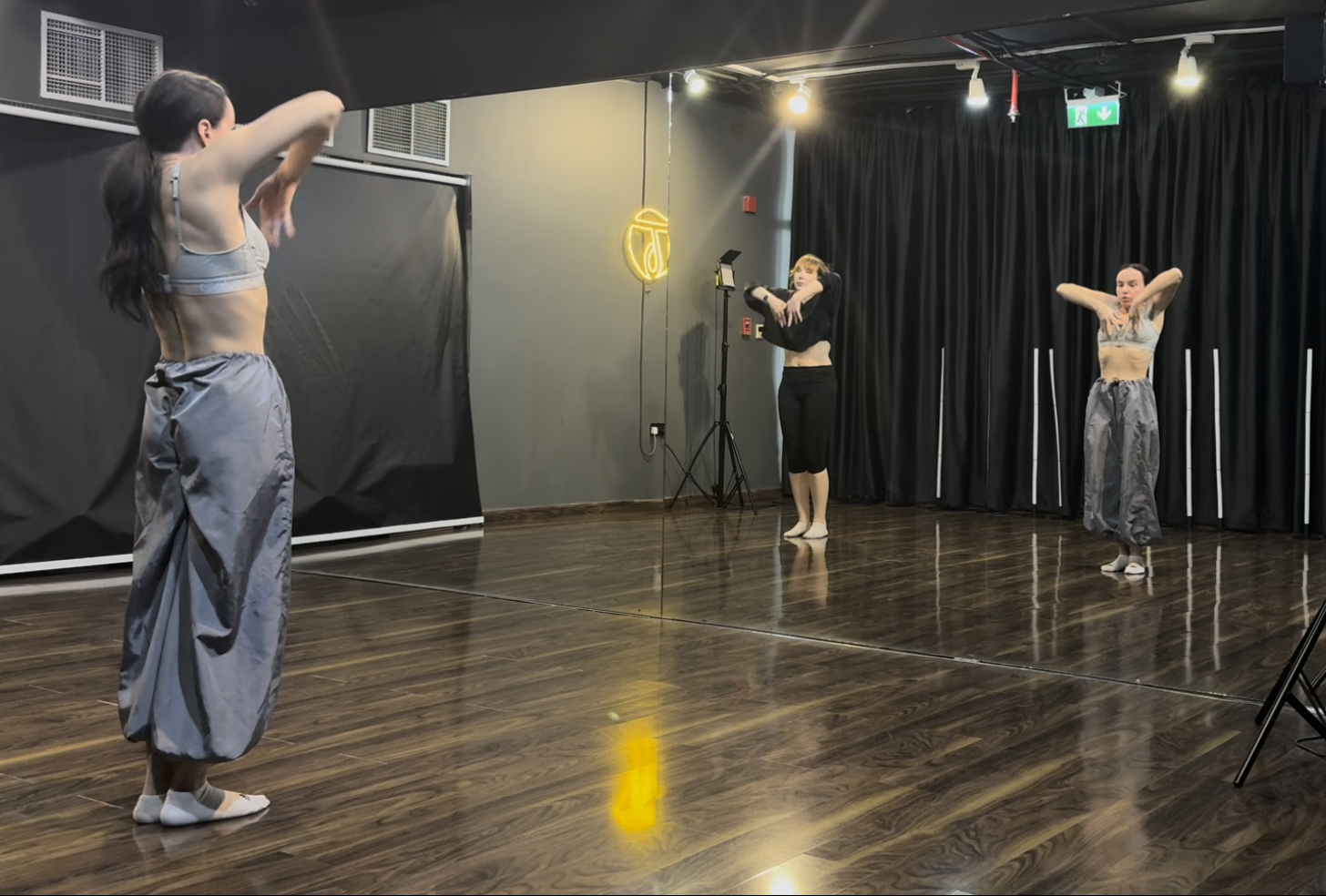 Kondrateva (in black) rehearsing with the choreographer in the studio
Having already spent some hours on the dance floor in her spare time made the decision to take the plunge a bit easier. Other aspects – such as appearing on camera – did not faze her in the slightest. “I used to blog, so I know how to tell a story on screen.”
Paring it down
She teamed up with a choreographer friend, recruited someone to film the project and secured a recording studio. All she needed was a plan – and the willingness to leave out large parts of her research to keep the dance easy to follow. Her PhD research focuses on why MRI data can vary between scanners, and how brain volumes measured at different times with different scanners can be reliably compared. “I had to leave out 80 per cent of my research just to make the remaining 20 per cent understandable.”
But even that proved a challenge. “The first time I walked into the studio with my pared-down dissertation and explained to the choreographer what the dance would be about, she looked at me like I was mad”, recalls Kondrateva. “I started explaining convolution – a mathematical operation – and how I thought we could portray it. You’ve got a matrix of numbers that you flip and multiply, like this.” She makes angular arm movements, miming squares with her hands. “I wanted a relatively literal translation, but the choreographer immediately said, ‘Kate, that’s not dance.’”
Sweating in trainers
That was when the panic first set in, and Kondrateva was pushed to put much more of herself into the performance. “It had to be more fluid, using my whole body, not just my hands. Dance is about emotion – it needed much more of that.”
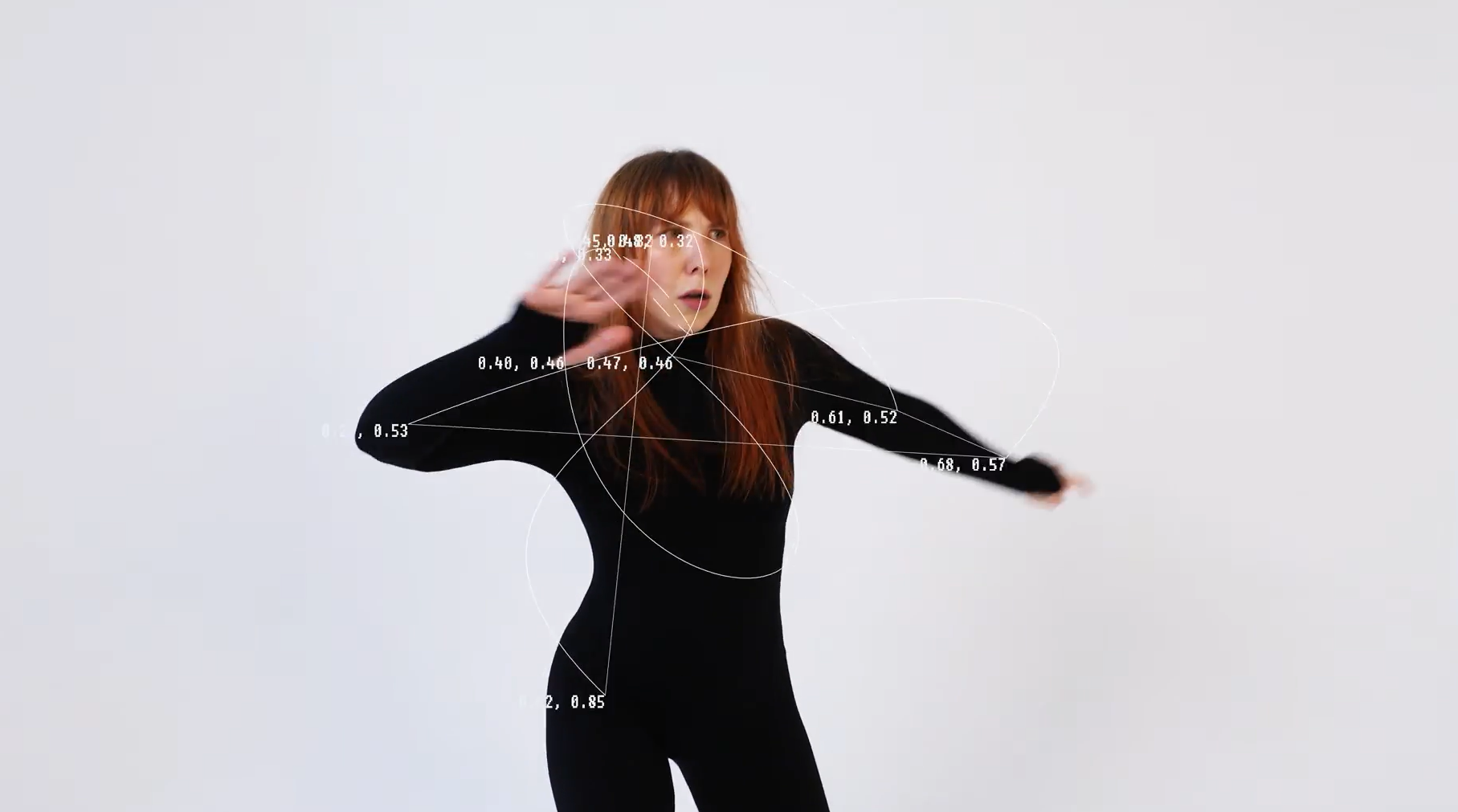 A still from the video in which Kondrateva illustrates how AI can help doctors (but is not infallible)
She spent hours in the studio, working with the choreographer and figuring out how to express concepts such as brainwaves, molecules and neural networks. Behind-the-scenes footage shows Kondrateva and the choreographer trying out movements in front of a mirror; moments later, she is on her knees with her back to the camera, arms outstretched, turning her whole body to the left. Sweat pours down her face. “Everything had to be very dynamic, with expansive gestures. Spinning movements represent magnetic fields, for example. Sitting on the floor and reaching upwards represents growth. And how do you portray organs such as the kidneys or liver in dance? I wanted to wear heels, but the choreographer wouldn’t let me. She said, ‘You’re a molecule – you need to jump. Put on your trainers.’”
The music was another headache. Kondrateva wanted to use AI to compose a track, but it was more difficult than she had expected. “It wasn’t until the last week before the deadline that I managed to put together something I was happy with.” And then there was clothing and make-up to sort out, along with the performance itself and the editing, complete with special effects like bright lights and text on screen. The end result? A nearly four-minute video about MRI scans, the brain, AI, diagnostics and the continued importance of doctors – with Kondrateva as its dynamic centre.“I worked on it for months, fitting it in around everything else. I was basically doing everything myself apart from the choreography. It was gruelling.” Even so, she would encourage others to take part in the contest. “If I’d known in advance what it would involve, I’d still have done it – just not on my own.”
Thinking outside the box
Anyone expecting this Dance Your PhD win (which comes with a $750 cash prize) to open doors for Kondrateva may be disappointed. In fact, she hasn’t even told a lot of people about it, worried they might not understand. “I feel like they might not take the dance contest seriously and see it as just a bit of fun you’ve spent way too much time on. I might tell more people later.” She is definitely proud of what she has achieved: “It’s very healthy to look at your dissertation in a different way – to take a step back and see it as something enjoyable. It’s good for your brain.”
Watch the dance video of Kondrateva below: