In their first (joint) interview after the failure of the ‘merger’ plans, both chairs have yet to come up with a clear answer as to what went wrong. Nor can that answer be found in the comprehensive letter with attachment they sent in mid-April to all the participatory bodies involved. In it, they briefly acknowledge that there were “both principal and pragmatic reasons” for the negative advice, particularly about the governance model. The outcome is called “regrettable”, because “we remain convinced that collaboration between both organisations without consolidating governance is more vulnerable and person dependent”. After which they swiftly move on to the more positive side: all the parties involved also feel that closer cooperation is “desirable and necessary”.
Unlikely
Yet there were enough signs ahead of time that the plans were unlikely to find much favour at UM. For example, the February meeting of the Faculty of Health, Medicine and Life Sciences (FHML) – one month before it was scheduled to vote on the administrative integration – which revolved mostly around the question, why are we actually doing this? Questions and doubts were also raised in the other faculty councils at the start of the year. Or the letter from the FHML institute directors (also in February), in which they expressed their concerns about the proposed plans. And much earlier, too, in June 2025, the concerns of the University Council, which that same council feels were not sufficiently addressed. Yet Habibović says: “My impression before the last U-Council meeting was that we could still talk, that there was still an opportunity for input. I wasn’t expecting this and it’s certainly not what I had hoped.”
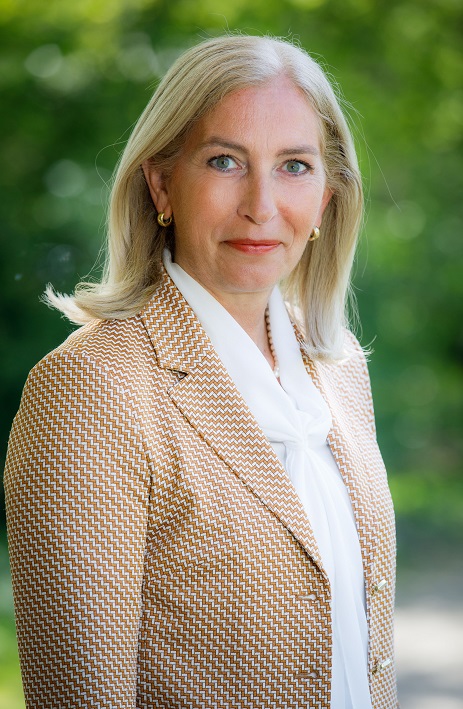 Chair board academic hospital Helen Mertens
Mertens also acknowledges that she “had heard criticism beforehand” at the academic hospital, but posited that those had more to do with nerves: “It takes courage to join forces like this. Certain questions had not yet been worked out fully, such as the makeup of the participatory body.”
Super complex
An important question for both board members: had they put sufficient effort into explaining the benefit and necessity of this “super complex” (Mertens) and “most substantial organisational change ever” (Habibović) within the two institutions and convincing the people? There is a lot of criticism of that at the two institutions. Because of the confidential nature of various sessions and meetings, for two years, neither of the two communities heard much more than general statements about what good things the integration would accomplish. The University Council wrote a letter in March – in which they defended the unanimous rejection – that many people at the university felt that this closed-door policy “left them feeling insufficiently informed or able to offer a significant contribution”.
No doom scenario's
The fact that the underlying arguments for the ‘merger’ were not all explained particularly well was an extra complicating factor. It turns out now that was deliberate. Because yes, the whole plan was linked to a significant degree to all the threats the board members could foresee: budget cuts in the health sector, the academic status of the hospital not being self-evident, or the increasing pressure on internationalisation in education. Together, they would be much better positioned to face those threats. But the project was predominantly ‘sold’ on the idea of all the scientific and societal benefits the ‘merger’ would offer. The positive side, not the defensive one. Mertens denies that was all it was about: “It was mentioned, we did say that it was important to ensure our continued existence.” Habibović: “But you don’t want to paralyse people with doom scenarios. You want to show them that we would be stronger together, not suggest that we’re weaker apart. Not internally and not externally. You want to encourage enthusiasm by showing the potential. So you don’t just highlight the risks." However,” she now acknowledges, “maybe we should have made that more explicit.”
Difficult puzzle
In the letter to the participatory bodies, the two board members explain how the discussion about the governance model – the thorniest problem – happened, and particularly why they happened behind closed doors: it was “a difficult puzzle uniting all the stakes, finding common denominators and compromises is a delicate process with a lot of dynamics, so it is important to first create internal support and a considered proposal, before publishing it more broadly”.
That internal support turned out to be far more brittle than board members expected; would it not have been more sensible to involve the university community in the process earlier? Habibović feels differently: “We are all about openness and dialogue, and if we can share a plan more widely, then we will do that. But there does have to be something to talk about. It was a very complex process, you have to negotiate every topic with two boards, two interests: is it a legal merger, an administrative integration, what is the role of the chair. We discussed every detail. We always looked at what was best for UM and the hospital, we got to know each other very well.”
Confidence
And that last thought fills Mertens and Habibović with more than enough confidence to at least continue with the substantive collaboration between the two institutions at full throttle. Although up till now, the motto had always been that only an administrative integration could guarantee that process; without that, it would all remain too non-committal, too dependent on people and their relationships, Habibović’s predecessor Rianne Letschert had emphasised on several occasions. Mertens sees it as “a case of two steps forward, one step back”, this time without a new governance model. The substantive cooperation is seen as of such importance that they want to continue their current administrative contact: the UM Executive Board on the one side and the hospital board on the other are “not going to meet weekly, but certainly frequently”, they say. As regrettable as it is, says Habibović: “Now everything will take longer, there are two boards, two participatory bodies, two supervisory boards.”
Spirit of openness
Finally, the attachment to the letter from the two board chairs to the participatory bodies ends with a striking paragraph. It – still confidently – states that over the last two-and-a-half years, there has been more than enough room for “input” and “involvement” from “the various layers and participatory bodies”. Yet the emphasis in the last sentence seems to undermine that somewhat. In it, they promise that “the dialogue will be conducted in a spirit of openness with the communities and the participatory bodies of both organisations”.