“How can we support something UM is fundamentally opposed to?” Pamela Habibović – at the time, rector, now President of Maastricht University – asked during a University Council meeting in April of last year. The subject at hand was the traditional student associations Tragos and Circumflex. Only days earlier, UM had cut ties with both associations after multiple reports of incidents with new members that crossed the boundaries of “physical safety and personal integrity” during hazing – something the two associations still maintain they know nothing about.
It was not the first time that the Code of Conduct of the Introduction Period – which sets outs rules relating to alcohol use and sleep, among other things – had been violated, and the university had run out of patience. The codes seemingly don’t work and it is time for a new system for student associations “more in line with the times”, then director of Student Services Centre Margriet Schreuders said. “Sooner rather than later,” she added.
A year later, that urgency is barely visible. The Executive Board has put off a decision multiple times – although according to spokesperson Koen Augustijn, it looks like it is now “a matter of weeks” until a decision is made. The associations themselves have no idea what that decision will be, said chairs Veerle Kiefer (Tragos) and Jasper Gielen (Circumflex), who sat down for a conversation with Observant. “The university isn’t telling us anything, because the policy will also apply to other associations,” said Gielen.
Abolishing hazing
Kiefer is “curious” what new etiquette they will have come up with. She understands that “the university wants things to change, no longer go from incident to incident”, but how is that supposed to work without a code of conduct? “Other university cities use them, too. Only there, they are often created together with the student associations, so that they are more on board with the end product. So, the process could certainly be more efficient, but I can’t think of a solution without a code of conduct.”
Last year, Habibović said it was still a question whether UM would continue to provide [financial] support at all, “if associations insist that hazing is necessary”. What happens if abolishing hazing is a prerequisite for restoring ties? Would Tragos and Circumflex agree to that? Both chairs say they would be willing to have conversations about what hazing would entail, but abolishing it entirely? “It remains an important tradition for our association,” said Gielen. Furthermore, added Kiefer, “we feel that we can organise it properly, and we will continue to do that, even if the ties with the university are permanently cut.”
On their own two feet
Say the latter were to happen, would that signal the end for the associations? Neither chair thinks it would be, despite the continued loss of administrative months – financial compensation for the delay incurred by student association board members, up to a maximum of €30,000 a year per association. “We have been able to partly compensate for that loss through a fund – funded in part by the association and in part by alumni,” said Gielen. Tragos has a similar solution, said Kiefer, although she admits “the money isn’t endless. But there are other options, without necessarily becoming more commercial, should the administrative months not be restored. Stricter rules made it harder to receive financial compensation anyway, the last few years.”
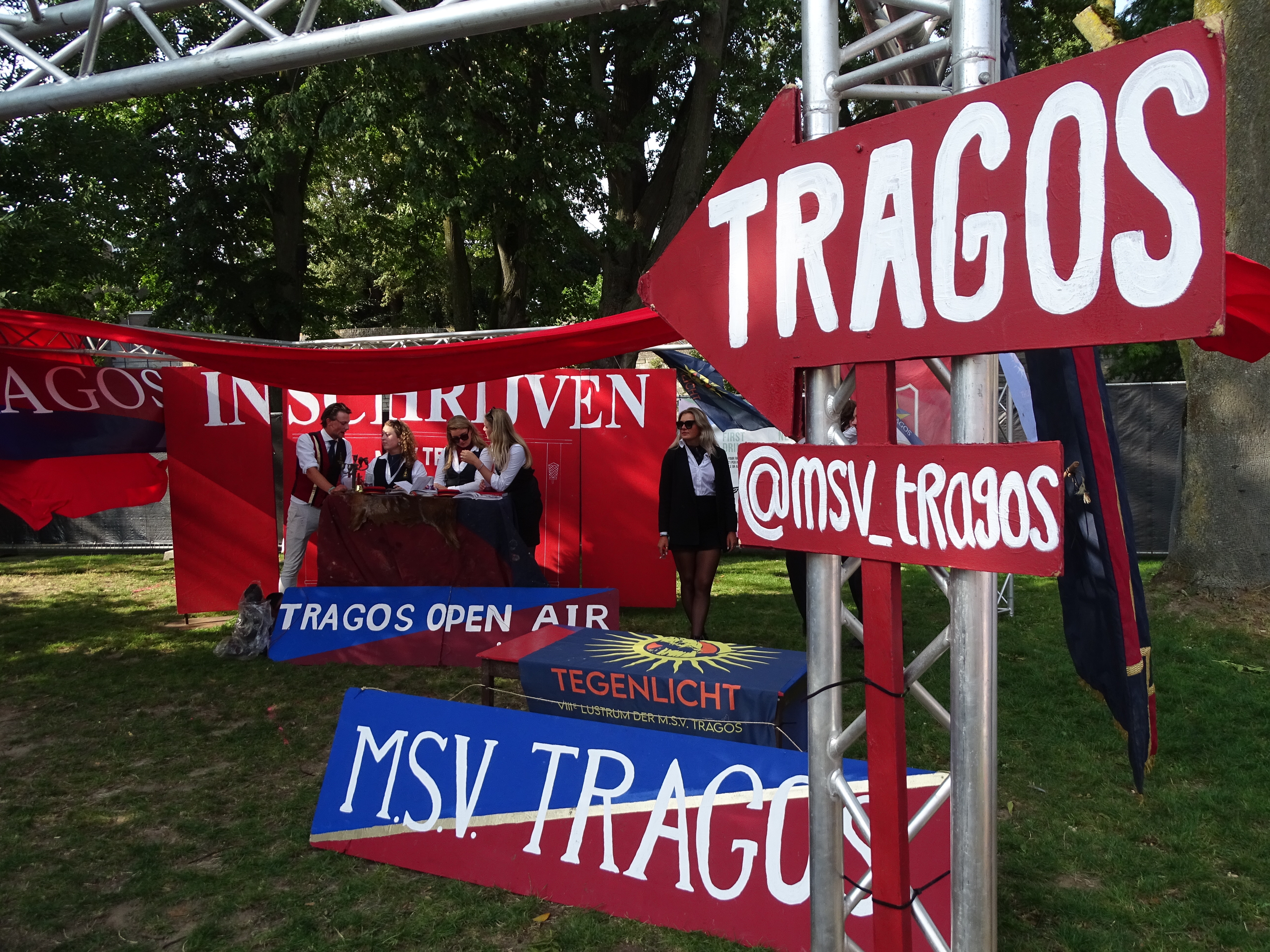 Tragos stand at INKOM 2024, for now the last edition the association participated. Photo: Observant
The associations also learnt to stand on their own two feet more last year. They solved the issue of being denied access to the INKOM introduction week by together organising Maasweek independently, an alternative that could definitely continue, they said. “And we now organise other business that was usually sorted through the university, such as first aid courses and fire inspections, ourselves,” said Kiefer.
Fewer members
The two chairs are very aware that the university may choose to permanently cut ties, but they emphasise that they would prefer a future with UM. “Neither side would prefer there to be no contact, so I don’t think that’s the university’s approach,” said Gielen. Kiefer maintains it wouldn’t make sense. “After all, our members are still UM students.”
But are students still interested in traditional associations? Haven’t chairs been complaining about decreasing membership for a while now? After a spike in membership during covid, Tragos and Circumflex each only welcomed about a hundred new members a year, out of a possible five thousand bachelor students at UM. But the main reason for the decrease is actually that students graduate faster nowadays, say Kiefer and Gielen. “That’s good news, of course, but it also means they aren’t members as long, and participate in fewer extracurriculars,” said Kiefer. “You hardly see active seventh years like you used to.”
Does the image problem not play a part, too? Frequent criticism is that the closed culture is ‘old-fashioned or outdated’, incidents – both at Tragos and Circumflex, and at associations elsewhere around the country – are guaranteed to lead to negative coverage by the media. Yet the two chairs say they haven’t noticed that much difference. “I didn’t get the impression during the introduction week that students looked at us any differently than before,” said Kiefer. She points to the fact that her student association “puts a lot of effort into creating a safe environment. There is more of a focus on confidential advisors and we are also working on a new policy regarding sexual harassment, so that we can handle reports more specifically.”
Merger
Whatever the reason may be, the lower membership figures are a cause for concern. “It’s getting harder to find people willing to join the board or other committees,” said Gielen. “That is also a problem faced by other associations, in Maastricht and beyond.” Despite that, he is not too worried yet. “If the numbers continue to drop, then it might become a problem. But I feel the numbers are stabilising again.”
There are frequent rumours that the two associations are considering a merger, because they are so similar and are essentially fishing for members in the same pond. But “that is not on the table at the moment, there are no talks”, both chairs asserted. “I can understand the thought, but there are also differences between Tragos and Circumflex, we both have our own vibes,” said Kiefer.
At the same time, neither is willing to entirely rule out a merger in the future. Although it is hard to look too far forward, says Kiefer. “You are always faced with new challenges. What will we look like in ten years? No idea, that’s still so far away.” But, assures Gielen, “we have often shown how resilient we are. We’ll be around for a while yet.”